RUDN Associate Professor Olga Butranova commented on Egypt’s plans to develop partnership with Kazakhstan in drug production
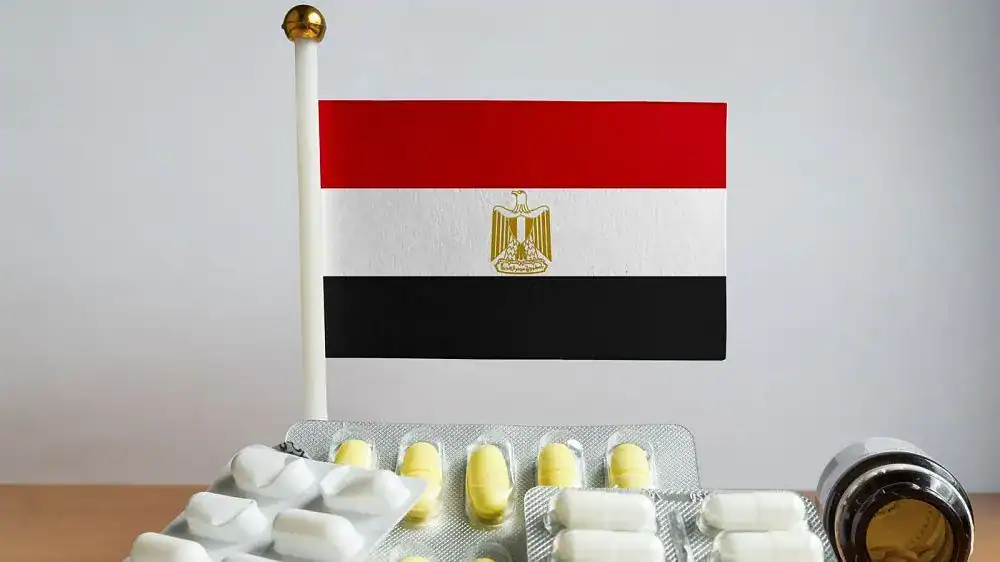
Candidate of Medical Sciences, Associate Professor of the Department of General and Clinical Pharmacology at the Medical Institute of the Peoples’ Friendship University of Russia (RUDN) Olga Butranova, exclusively for TV BRICS, commented on the news of Egypt’s intention to develop a partnership with Kazakhstan in the pharmaceutical sector
The expert notes that today Egypt accounts for almost 30 per cent of the regional pharmaceutical market by production volume among Middle Eastern and North African countries. The level of localisation of pharmaceutical products in the country has reached 91 per cent. Around 180 pharmaceutical factories and more than 80,000 pharmacies operate in the Arab Republic.
“A distinctive feature of Egypt’s pharmaceutical market is the focus on the production of generics, that is, reproduced medicinal products whose production patents with the original developer have already expired. […] In particular, this includes efforts in the production of monoclonal antibodies, vaccines and a number of other high-tech products,” Butranova said.
According to the expert, to achieve such results, Egypt has created pharmaceutical clusters bringing together local and foreign manufacturers. One of the largest opened in 2021 in Al Khankah. The complex covers almost 200,000 square metres and operates 160 production lines.
“Pharmaceutical clusters have been established, with large companies combining several factories and numerous technological lines. They include both local manufacturers and their integration with foreign manufacturers who have come to Egypt and are actively developing production of their product lines here. […] Among other significant African countries, Nigeria can also be mentioned in this respect,” the RUDN associate professor added.
Olga Butranova explained that external factors restricting the import of finished medicines prompted Egypt to develop localisation. The state recognised the need to establish its own production chains to ensure basic provision of medicines to the population. At present, Egypt independently produces, among other medicines, insulin. The share of generics in the country’s market is 70 per cent.
In 2022, Egypt reached the third maturity level of the regulatory system under the World Health Organisation classification, allowing foreign companies to integrate into the drug production process in the country. At the same time, the expert noted that Egypt remains dependent on imported raw materials for medicine production. Butranova emphasised that today the main suppliers of pharmaceutical substances globally are India and China.
Earlier, Egypt’s Minister of Health Khaled Abdel-Ghaffar discussed cooperation prospects with the Ambassador of Kazakhstan to Egypt, Zhengis Askar. The focus was on the possibility of exporting Egyptian products, including hepatitis C medicines. At the end of the meeting, Ghaffar extended an invitation to the Minister of Health of Kazakhstan to visit hospitals and pharmaceutical enterprises in Egypt.
African Times published this article in partnership with International Media Network TV BRICS