For generations, women were told that politics was not their place. Leadership was treated as a masculine calling, while women were expected to support from the margins, mobilising communities, campaigning for others and carrying the invisible work of political organisations without necessarily being trusted with power.
Today, more women are contesting elections, serving in councils and legislatures, leading political parties and occupying executive office. These gains matter. Every woman who enters a space from which women were historically excluded weakens an old barrier. But breaking barriers cannot be the final measure of progress.
The real question is not simply how many women are in politics, but how much power they possess, whose interests they advance and whether political institutions allow them to lead effectively. A woman may hold a senior title while critical decisions are still taken elsewhere. She may be publicly celebrated as evidence of transformation while being denied resources, political support or meaningful authority. Representation without power can become decoration, while inclusion without institutional change can preserve the very system it claims to transform.
This distinction matters because political power is not always visible in official positions. It is also exercised through access to information, funding, networks, party structures and informal decision-making spaces. A woman may sit in the room but still have little influence over what is discussed, what is prioritised and ultimately what is decided. True transformation therefore requires women to move from being present in political spaces to having the authority to shape those spaces.
Women in politics also face standards rarely applied to men. They must be competent but not “too ambitious”, firm but not “difficult”, visible but not “attention-seeking”. Their clothing, family lives, relationships and personalities are scrutinised alongside their public performance. Their voices are often judged before their policies are considered. When a man makes a mistake, it is frequently treated as an individual failure. When a woman falters, her failure can too easily be presented as evidence that women are not ready to lead.
This double standard does more than hurt individual women. It discourages capable women from entering political life and creates a hostile environment for those who do. Women should not have to be twice as competent simply to be regarded as equal. They should be allowed to make mistakes, learn, grow and lead without having their gender turned into the central explanation for every success or failure.
The challenge is even greater for young women, rural women, working-class women and women with disabilities. They experience not only sexism, but also exclusion based on age, class, geography, disability and access to political networks. If political parties recruit only well-connected women from established political circles, transformation will remain narrow and disconnected from the realities experienced by millions of women.
Political leadership must reflect the diversity of women’s lives. The woman who understands the daily realities of unreliable water, unsafe streets, unemployment, inadequate healthcare, poor public transport and unpaid care work brings a valuable perspective to policymaking. These are not peripheral issues. They are central questions of governance and development.
Breaking barriers must therefore be followed by changing institutions. Political parties should move beyond quotas on candidate lists and examine who controls campaign funding, branch structures, committee assignments, policy platforms and leadership pipelines. A quota may open the door, but it does not guarantee that a woman will have the resources or authority to lead once she enters.
Women must not be deployed only when an organisation needs to appear progressive or when a constituency is considered difficult to win. They should receive the same preparation, protection, resources and political backing routinely extended to male leaders. Political parties must also create meaningful mechanisms to address harassment, intimidation and discrimination rather than expecting women to endure these challenges as the price of participation.
We must also reject the assumption that every woman in office automatically advances women’s interests. Women, like men, hold different values, political commitments and leadership philosophies. Simply occupying a position because of gender does not make someone transformative. Representation becomes meaningful when leaders use power ethically, open opportunities for others and place the needs of communities above patronage and personal advancement.
Women leaders should not be expected to carry the struggle alone, but they have an important role in building a political culture in which future generations do not face the same locked doors. Every woman who reaches a position of influence has an opportunity to mentor, sponsor and create pathways for others. Leadership should not become another closed circle in which only a select few benefit.
Men also have a direct responsibility. Gender equality is not a women’s programme; it is a democratic obligation. Male leaders must challenge sexist language, intimidation, harassment and the informal networks through which women are excluded from important decisions. Remaining silent in the face of discrimination protects the status quo. Allyship must be visible in the allocation of power, opportunities and resources, not merely in speeches delivered during Women’s Month.
South Africa’s democracy will be stronger when women are not only present but influential, safe, respected and able to govern. Success should be measured by whether women shape budgets, policies and development priorities; whether they can disagree without being degraded; whether they have access to political resources; and whether institutions protect them from political and gender-based violence.
The political system must also recognise that women’s safety is inseparable from their ability to exercise power. Intimidation, threats and harassment are not simply personal difficulties. They can become mechanisms for silencing women and forcing them out of public life. A democracy cannot claim to value participation while allowing intimidation to determine who feels safe enough to participate.
Ultimately, the goal is not simply to help a few exceptional women enter rooms built by men. It is to rebuild those rooms, redistribute power and create a political culture in which women’s leadership is ordinary, supported and judged fairly.
Breaking barriers opens the door. True transformation begins when women can walk through it, lead with authority and keep it open for others. The measure of progress is therefore not merely the number of women sitting at the table, but whether they have the power to change what is served, who gets invited and how decisions are made.
South Africa does not need women merely to occupy political positions. It needs women to exercise power, shape institutions and redefine what leadership looks like. The next chapter of political transformation must move beyond tokenism towards genuine power, accountability and equality.
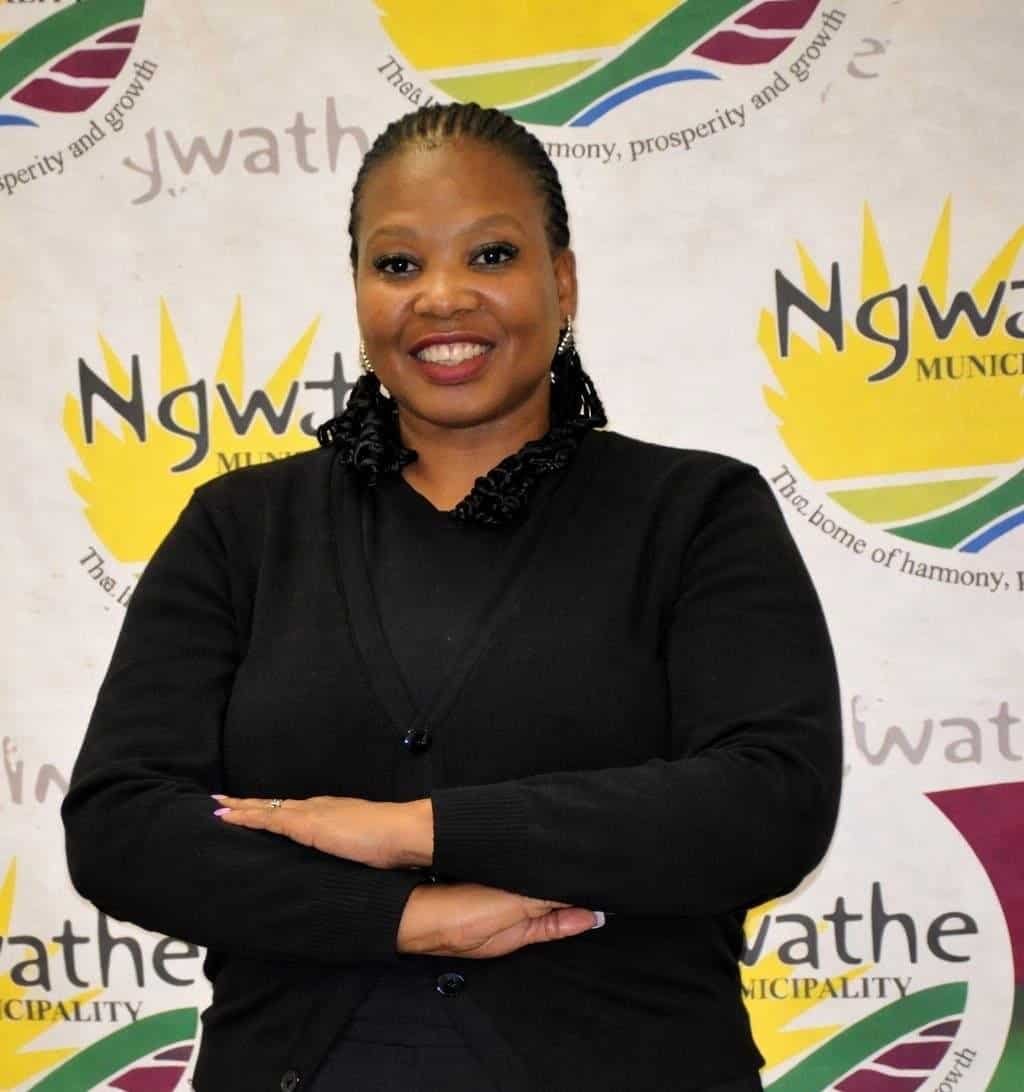
Victoria De Beer-Mthombeni is the Executive Mayor of Ngwathe Local Municipality in the Free State province of South Africa.