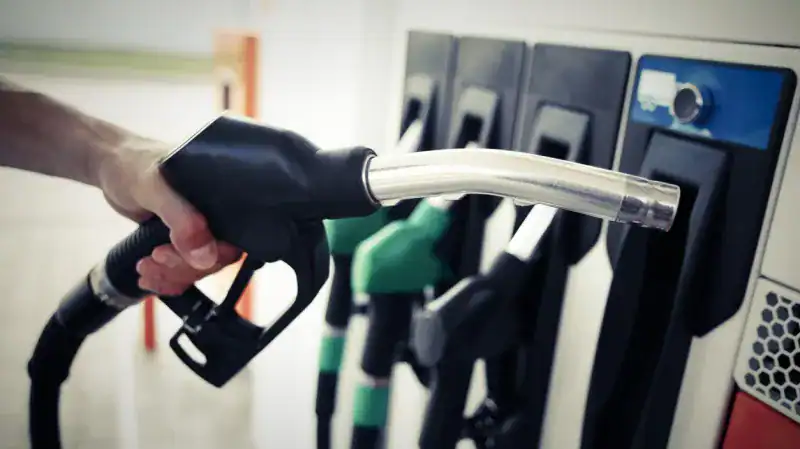
South Africans are bracing for higher fuel costs from Wednesday as a fresh increase in petrol, diesel and paraffin prices takes effect, adding further pressure to already strained household budgets and businesses.
The price adjustments, confirmed by the Department of Mineral Resources and Energy, will see petrol rise by 20 cents per litre, while diesel will increase by between 62 and 65 cents per litre. Illuminating paraffin will go up by 44 cents per litre and LPGAS in Gauteng will increase by 23 cents per kilogram.
The increases come amid rising global oil prices, driven by geopolitical tensions and instability in the Middle East. Oil prices climbed sharply during February, moving from below 60 dollars a barrel to above 80 dollars, with much of the spike recorded towards the end of the month.
While a stronger rand provided some relief, it was not enough to offset the rising cost of fuel. The average rand to US dollar exchange rate improved to 15.9959 during the review period, compared to 16.3054 previously, slightly reducing the overall fuel price impact.
Despite this, the increases are expected to ripple across the economy, affecting transport costs, food prices and the cost of goods and services.
The Forum for South Africa has criticised the latest hike, warning that it will deepen the cost of living crisis faced by millions of South Africans.
FOSA national leader Tebogo Mashilompane said the increase comes at a time when households are already under severe financial strain.
“This fuel increase is not just an adjustment. It is another blow to struggling households and small businesses,” Mashilompane said.
He added that government explanations pointing to global oil prices do little to address the impact on ordinary citizens.
“South Africans are continuously left to absorb the full impact of global instability without meaningful protection,” he said.
Fuel prices play a central role in the economy, with increases affecting multiple sectors. Higher diesel costs in particular are expected to impact supply chains, raising the cost of transporting goods and ultimately driving up prices for consumers.
Mashilompane warned of broader economic consequences, saying, “Every increase at the pump pushes up transport costs, inflates food prices, raises the cost of goods and services, and deepens poverty.”
FOSA also raised concern about the structure of fuel pricing in South Africa, pointing to levies that form a significant portion of the pump price. These include the general fuel levy, the carbon fuel levy and the Road Accident Fund levy.
“These levies may serve fiscal purposes, but they directly contribute to the escalating cost of living for ordinary South Africans,” Mashilompane said.
The organisation has called on government to urgently review these levies and introduce relief measures to cushion vulnerable households. It also wants greater transparency in how fuel prices are calculated, as well as long term strategies to reduce dependence on international oil markets.
“We cannot continue on a path where citizens are expected to endure endless price hikes while economic growth remains weak and unemployment remains dangerously high,” Mashilompane said.
The Department of Mineral Resources and Energy said the increases are primarily linked to higher international product prices for petrol, diesel and illuminating paraffin. The department noted that while the rand’s performance helped reduce the basic fuel price, it was not sufficient to counter the global oil surge.
The slate levy, which is adjusted to balance under recoveries and over recoveries in the fuel price, will remain unchanged at zero cents per litre.
Economists have warned that continued fuel price increases could place additional pressure on inflation, particularly as transport costs feed into the prices of essential goods such as food.
For consumers, the latest increase means higher daily expenses, from commuting costs to the price of basic goods. For businesses, especially those reliant on transport and logistics, the rise in diesel costs is expected to tighten margins and potentially lead to further price increases.
FOSA said urgent intervention is needed to prevent further economic strain.
“South Africans deserve decisive leadership and practical solutions, not recurring financial shocks,” Mashilompane said.
“The cost of living crisis is real, and failure to act will only deepen economic hardship and social instability.”
The latest fuel price adjustments take effect on Wednesday, 4 March 2026.