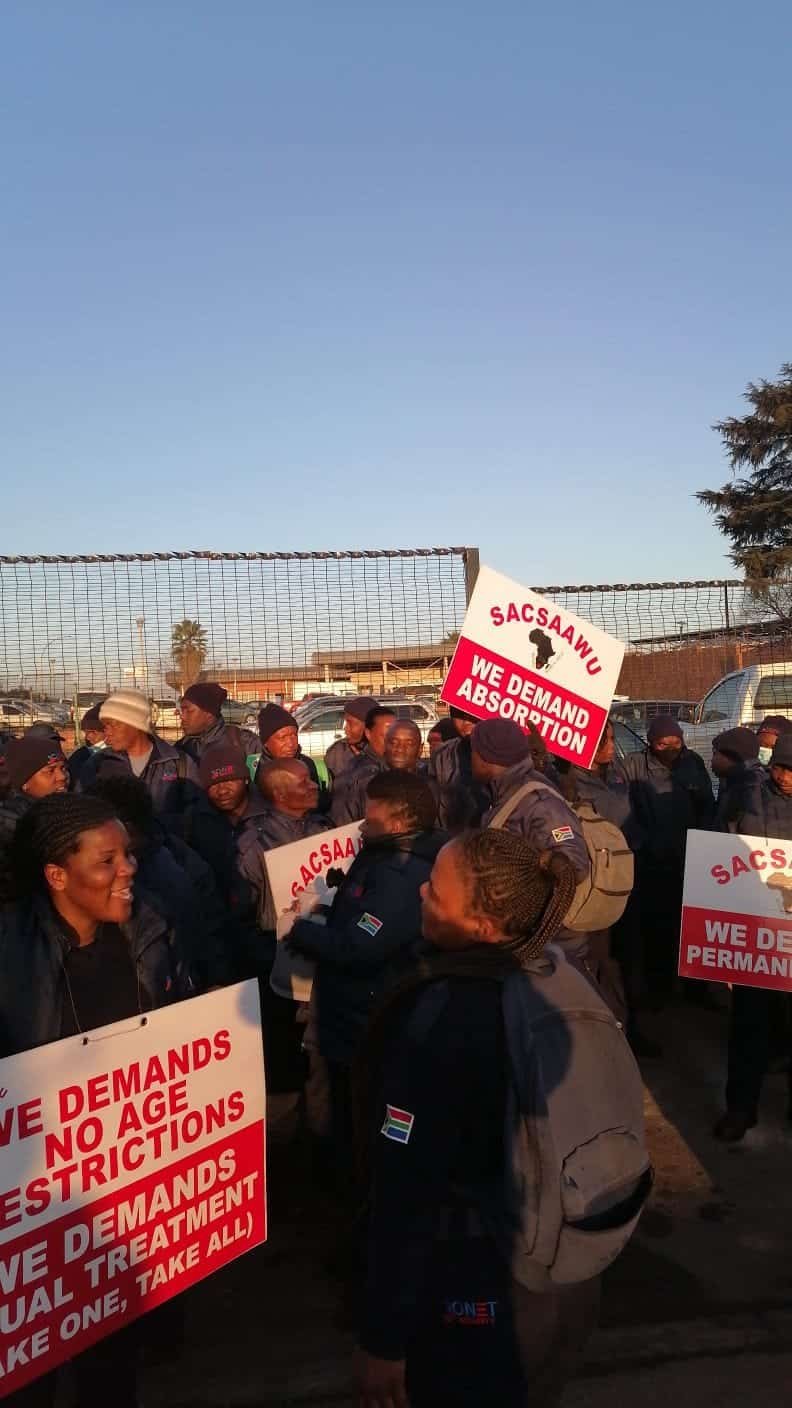
Security guards stationed at public hospitals across Gauteng have gone unpaid for weeks, sparking anger, protests, and accusations of gross mismanagement within the provincial Department of Health.
Dozens of guards contracted to facilities including Chris Hani Baragwanath, Charlotte Maxeke, Tembisa, and Steve Biko Academic hospitals say they have not received their salaries since early June—despite working full shifts under dangerous conditions.
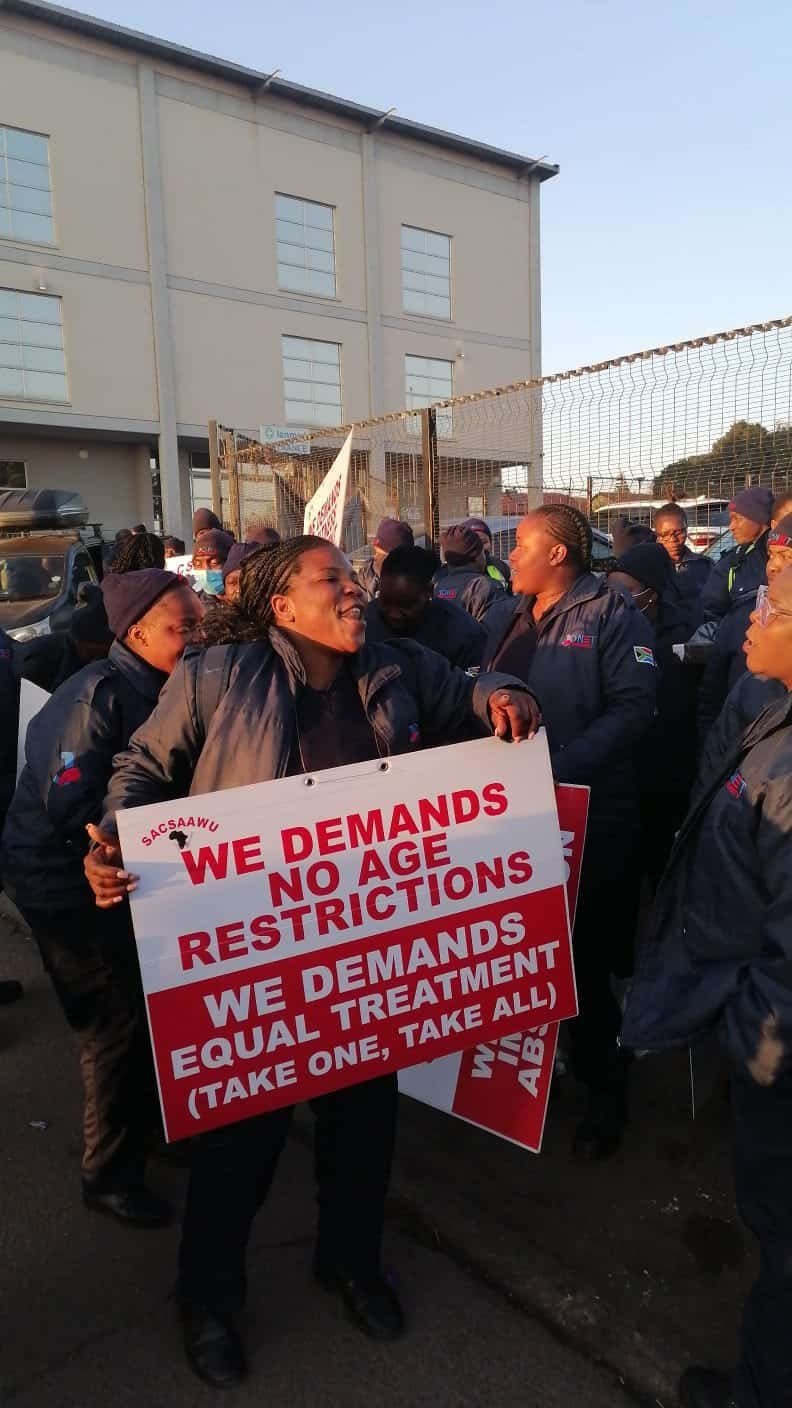
The workers, many of whom are employed through private companies contracted by the department, say they have been forced to borrow money for food and transport. Some are threatening to down tools if payments are not processed by the end of the month.
“This is exploitation,” said a guard based at Thelle Mogoerane Hospital in Vosloorus. “We protect doctors, patients, and expensive medical equipment—yet we can’t even buy bread or send our children to school.”
Guards told African Times that repeated attempts to engage with their supervisors and the companies they work for have yielded no results. Many blame the provincial government for failing to ensure that contractors pay workers on time.
Unions Demand Urgent Intervention
The Association of Private Security Owners of South Africa (TAPSOSA), which represents over 2,000 historically marginalised private security companies, has condemned the situation, calling it a reflection of “systemic neglect” of essential frontline workers.
“This non-payment of hospital security guards is not only immoral—it is illegal,” said Moafrika Mabokela, TAPSOSA General Secretary. “These workers perform their duties at great risk to their lives in hospitals where crime, theft, and violence are common.”
Mabokela accused the Gauteng Department of Health of failing to monitor its contracted service providers and urged Health MEC Nomantu Nkomo-Ralehoko to intervene as a matter of urgency.
“The department has a duty to ensure that companies it appoints fulfil their contractual obligations. It cannot wash its hands while guards are starving,” he said.
TAPSOSA has called for a full investigation into all companies currently contracted to provide security at Gauteng health facilities.
The union says many operate without valid Private Security Industry Regulatory Authority (PSIRA) accreditation and underpay their staff below sectoral wage standards.
Numerous TAPSOSA members, contracted to secure public healthcare facilities across the province, have reported not receiving purchase orders or payments for services rendered—some outstanding for over 24 months—amounting to more than R200 million in unpaid invoices.
“Despite repeated appeals to departmental officials and procurement units, there has been no decisive action to address or resolve the matter. The consequences of this failure are now being felt most acutely by frontline security employees, many of whom have gone unpaid for extended periods,” said Mabokela.
“This has resulted in labour unrest, with legitimate wage disputes arising from a breakdown not of their own making,” he added.
DA Slams ‘Rotten’ Tender System
The Democratic Alliance (DA) in Gauteng has echoed TAPSOSA’s concerns, linking the payment delays to broader issues of corruption, weak oversight, and secrecy in the province’s procurement system.
“This is yet another consequence of the ANC’s secretive and irregular tender system,” said Mike Moriarty, DA Gauteng Chief Whip. “They award tenders to dodgy companies with political connections, then act surprised when workers don’t get paid.”
The DA has demanded the release of the names of all security service providers contracted in the past 18 months and their compliance status with labour, tax, and regulatory requirements.
Moriarty said the current crisis follows revelations that Triotic, a company linked to a senior Tshwane politician, was awarded a province-wide hospital security contract despite reportedly being non-tax-compliant.
“It’s clear that political patronage is being prioritised over service delivery. Workers are suffering because the system is rotten to the core,” he said.

Department Silent Amid Mounting Pressure
Despite growing public pressure, the Gauteng Department of Health has not issued a formal response to the allegations. Officials referred African Times to send questions via email, but days later, the department had yet to provide any meaningful response or clarity.
Insiders within the department, speaking on condition of anonymity, said payment backlogs and poor contract oversight were partly to blame.
“There’s confusion about which service providers were formally approved, and some invoices were not processed correctly,” said one senior official.
The insider admitted that some companies had been operating on expired contracts or letters of appointment without proper vetting.
“This is the fallout of poor planning and weak contract management,” the official said.
Guards Threaten Strike Action
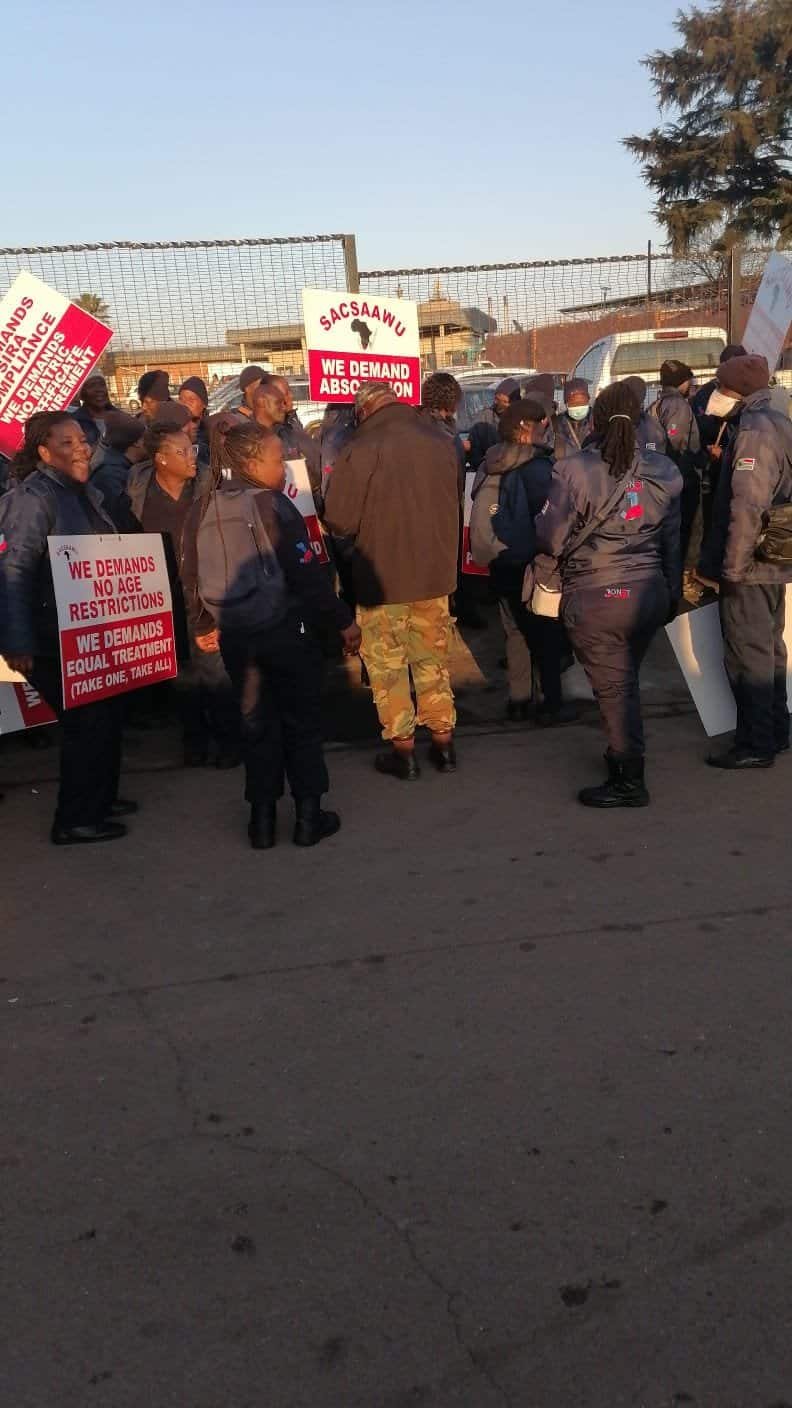
In the absence of payment or clear communication from either the contractors or the department, security guards are now threatening to walk off the job.
“We are tired of empty promises. If we are not paid by the end of the month, we will stop working,” said a security guard stationed at Leratong Hospital. “No one cares about us until something goes wrong.”
Hospital staff have expressed concern over the possible impact of a security strike. A nurse at Charlotte Maxeke Hospital said guards play a vital role in managing patient access, deterring theft, and ensuring staff safety during night shifts.
“If they leave, we’ll be exposed. There’ve already been cases of copper theft and threats from patients’ relatives,” she said.
Civil Society Calls for Systemic Reform
Civil society organisations say the crisis reveals deeper dysfunction in Gauteng’s public health administration.
“This is not just about non-payment—it’s about a procurement system that prioritises patronage over performance,” said Nomzamo Dhlamini, a governance researcher at Open Procurement SA.
Dhlamini said departments must be held accountable for the human consequences of awarding contracts to unfit service providers.
“When guards aren’t paid, it’s not just labour rights being violated—it’s the safety of hospitals and patients that is at risk,” she said.
Calls for Parliamentary Inquiry
The DA has called for an urgent debate in the Gauteng Provincial Legislature to address the crisis. Meanwhile, TAPSOSA is lobbying the national Department of Labour and Employment to launch inspections at all affected hospitals.
With security personnel unpaid, morale at rock bottom, and silence from those in charge, the provincial government faces growing calls to fix a system that is once again failing those who are supposed to protect it.