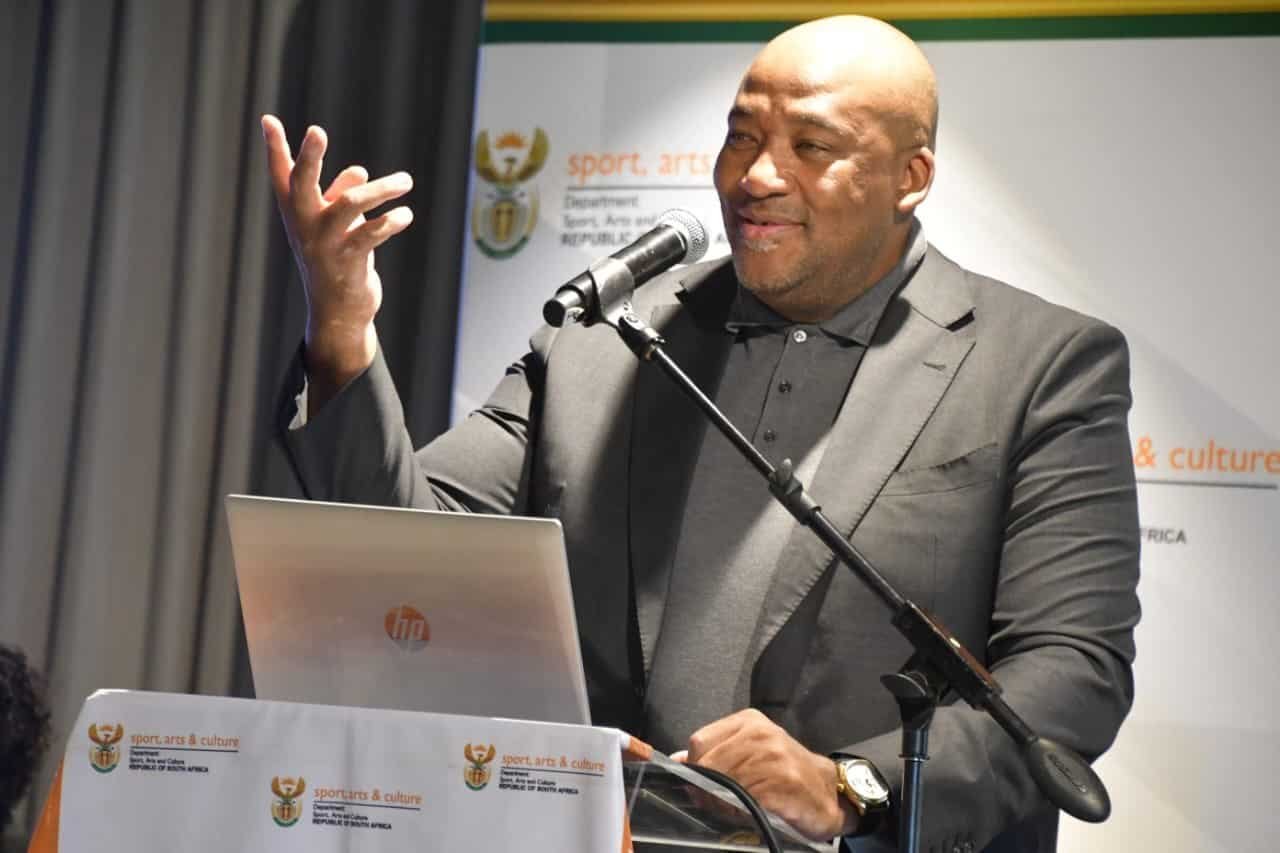
Patriotic Alliance leader and Sports, Arts and Culture Minister Gayton McKenzie is refusing to back down amid growing calls for his dismissal over resurfaced tweets containing racial slurs, defiantly defending himself on social media platform X despite mounting political and public outrage.
On Tuesday, McKenzie posted several of his own decade-old tweets, insisting they prove he is not racist. Among them was one exchange in which he wrote: “The dumbest thing I have ever heard!!!! @QtheDJ: @G_XCON nothing wrong with racism as long as it is not imposed on one.”
Alongside the old posts, McKenzie told his 400,000 followers: “This is what I tweeted 10–15 years ago about racism. I’m done explaining.”
His approach has been labelled “tone-deaf” and “reckless” by critics, who accuse him of inflaming tensions rather than showing remorse. The minister’s strategy – continuing to argue his case online – has earned him the label of “keyboard warrior” from detractors, and even some supporters have warned it is backfiring.
Popular X commentator ChrisExcel advised: “You need to fire your PR team Lord Gayton. They failed you big time. In moments like these you go offline… let the people talk. When the dust settles, you come back and say, ‘I bought the account, I was not on social before 2022.’ That’s it – you win, not this!”
Another user, Kwena Molekwa, was more blunt: “We don’t care if they were yesterday or today – they are racist remarks. You should account for them. Racists don’t know when to stop. We have a strong precedent like with Renaldo Gouws.”
Molekwa was referring to the Democratic Alliance’s firing of former councillor Renaldo Gouws after a public outcry and condemnation from the South African Human Rights Commission (SAHRC) over his own racist comments online.
In McKenzie’s case, the SAHRC has been notably silent, despite reports of formal complaints. African Times approached the commission to confirm whether it had received grievances about the minister’s tweets, SAHRC said it was finalising a media statement, at the time of publication.
The ANC said it was “deeply concerned” by the allegations and urged the minister to publicly clarify his position. “Leaders must be exemplary in speech and conduct, both past and present. This is not the time for defensiveness but for accountability,” an ANC NEC member told African Times.
The EFF demanded McKenzie’s immediate removal, accusing him of “clinging to office instead of confronting his own bigotry.” A party statement read: “The minister’s online defence only deepens the injury to millions of black South Africans who bear the scars of racism. President Ramaphosa must act decisively.”
ActionSA joined the calls for him to step down, warning that double standards on racism undermine public trust. “We have seen swift action in other cases – why is this different?” spokesperson Lerato Ngobeni said.
The uMkhonto weSizwe (MK) Party, while preoccupied with its own fight against alleged ANC patronage in SOE board appointments, nevertheless condemned McKenzie’s comments as “incompatible with public service.” An MK statement said: “The struggle against racism is not a PR exercise – it requires leaders to show humility and responsibility.”
The African Transformation Movement (ATM) went further, announcing it would write to the President to have McKenzie removed. ATM leader Vuyo Zungula told African Times: “This is not about politics. It is about values. If the DA can fire someone for racism, why should McKenzie be treated differently?”
The uproar has reignited debate about how South Africa deals with racism in politics and public life. Many South Africans point to a pattern where lower-profile figures face swift punishment, while politically connected leaders survive similar scandals.
“Renaldo Gouws was out within days. Penny Sparrow was prosecuted. But with ministers, there’s always a long wait for ‘processes’,” said Soweto resident Lindiwe Mokoena. “It feels like there are two sets of rules.”
In the corporate world, several executives have lost their jobs over racist remarks or conduct – from the infamous “monkey” WhatsApp messages at a KwaZulu-Natal estate to a Cape Town property mogul’s derogatory outburst caught on camera. Civil rights activists argue that political office should have an even higher standard.
Despite the backlash, McKenzie retains vocal defenders. Some supporters say his old tweets have been taken out of context or were attempts at irony. Others argue that his record as a politician – including projects in impoverished communities – shows he cannot be a racist.
“The man has employed thousands of black South Africans, rebuilt sports facilities, and spoken out against white monopoly capital. This is a witch-hunt,” said PA councillor Ashley Sauls.
McKenzie himself appears determined to weather the storm. In another tweet on Monday night, he wrote: “I’ve faced worse. I’m here to serve my country, not to please Twitter. I will not resign.”
President Ramaphosa has so far not commented directly, but insiders say he faces a political dilemma. Removing McKenzie could upset coalition dynamics in several municipalities where the Patriotic Alliance is a crucial partner. Keeping him, however, risks alienating voters who expect consistency in addressing racism.
Political analyst Sandile Swana said: “This is as much a test for the Presidency as it is for McKenzie. If the ANC wants to show moral leadership, they cannot be selective. But politics often trumps principle, especially in a coalition era.”
As the controversy grows, all eyes are on whether formal action – from the Presidency, Parliament, or the SAHRC – will follow. Until then, McKenzie shows no sign of logging off.