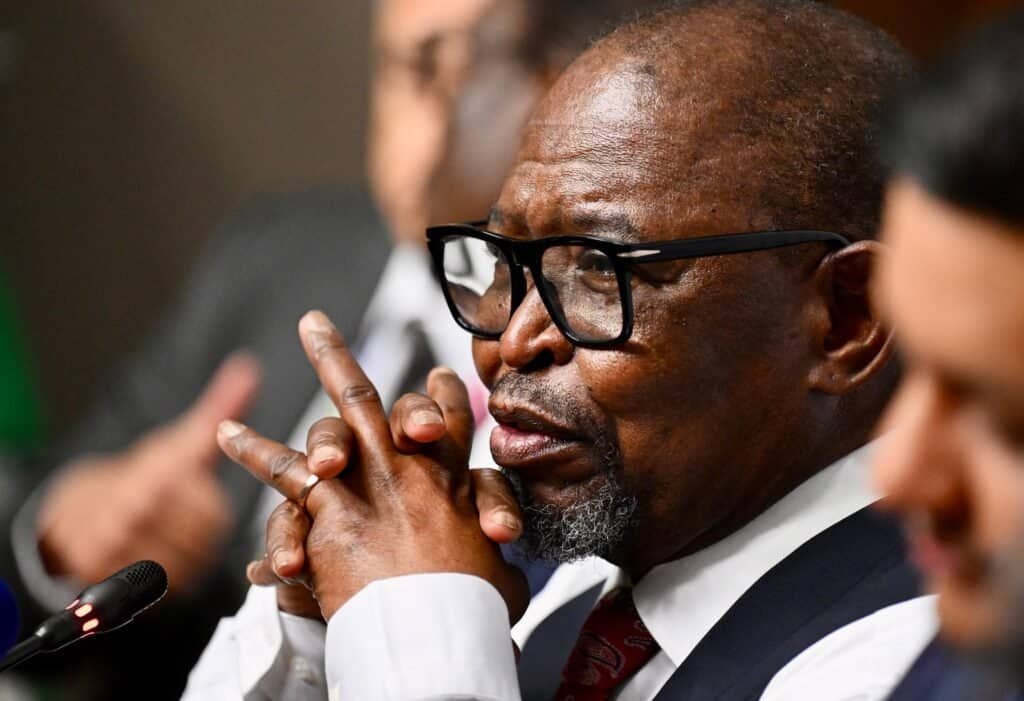
Finance Minister Enoch Godongwana has announced R10 billion in temporary fuel levy relief to cushion South African households and businesses against soaring fuel prices, while committing additional funding to strengthen policing, the judiciary and the country’s response to crime and corruption.
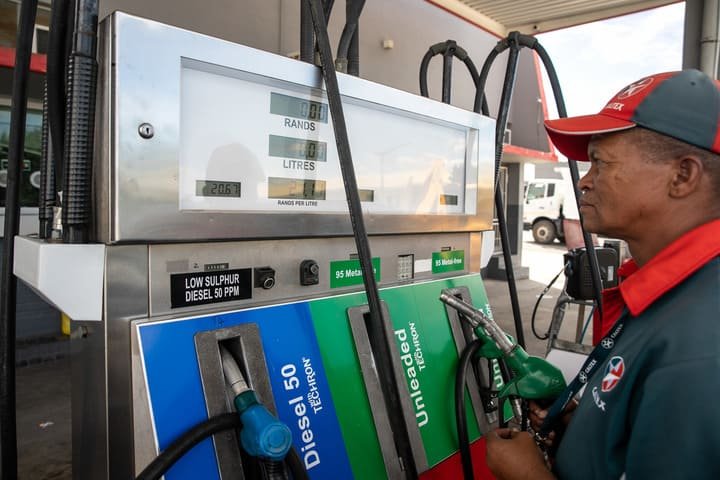
Presenting the Medium-Term Budget Policy Statement (MTBPS) in Parliament on Wednesday, Godongwana announced that the general fuel levy would be reduced by R1.50 per litre for petrol and R3 per litre for diesel from November 4 to December 1.
Smaller reductions of R1 per litre for petrol and R1.50 for diesel will then apply until January 5, 2027.
The intervention comes as international oil prices rise amid geopolitical tensions and disruptions to global supply, putting additional pressure on an economy already grappling with sluggish growth and a high cost of living.
National Treasury said the relief would cost the fiscus R10 billion in foregone revenue. The money will be funded by returning R10 billion previously transferred to the Central Energy Fund to the National Revenue Fund.
Godongwana said the intervention was possible because the government had rebuilt some of its financial buffers through tighter fiscal management and improved revenue collection.
“This intervention will help ease cost of living pressures without compromising the sustainability of the budget,” he told Parliament.
However, the levy reduction does not guarantee an equivalent reduction in pump prices. International oil prices, the rand-dollar exchange rate and other components of the fuel price will continue to influence what motorists pay.
Unions welcome intervention
The Motor Industry Staff Association (MISA) welcomed the announcement, describing it as a victory for workers and their families and evidence of the influence of organised labour.
MISA said it was the first trade union to publicly demand fuel levy relief as rising fuel prices placed increasing pressure on working households.
The union said it had warned in September that transport and electricity costs were consuming an unsustainable share of workers’ incomes, leaving some families struggling to meet basic expenses.
According to MISA, its calls intensified earlier this month when petrol prices exceeded R30 a litre.
Martlé Keyter, MISA’s chief executive officer for operations, said workers had reported being forced to choose between travelling to work and buying food for their families.
“Our members told us they were being forced to choose between getting to work and putting food on the table. MISA amplified that message directly to decision-makers and refused to let workers’ voices be ignored,” Keyter said.
She said the announcement demonstrated the importance of organised labour in influencing government decisions, although workers remained under severe financial pressure.
MISA said lower diesel costs could help reduce transport and logistics expenses, easing some of the pressure on food and other essential goods.
However, the union argued that the relief did not go far enough because petrol users had received only part of the relief it had called for, while households dependent on paraffin remained excluded.
It urged government to extend the measures if fuel prices remained high, introduce targeted assistance for paraffin-dependent households and engage organised labour through the National Economic Development and Labour Council (NEDLAC) on longer-term solutions.
Economic pressures remain
The announcement offers temporary breathing room to households and businesses whose expenses have risen alongside fuel prices.
Diesel costs are particularly significant for freight operators, agricultural producers and other businesses that rely on road transport. Higher operating costs can feed through to food prices, public transport fares and the cost of delivering goods.
However, the relief is time-limited, leaving questions about how households and businesses will cope if international oil prices remain elevated after January.
Godongwana revised South Africa’s economic growth forecast for 2026 downwards to 1.2%, from the 1.6% projected in February. Growth is expected to reach 1.6% in 2027 and 2% by 2029.
The minister attributed the weaker outlook partly to the deteriorating global environment, including conflict in the Middle East and its impact on oil supplies and borrowing costs.
Despite these pressures, gross tax revenue for 2026/27 has been revised upwards by R17.1 billion compared with the February estimate, supported by stronger collections from corporate tax, dividends tax and value-added tax.
Billions directed towards fighting crime
Beyond the fuel intervention, the MTBPS provides additional resources for policing, the judiciary and measures to combat gender-based violence and femicide.
Godongwana announced that R810 million would be spent next year on recapitalising the South African Police Service vehicle fleet, while an additional R2.2 billion over the medium term would go towards enhancing the independence of the judiciary.
The government has also allocated R823 million to the South African National Defence Force for deployments supporting police operations against gang-related crime and illegal mining.
A further R516 million has been provided for the Madlanga, Khampepe and Nkabinde commissions of inquiry.
The allocations come amid continuing public concern about violent crime, organised criminal networks, corruption and the capacity of law enforcement agencies to investigate and prosecute complex cases.
Godongwana said crime and corruption weakened governance, undermined economic activity and deprived the state of money intended for service delivery.
The government is also expanding its response to gender-based violence and femicide following measures announced by President Cyril Ramaphosa in September.
Treasury has allocated R3.8 billion to employ more than 3,500 social workers to strengthen prevention and responses to violence against women.
Another R186 million will be directed towards forensic and investigative capacity.
The number of sexual offences courts is expected to increase from 55 to 101, while the number of Thuthuzela Care Centres providing support to rape survivors will rise from 72 to 80 by the 2028/29 financial year.
An additional R157.4 million has been allocated to the Department of Women, Youth and Persons with Disabilities to improve national coordination and oversight of the government’s response to gender-based violence and femicide.

ActionSA says fuel relief falls short
ActionSA welcomed aspects of the government’s improved revenue collection but criticised the temporary fuel levy reduction as insufficient to address the broader cost-of-living crisis.
In a statement issued on Wednesday, ActionSA MP Alan Beesley said the relief did not go far enough to ease pressure on households and businesses affected by high fuel prices.
The party argued that rising transport costs affect virtually every part of the economy, pushing up the prices of food, basic goods and services.
ActionSA also questioned the country’s preparedness for international energy shocks, arguing that government had failed to develop a credible strategy to strengthen energy security.
However, the party welcomed the additional R4.4 billion it said had been allocated to the South African Revenue Service, describing stronger tax collection as important in closing the tax gap and tackling illicit trade.
ActionSA called for more decisive measures to combat the illicit economy and a clearer plan to stimulate growth and create jobs.
Free SA calls for economic freedom
Free SA welcomed several reforms announced in the MTBPS, including the proposed fiscal anchor and Treasury’s decision to reconsider its approach to capital flow management regulations.
The organisation also welcomed the government’s acknowledgement that excessive municipal administrative spending was leaving insufficient resources for infrastructure and maintenance.
However, it said the growth outlook remained inadequate for a country facing high unemployment and widespread poverty.
Free SA called for deregulation, greater competition, increased private investment and stronger protection of property rights, arguing that government should focus on creating conditions in which businesses can grow.
SAFTU’s Zwelinzima Vavi says continued budget cuts are deepening poverty. The union is calling for urgent action to address unemployment and poverty.
Implementation will be key
The MTBPS attempts to balance immediate financial pressures with the government’s longer-term commitment to fiscal stability.
For workers, the fuel levy reduction offers temporary relief, but MISA’s response highlights concerns about what happens when the measures expire. For communities affected by crime, the challenge is whether additional funding will produce better investigations, stronger prosecutions and safer neighbourhoods.
Godongwana’s message is that improved fiscal management has created room for targeted intervention without abandoning budget discipline.
Whether the relief proves sufficient, and whether the crime-fighting allocations translate into measurable improvements, will depend on implementation and accountability.