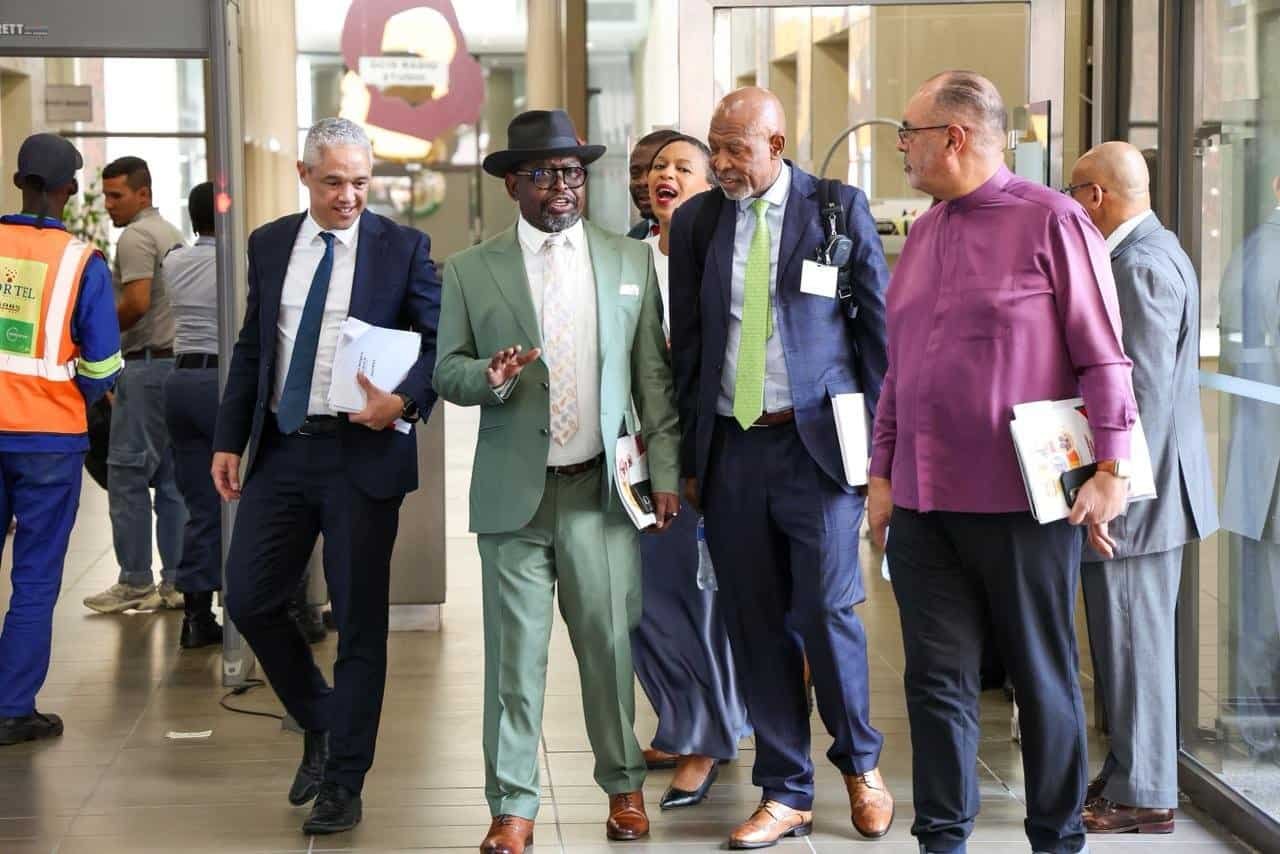
Finance Minister Enoch Godongwana on Wednesday delivered a Medium-Term Budget Policy Statement (MTBPS), calling for collective discipline to stabilise public finances while ensuring the protection of South Africa’s most vulnerable citizens.
The Minister said that after years of fiscal strain, South Africa’s debt will finally stabilise at 77.9% of GDP this year and begin to decline over the medium term. The deficit, he said, was smaller than forecast earlier in the year, showing progress in government’s commitment to restore credibility to its financial management.
“The budget is about restoring trust, protecting the vulnerable and creating a foundation for sustained growth,” Godongwana told Parliament.
He said revenue collection had improved significantly due to better performance by the South African Revenue Service (SARS), whose net tax revenue estimate for 2025 was revised from R1.985 trillion to R2.005 trillion. This was driven by stronger compliance and enforcement, as SARS recovers from a decade of institutional decline.
The Minister announced that no new major taxes would be introduced, but confirmed moderate increases in excise duties on alcohol and tobacco, commonly known as sin taxes, in line with inflation. He said government’s focus remains on expanding the tax base and tackling illicit trade rather than burdening ordinary taxpayers.
To cushion the impact of the rising cost of living, Godongwana announced adjustments to key social grants. The old-age grant rises to R2,270 for recipients aged between 60 and 74, and to R2,290 for those aged 75 and older. The child support grant increases to R540, while the disability grant is aligned with the old-age grant.
He said social spending would remain a cornerstone of government policy, noting that almost 19 million South Africans rely on grants. Work is ongoing, he added, to design a permanent form of income support to succeed the Social Relief of Distress (SRD) grant.
Godongwana said government would continue investing in infrastructure, energy, and public services. An additional R15.8 billion has been allocated to infrastructure projects, while a R2 billion Credit Guarantee Vehicle will support expansion of electricity transmission infrastructure, aimed at unlocking private investment in the national grid.
The Minister also confirmed a new inflation targeting framework of 3% with a 1% tolerance band, saying it would strengthen coordination between fiscal and monetary policy, reduce inflation expectations, and create room for lower interest rates over time.
However, he warned that slow growth remains the biggest threat to social development, with GDP expected to grow only 1.2% this year and 1.8% in three years. “The task before us is to maintain stability while reigniting growth that is inclusive and sustainable,” he said.
Reactions from political parties and the private sector were mixed, with praise for fiscal restraint but sharp criticism over slow reform and continued hardship for the poor.
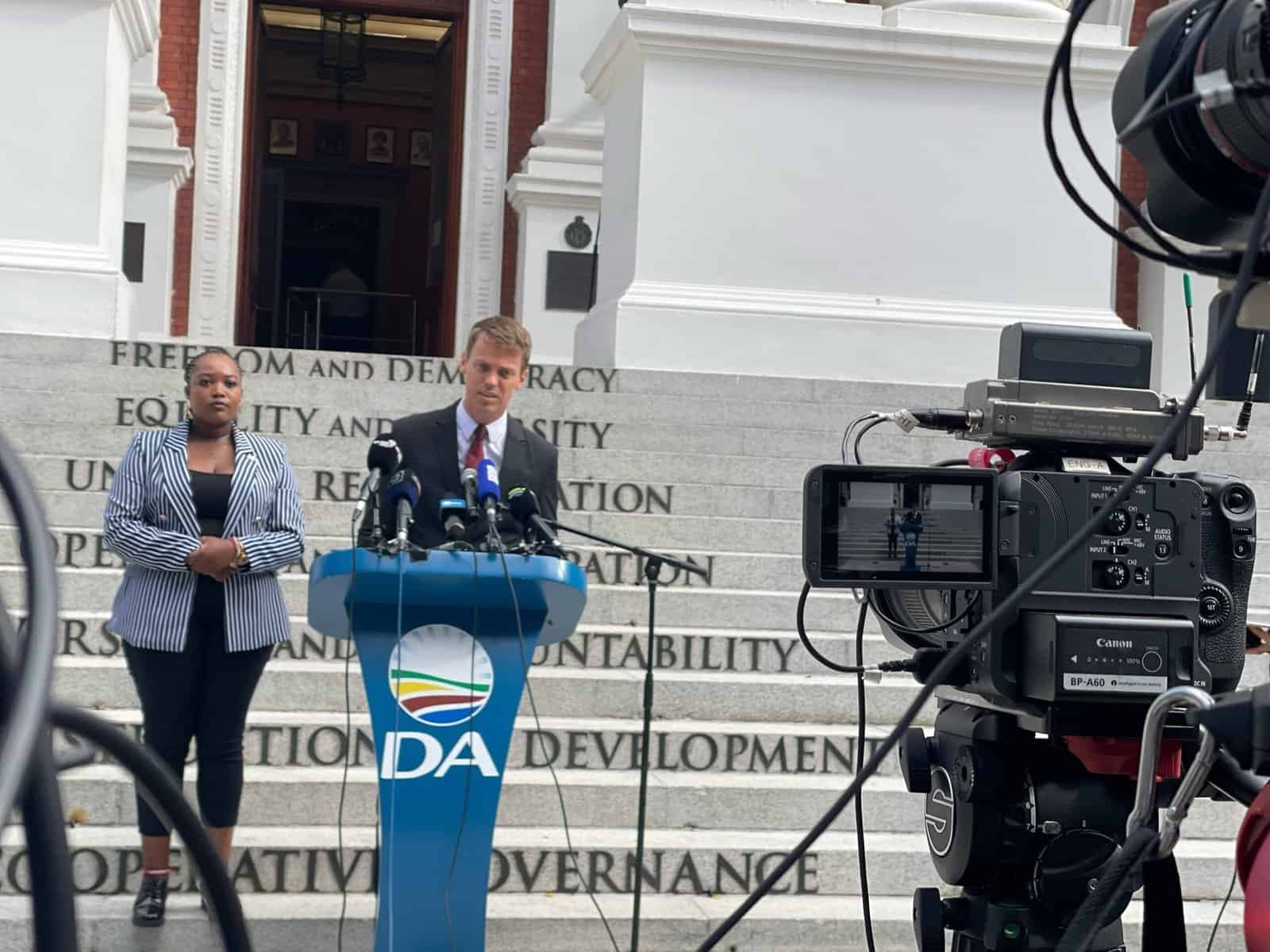
Democratic Alliance (DA) spokesperson on finance, Dr Mark Burke, said the stabilisation of debt was a major breakthrough. “After 15 years of reckless borrowing, this government, with the DA inside, is finally committed to stopping the debt spiral,” he said. Burke praised the start of a spending review process expected to save R6.7 billion and welcomed progress in ghost worker audits that flagged nearly 9,000 cases.
He said the DA would continue pushing for faster reforms at Eskom and Transnet to boost growth and job creation. “While this is a step in the right direction, much more must be done to grow the economy,” Burke added.
GOOD Party secretary-general Brett Herron said that although debt stabilisation was positive, the mini budget failed to address South Africa’s deep inequality. “The economy is no longer in free fall, but growth of 1.2% is far too low to address poverty and unemployment,” he said. Herron criticised the absence of a Basic Income Grant and a national food support programme, saying the poor had been left without meaningful relief.
ActionSA Member of Parliament Alan Beesley welcomed the additional R4 billion allocation to SARS, saying it vindicated the party’s call for a properly resourced revenue authority. “This is a victory for all South Africans who deserve a government that manages their money efficiently before reaching for higher taxes,” he said. Beesley, however, expressed concern about South Africa’s “homegrown stagnation,” citing contraction in construction, manufacturing, and transport.
RISE Mzansi leader Songezo Zibi said South Africa is “starting to turn the corner,” but warned that the economy needs to grow at between 4% and 6% to create sustainable jobs. “Reducing and stabilising debt will free up funds for investment, but low growth remains our biggest obstacle,” he said.

The Economic Freedom Fighters (EFF) took a harder stance, describing the mini budget as an extension of neoliberal policies that protect elite interests. EFF national spokesperson Sinawo Thambo said the government under President Cyril Ramaphosa “continues to serve the interests of the white capitalist establishment.” He said the budget confirmed the ruling coalition’s commitment to privatising key public assets in energy, ports, logistics, and municipal services.
“The policy statement fails to appreciate the deep economic crisis confronting the poor and working-class people of South Africa,” Thambo said. “Prices of electricity, transport, education, and basic goods remain excessively high, while household debt has reached unsustainable levels.”
He criticised the revised growth forecast of 1.2% as unrealistic and accused Treasury of “blindly applying austerity while the economy stagnates.” Thambo said the adoption of the new 3% inflation target was a “surrender of policy sovereignty to foreign financial interests.”
“The National Treasury has become the single greatest obstacle to transformation, jobs, and industrial development,” he said. “Something decisive must be done to restore the sovereignty of the state and rebuild the economy in the interests of the people.” said Thambo.
In the business sector, responses were largely supportive of the fiscal direction. The South African Photovoltaic Industry Association (SAPVIA) said the R2 billion Credit Guarantee Vehicle for transmission expansion would unlock private investment in renewable energy infrastructure.
“This is the kind of innovative finance mechanism we called for,” said SAPVIA technical and policy manager Sim Khuluse. “It gives investors confidence and supports South Africa’s energy transition.”
Cross-border payments firm Verto also welcomed the new macroeconomic framework, calling the 3% inflation target a “bold step toward long-term currency stability.” James Booth, the company’s head of revenue, said, “It strengthens South Africa’s position following its exit from the FATF grey list and creates room for sustainable growth.”
Economists said the mini budget reflects a government walking a tightrope between fiscal discipline and social demands. While debt stabilisation signals progress, the challenge remains to turn stability into inclusive growth that delivers jobs and reduces inequality.
As Godongwana concluded his speech, he appealed for unity and accountability. “Our duty is not only to balance the books,” he said, “but to build a state that works for all South Africans.”