The Department of Health has called for an urgent national response to a sharp decline in childhood immunisation coverage, warning that South Africa risks outbreaks of vaccine-preventable diseases that could reverse decades of public health gains.
Department spokesperson Foster Mohale said the decline in vaccination rates was placing hundreds of thousands of infants at risk of serious illness and death.
“The proportion of unvaccinated infants, children under one year receiving no vaccinations, has increased from 12.1% in 2017 to an alarming 36.3% between January and April 2026,” Mohale said.
“This has effectively tripled the number of completely unvaccinated children and left hundreds of thousands of infants at risk of life-threatening illnesses.”
The department said routine immunisation coverage had fallen severely across all 52 districts in the country, with first dose coverage among children under one year dropping from 87% in 2021 to 67% in 2025.
Coverage of the Hexavalent, or six-in-one, infant vaccine also declined from 87% to 60.5% during the same period.
Mohale said the country was now unlikely to reach the World Health Organization’s critical 90% coverage threshold unless urgent interventions were implemented.
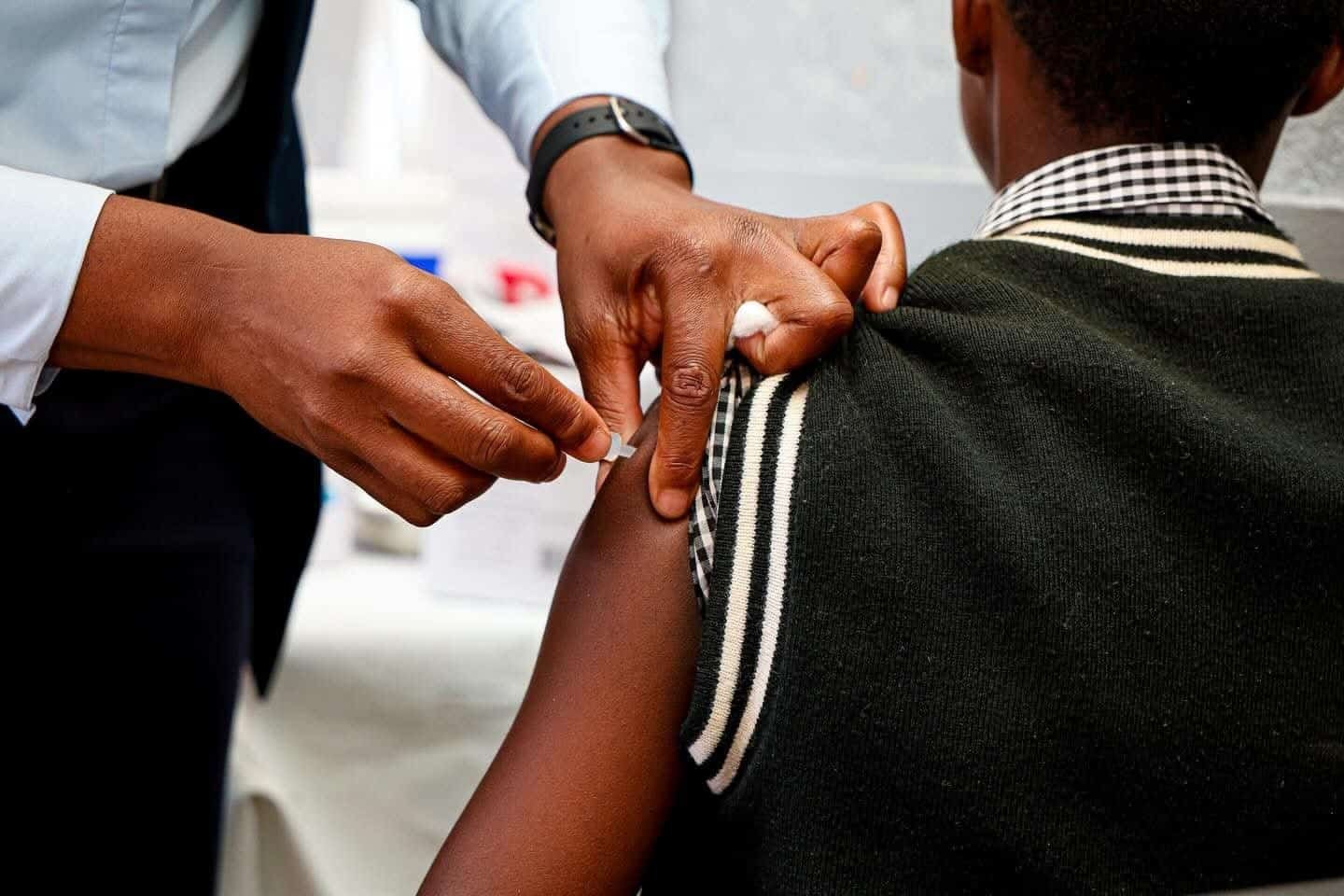
He urged parents and families to ensure that children who had missed vaccinations were taken to healthcare facilities and providers for immunisation.
The warning comes as South Africa is already experiencing outbreaks of vaccine-preventable diseases in several provinces.
Since January 2026, the country has recorded 3,462 laboratory-confirmed measles cases, with outbreaks reported in the Western Cape, Free State, KwaZulu-Natal, Northern Cape and other provinces.
Children aged between one and 14 years account for 70.9% of the reported measles cases.
The department said the majority of cases were directly linked to low immunisation coverage.
“The consequences of declining coverage include the resurgence of serious vaccine-preventable diseases, erosion of community herd immunity, and higher rates of long-term disability and death among infants,” Mohale said.
He said the threat was particularly serious because unvaccinated children could also endanger infants and immunocompromised people who could not be vaccinated.
The department has also raised concerns about polio after imported poliovirus strains were detected in wastewater in Cape Town.
South Africa has maintained its polio-free status since 2014.
Mohale said it was important that the country maintained protection against the disease despite the detection of imported strains.
“South Africa maintained a polio free status since 2014,” he said.
Sporadic cases of diphtheria, a serious bacterial infection of the nose and throat that can obstruct breathing, have also been detected, primarily in the Western Cape.
The department said the cases highlighted gaps in booster coverage and disease surveillance.
Pertussis, commonly known as whooping cough, has also been identified in several provinces, predominantly affecting infants under six months who are too young to be fully vaccinated.
“This pattern signals a failure of herd immunity to protect the most vulnerable,” Mohale said.
The country has also recorded nearly 400 rubella cases, mostly among children aged between one and 14 years in several parts of the country.
Rubella is particularly concerning because infection can pose serious risks to pregnant women and unborn babies through congenital rubella syndrome.
Mohale said the decline in routine immunisation had created a public health emergency that required coordinated action across government, healthcare services, communities and families.
“The decline in routine immunisation rates has created a public health emergency characterised by childhood disease outbreaks,” he said.
The department is prioritising an immediate national response, including catch-up vaccination campaigns targeting children who have missed doses and under-immunised groups across all districts.
Mohale said the government had secured adequate vaccine supplies and was maintaining cold chain infrastructure nationwide.
He said access to vaccines should therefore not prevent children from receiving the protection they needed.
“All vaccines used in South Africa are evaluated and registered by the South African Health Products Regulatory Authority, confirming their safety and effectiveness,” Mohale said.
The department has urged parents, caregivers and communities to take children for routine and catch-up vaccinations at their nearest healthcare facility or provider.
It has also appealed to South Africans to rely on official government platforms for accurate immunisation information and disregard unverified claims and misinformation circulating on social media.
Mohale said communities had an important role to play in reversing the decline in vaccination rates, particularly in areas where coverage was lowest.
“Addressing it requires coordinated action across all sectors of society, with particular emphasis on engaging families and communities where vaccination rates are lowest,” he said.
The department warned that the consequences of outbreaks could extend beyond the immediate health impact on children.
Children who become ill may miss extended periods of school, disrupting their education and early development. Families can also face financial pressure when parents are forced to stay home to care for sick children, potentially resulting in lost wages and employment instability.
Mohale said protecting children from vaccine-preventable diseases required a collective effort.
“Every child deserves protection, and safeguarding them is a collective responsibility,” he said.