Health Minister Dr Aaron Motsoaledi has held a high-level meeting with Operation Dudula leadership, warning them that their campaign to block undocumented foreign nationals from accessing public health facilities risks denying medical care to South Africans who lack official documents.
Operation Dudula began stationing its members at government clinics and hospitals, with activists claiming they were protecting overstretched resources from being drained by illegal migrants. The group’s members position themselves at facility entrances, questioning patients and demanding proof of South African citizenship before allowing them to proceed.
The move has drawn sharp criticism from human rights groups and health professionals, who have labelled it “xenophobic vigilantism.” Yet the group has also won praise from some South Africans who believe that scarce medicines and services should be reserved for citizens.
Speaking in an interview with SABC News this week, Dr Motsoaledi said he urged the Dudula leadership to reconsider their approach.
“I warned them that they might end up turning away South African citizens who simply don’t have proper documents,” he said. “In South Africa, 11% of our people – that’s about six million citizens – have no form of documentation whatsoever. They’re not illegal; they’re just not registered. I have personally met elderly South Africans, in their sixties, who have never had an ID.”
Motsoaledi cited the case of convicted rapist and murderer Thabo Bester, whose relatives were found to be undocumented despite being South African.
He also cautioned that denying treatment could have serious legal and humanitarian consequences.
“If we instruct clerks not to give anybody a file and they go out and die, we will be sued,” he said. “Imagine a pregnant woman refused treatment who then delivers a baby on the street – we know such cases have happened before, and the backlash would be severe. The route they are following is the law of the jungle.”
While Operation Dudula insists its campaign is about enforcing immigration laws, the Minister pointed to systemic border and documentation challenges.
“When I was in Home Affairs, I launched the Border Management Authority to strengthen border security. I also proposed repealing and rewriting our Citizenship, Identification, Refugee and Immigration Acts because they have serious flaws. But until the law changes, we cannot allow individuals to take enforcement into their own hands,” he said.
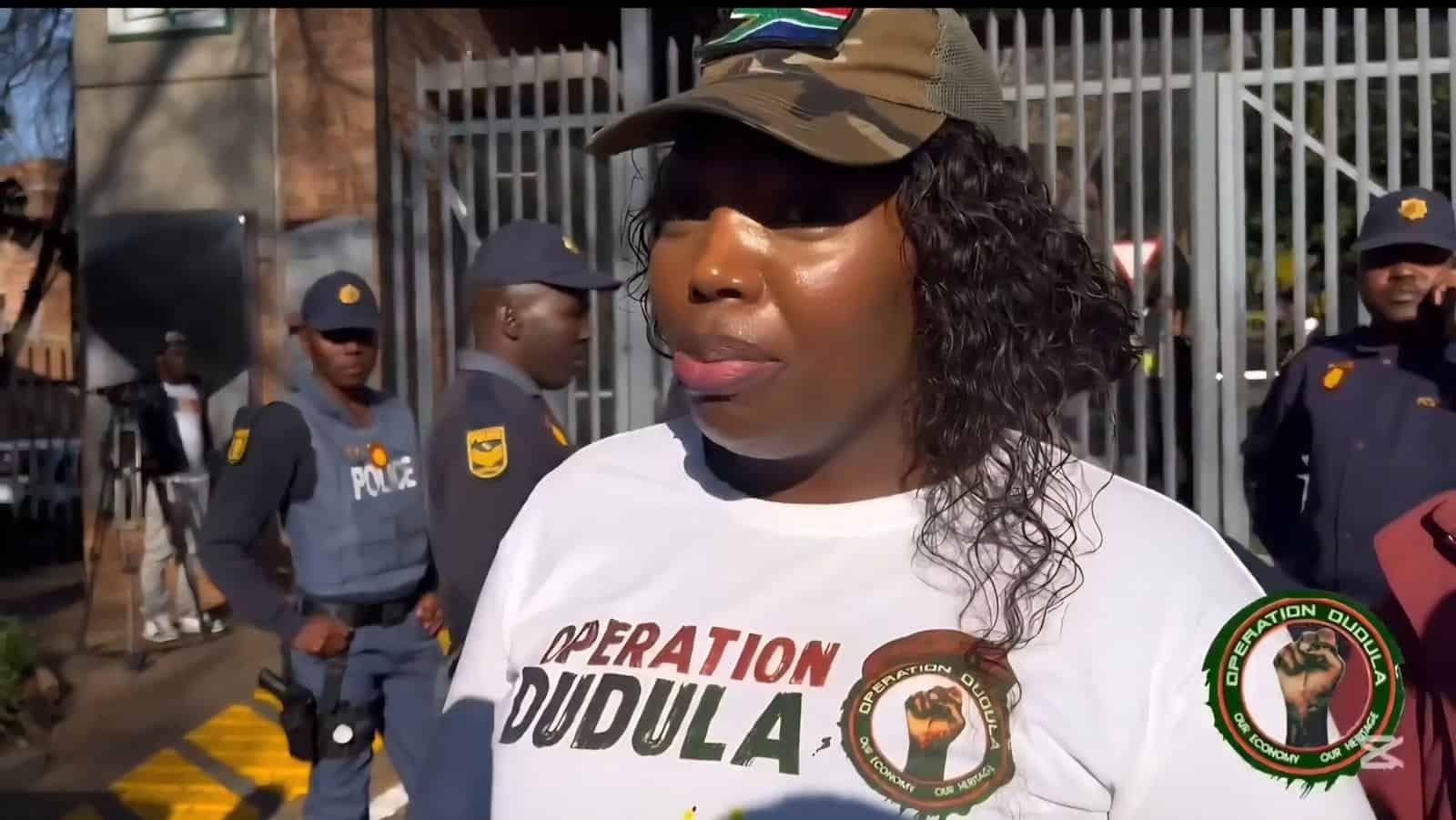
Operation Dudula president Zandile Dabula dismissed suggestions that the group’s actions were reckless.
“We are not chasing away genuine South Africans. We are protecting our health system from collapse,” Dabula told journalists. “Hospitals and clinics are overwhelmed. Citizens are forced to wait hours, sometimes days, for care. Since we started monitoring entrances, we’ve seen facilities less crowded and staff more efficient. That’s not a coincidence.”
She accused the government of failing to act decisively against illegal immigration.
“The Minister talks about laws and white papers, but our communities are suffering now. In other countries, you cannot walk into a hospital without insurance. Why is South Africa expected to carry the health costs of the entire region?”
On social media, the Dudula campaign remains a polarising topic.
“How can you be sued by an illegal individual? Please make it make sense,” wrote X user Musa Walter6.
Another user, LaPolymath, argued: “Warned them? Why not arrest the illegal immigrants instead? Government must stop protecting those draining our resources.”
But others fear the movement’s tactics could lead to abuses. Health rights advocates warn that medical staff could be pressured to act unlawfully, and that desperate patients may be turned away without due process.
In some areas where Dudula has maintained a presence, health workers acknowledge a drop in patient numbers, which they say has eased overcrowding. However, public health experts caution that this apparent efficiency gain may come at the cost of untreated illnesses spreading in communities.
“Turning people away from clinics – whether citizens or foreigners – increases the risk of communicable diseases going untreated. That can hurt everyone, regardless of nationality,” said a Gauteng-based infectious diseases specialist, who asked not to be named.
A Limpopo clinic nurse told African Times that Dudula members’ presence had “changed the atmosphere” at her workplace.
“We see fewer queues, yes, but also more tension. Some patients are scared to come back. We are here to treat the sick, not to police immigration,” she said.
South Africa’s public health system serves millions who cannot afford private care. Government statistics show the country spends billions annually on healthcare for all who seek treatment, regardless of nationality. Critics say this has made South Africa a destination for medical migration, particularly from neighbouring countries with underfunded health systems.
Some foreign nationals insist they have a right to access treatment while in South Africa. “Healthcare is a human right,” said Farai Moyo, a Zimbabwean living in Johannesburg. “When South Africans come to Zimbabwe, we also treat them.”
But Dudula and its supporters maintain that the system is being abused.
“We are not anti-foreigner,” said Lwana. “We are pro-South African.”
There are also reports that organisations have lodged complaints against Operation Dudula with the South African Human Rights Commission (SAHRC). When approached by African Times, the commission said the matter was still under internal discussion.
“We will have a discussion about it this morning,” SAHRC spokesperson Wisani Baloyi said.
For now, the standoff between the Health Minister’s warnings and Dudula’s defiance continues – a reflection of South Africa’s ongoing struggle to balance the right to healthcare with the political pressure to prioritise citizens