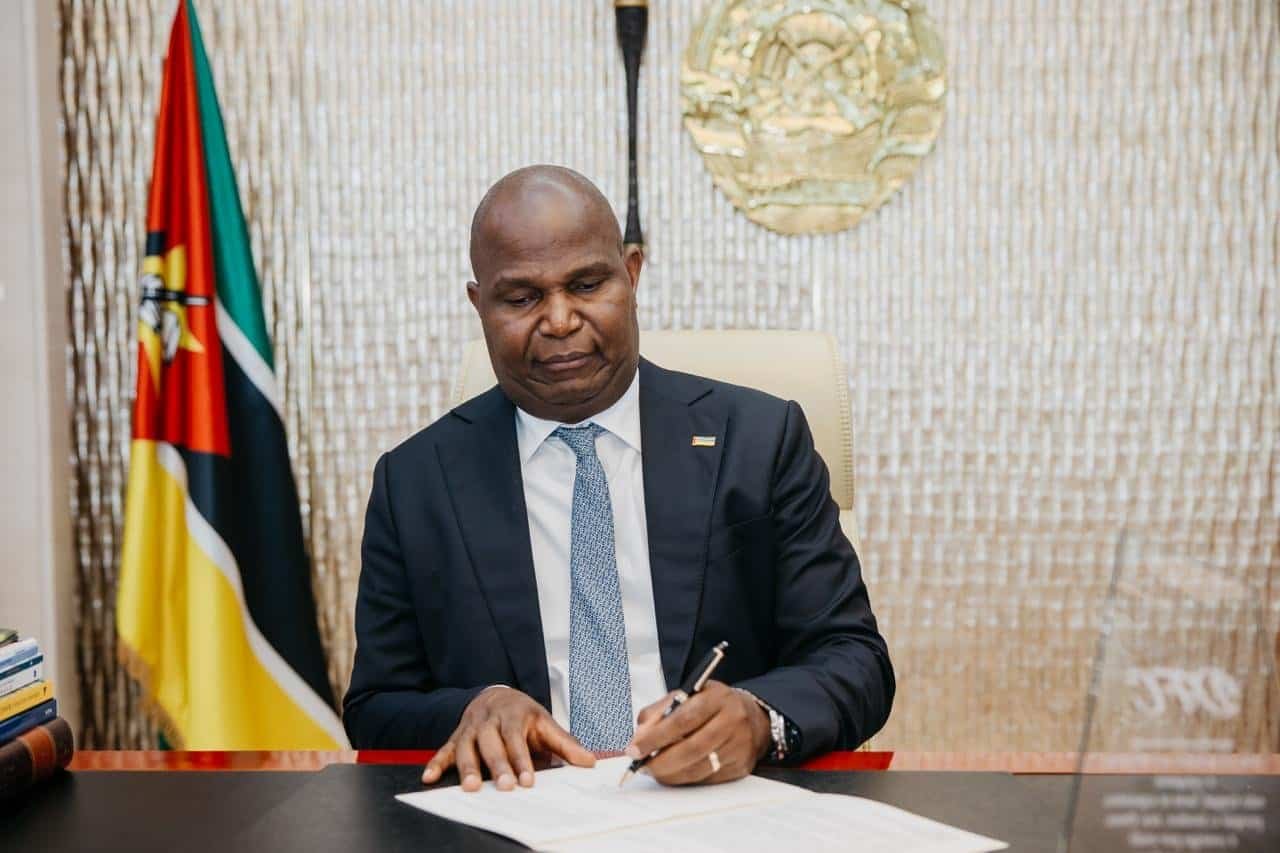
Mozambique has entered a new chapter in the regulation of its media sector after President Daniel Francisco Chapo officially promulgated a new package of communication laws aimed at reshaping the country’s broadcasting and press landscape.
The legislative package includes the new Social Communication Law, the Broadcasting Law, and the Law governing the Higher Council for Social Communication. According to the Presidency, the reforms seek to modernise Mozambique’s legal framework for the media sector in line with constitutional principles of freedom of expression, freedom of the press and the public’s right to information.
In an official statement, the Presidency said the laws were designed to strengthen democratic institutions while adapting the media environment to the “current challenges of the sector”. Authorities also argue that the legislation will contribute to national unity, civic education and the protection of state interests through a more professional and responsible media industry.
Yet, beyond the official optimism surrounding the reforms, the approval of the new laws has opened a heated debate within Mozambique’s media fraternity, with journalists, commentators and civil society organisations warning that some provisions could narrow the space for independent journalism and critical public debate.
Reform or Restriction?
Government officials have presented the legislative package as a necessary overhaul of outdated laws that no longer reflect the realities of a rapidly evolving communication ecosystem shaped by digital media, private broadcasters and online platforms.
Supporters of the reforms argue that the new laws introduce clearer standards for media operations, strengthen accountability mechanisms and promote professionalism in journalism. They say the country needs stronger regulatory tools to combat misinformation, unethical reporting and the spread of inflammatory content capable of undermining social stability.
However, critics insist that the process was far from consensual.
Several media practitioners and legal analysts contend that consultations surrounding the bills did not sufficiently accommodate concerns raised by independent media organisations and press freedom advocates. Some journalists’ unions and media watchdogs reportedly expressed reservations about clauses they believe could expand state influence over editorial activity and licensing processes.
For many observers, the language used by authorities — particularly references to the “defence of state interests”, “national unity” and “reinforcement of national identity” — has triggered concerns about how such concepts may be interpreted in practice.
“There is always a fine line between responsible regulation and political control,” noted one Maputo-based media analyst, who spoke in anonymity.
“The fear among many journalists is that vague provisions can eventually be used selectively against critical voices.”
A Sensitive Moment for the Media
The debate emerges at a delicate moment for Mozambique’s media environment. Over the past decade, the country has witnessed growing tension between authorities and sections of the independent press, particularly over coverage related to corruption, governance, security issues in Cabo Delgado and electoral disputes.
Media freedom advocates have frequently accused state institutions of creating an atmosphere of intimidation against investigative journalism, while authorities maintain that regulation is necessary to preserve public order and national cohesion.
The new legislation is therefore being interpreted by some commentators as part of a broader struggle over the future character of Mozambique’s public sphere: whether it evolves into a more pluralistic and open media environment, or one increasingly shaped by institutional oversight and political sensitivities.
Questions are also being raised over the powers and independence of the Higher Council for Social Communication, the body expected to play a central role in supervising the sector. Critics argue that without strong guarantees of institutional autonomy, the regulator risks being perceived as politically aligned rather than genuinely independent.
Digital Era Challenges
Mozambique’s government insists that reform was unavoidable in the face of profound technological changes transforming how information is produced and consumed. The rise of social media, online broadcasters and citizen journalism has created new regulatory dilemmas across Africa, forcing many governments to rethink media legislation.
But across the continent, similar reforms have often generated controversy, especially where governments have been accused of using regulatory language to silence dissent.
In Mozambique, the true impact of the new laws will likely depend less on the wording of the legislation itself and more on how the provisions are implemented in practice.
For now, the promulgation of the laws marks the beginning — not the end — of a wider national conversation about freedom of expression, media independence and the role of journalism in a democracy still navigating political transition and economic uncertainty.
As Mozambique seeks to modernise its communication sector, the country now faces a crucial test: whether it can balance the state’s desire for regulation and cohesion with the constitutional promise of a free and independent press.