Justice and Constitutional Development Director-General Advocate Doctor Mashabane has been suspended, along with Deputy Director-General for ICT Jabu Hlatshwayo, following administrative failures that have forced a delay in the start of the highly anticipated Madlanga Commission of Inquiry into Criminality, Politics and the State.
Justice Minister Mmamoloko Kubayi announced the suspensions at a press briefing in Pretoria on Tuesday afternoon, citing “serious lapses” that compromised the commission’s readiness.
The inquiry, chaired by Justice Mbuyiseli Madlanga, was meant to begin on 1 September but will now be postponed to an as-yet-undetermined date after the Department of Justice failed to procure critical infrastructure, including a secure digital platform for evidence submission.
Kubayi said the breakdown was “avoidable” and squarely blamed senior officials for negligence.
“On Friday, it was brought to my attention that the Madlanga Commission would not be able to start as envisaged on 1 September,” Kubayi explained. “I immediately convened meetings throughout the day, even cancelling my diary, in an attempt to find urgent solutions.
Unfortunately, it became clear that intervention at that stage would have required violating the Public Finance Management Act (PFMA) and supply chain rules. That was not an option.”
She said the commission had warned that without a secure ICT system to upload sensitive documents, it could not proceed with witness preparation.
“These are issues that could and should have been resolved earlier by the administrators of the department,” Kubayi said. “As a result, the commission has had no choice but to delay its hearings. This represents a serious lapse of duty.”
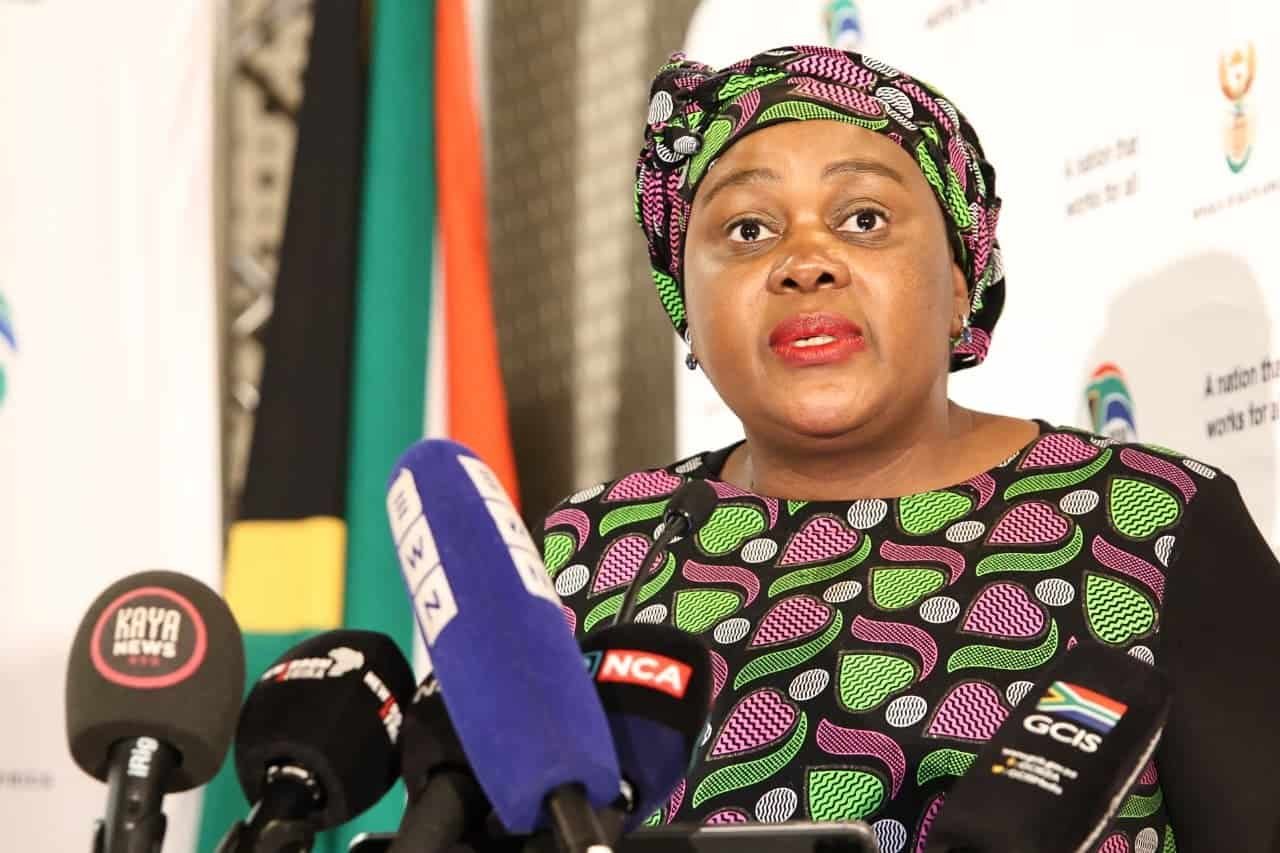
According to Kubayi, President Cyril Ramaphosa was briefed on the situation while returning from an overseas trip. The President delegated to Kubayi the authority to institute disciplinary proceedings against Mashabane, while Hlatshwayo was placed on immediate suspension last week. Both now face internal disciplinary hearings.
“We remain committed to ensuring that the Madlanga Commission begins its work without further delays, and to strengthening the department’s operational efficiency to prevent similar setbacks in the future,” Kubayi assured.
The suspensions sparked swift and heated responses across the political spectrum.
The uMkhonto weSizwe Party (MKP), which recently hauled President Ramaphosa to court over what it called the “unconstitutional appointment” of former Police Minister Senzo Mchunu to head the South African Police Service, said the suspensions were proof of “chaos in government.”
MKP spokesperson Nhlamulo Ndlela said:
“What we are witnessing is a state collapsing under the weight of its own incompetence. Now we have two police ministers illegally, and a commission that cannot even start on time because the Department of Justice cannot procure basic systems. This is unacceptable.”
The Economic Freedom Fighters (EFF) echoed the outrage, accusing Ramaphosa’s administration of shielding politicians while scapegoating officials.
EFF national spokesperson Leigh-Ann Mathys said: “The problem is not just administrative — it is political. Heads of departments take orders from ministers. The ANC cannot pretend this failure belongs to bureaucrats alone. The entire executive must account.”
The ANC, however, defended Kubayi’s action as a necessary step to restore credibility.
ANC national spokesperson Mahlengi
Bhengu-Motsiri said: “Minister Kubayi acted decisively and transparently. The ANC supports her interventions and reiterates our commitment to the integrity of the Madlanga Commission. This is about accountability, and no official is above the law.”
The Inkatha Freedom Party (IFP) struck a cautious tone, warning that suspensions alone would not solve deeper problems.
IFP Chief Whip Narend Singh said: “We are dealing with systemic governance failures that have crippled the justice system for years. While suspensions may be justified, what the public needs are permanent solutions and guarantees that commissions will no longer be delayed.”
The Democratic Alliance (DA) described the scandal as a “national embarrassment.”
DA justice spokesperson Glynnis Breytenbach said: “This is another example of the ANC government’s inability to run state institutions. The Madlanga Commission is critical to unearthing the nexus between politics, crime and the state, and yet it has been derailed before it even started. Minister Kubayi must answer fully in Parliament.”

Civil society organisations also weighed in, warning that the commission’s credibility could suffer.
Freedom Under Law, a legal watchdog, said the delays undermined public trust.
“For ordinary South Africans who are desperate for answers about political violence and corruption, this is a bitter blow. The government must act urgently to restore confidence,” the organisation said.
The Council for the Advancement of the South African Constitution (CASAC) added that technical failures should never be allowed to paralyse accountability mechanisms.
“The public has waited too long for this commission to get underway. Every delay chips away at its legitimacy,” CASAC said.
Despite the setback, Kubayi confirmed that Justice Madlanga and his team had begun “preparatory engagements” with witnesses. However, the commission will only announce a new start date once all systems are in place.
For now, the suspensions of Mashabane and Hlatshwayo mark one of the most dramatic accountability moves within the Department of Justice in recent years — but also expose how fragile South Africa’s justice architecture remains.