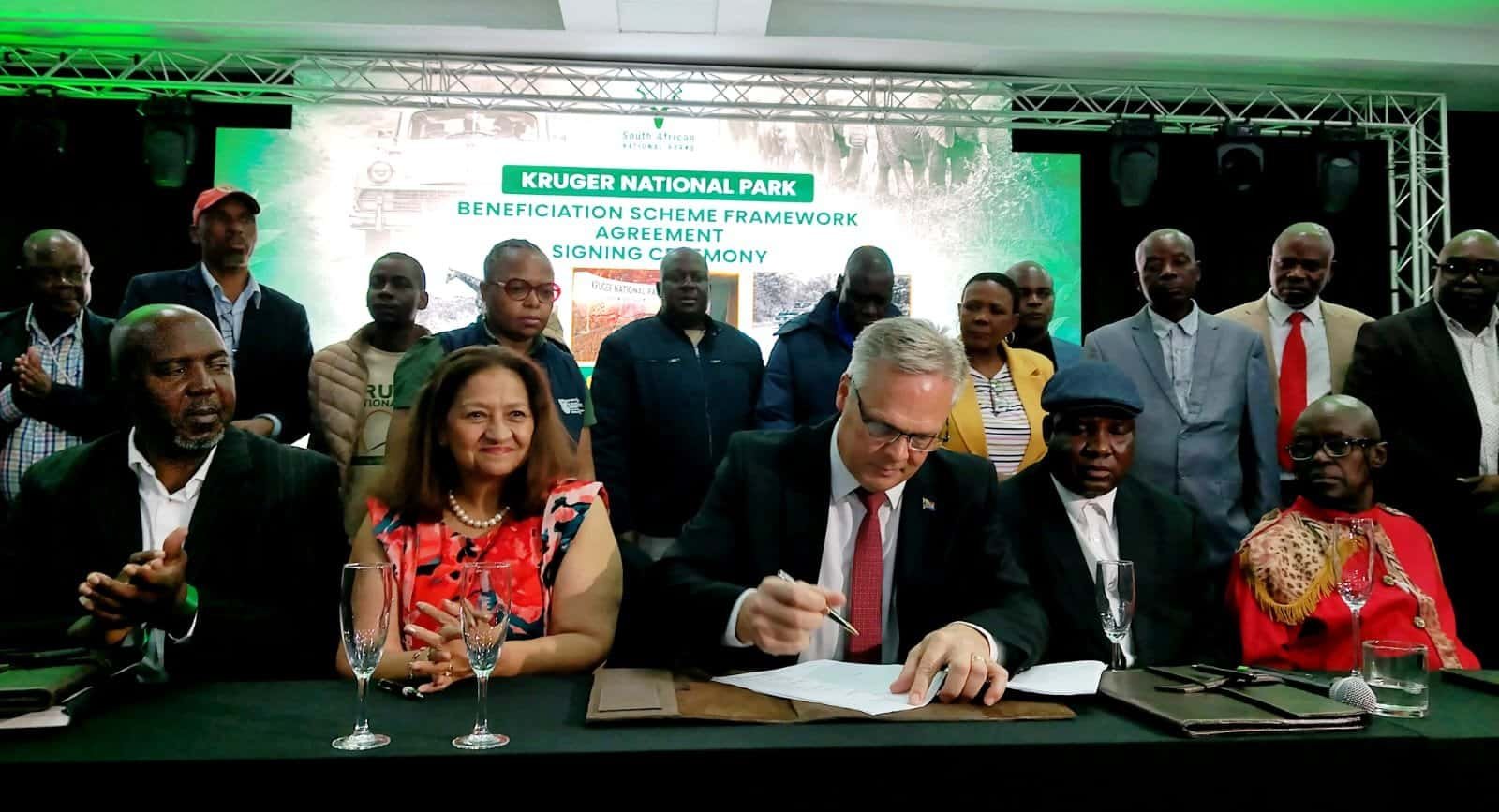
As Kruger National Park prepares to celebrate its 100th anniversary, a historic agreement signed on Friday has opened a new chapter in the relationship between conservation authorities and communities whose ancestors were displaced to make way for South Africa’s most famous wildlife sanctuary.
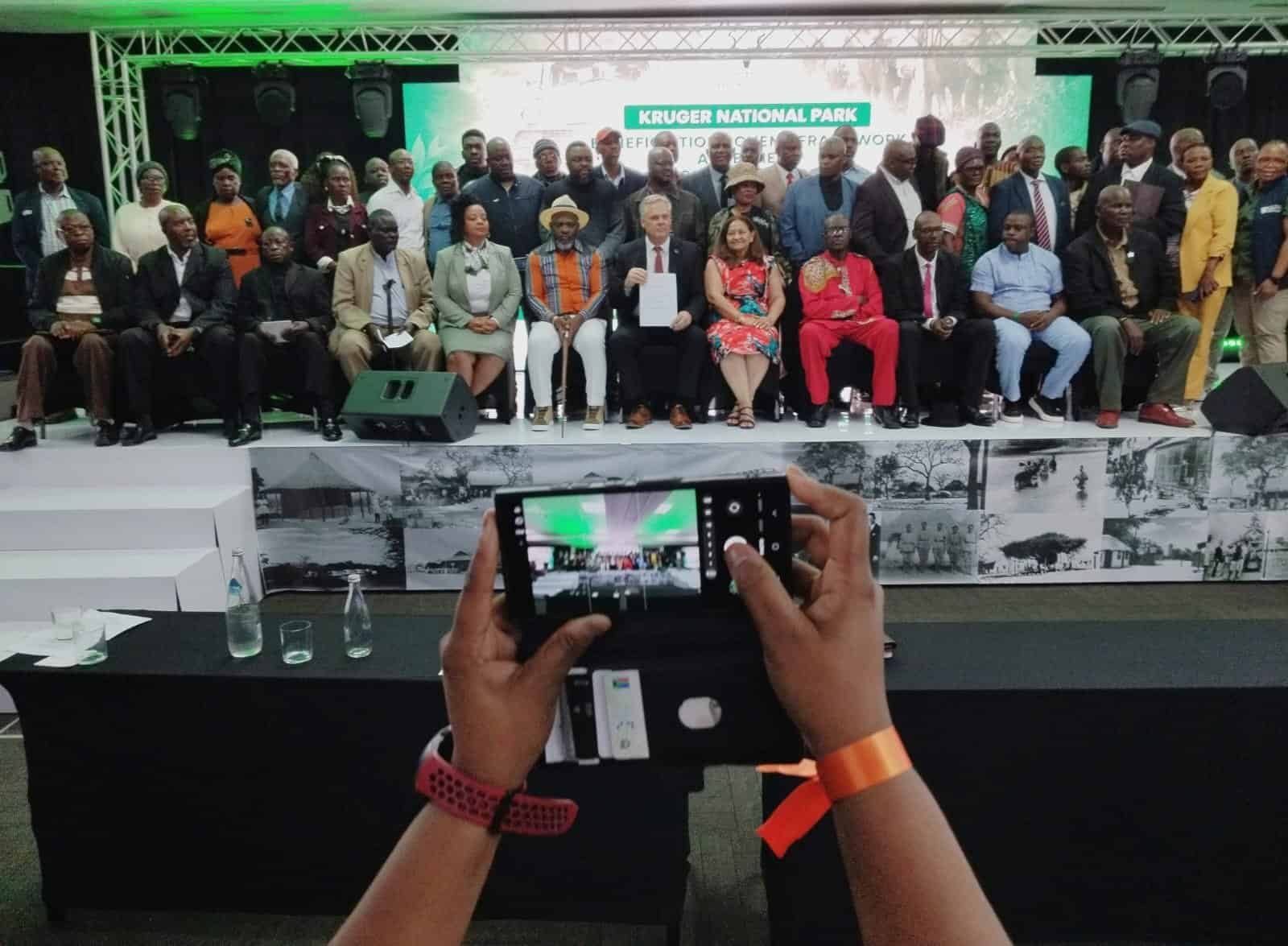
Hundreds of jubilant community members from villages surrounding the park gathered at Skukuza Rest Camp to witness the signing of the Kruger National Park Beneficiation Scheme Framework Agreement, a landmark deal aimed at ensuring that communities with successful land claims benefit from the economic opportunities generated by the park.
The atmosphere was one of celebration, relief and hope as traditional leaders, community representatives, government officials and SANParks executives came together ahead of Saturday’s centenary celebrations.
For many of those in attendance, the signing represented far more than a legal agreement. It symbolised recognition of decades of pain, dispossession and exclusion suffered by families removed from their ancestral land when the park was established in 1926.
Minister of Forestry, Fisheries and the Environment Willie Aucamp described the agreement as a major milestone in South Africa’s efforts to balance conservation with social justice.
“Today, we turn the often-sensitive matter of land into a story of victory and resilience. Land is more than just the soil and rocks beneath our feet. It represents bloodlines, legacy and heritage,” Aucamp told the gathering.
The agreement comes after years of negotiations between the government, SANParks and claimant communities. Land claims linked to the Kruger National Park were lodged in the early 2000s, while the Cabinet in 2008 recognised the park as a strategic national asset and affirmed the need for equitable redress for affected communities.
Formal negotiations on the beneficiation framework began in 2012.
Aucamp acknowledged that many community members had waited years for justice and that some had passed away before seeing the process reach fruition.
“We recognise that some members of the claimant communities have passed on without experiencing this moment. We honour and salute their contribution,” he said.
“Whilst there have been delays, disagreements and legitimate concerns raised by communities, these were not signs of failure. It was a journey of transforming systems that were never designed for all peoples into inclusive systems built on respect and heritage.”
The Beneficiation Scheme seeks to ensure that communities share in the economic benefits generated by conservation and tourism activities linked to the park.
According to Aucamp, conservation can no longer focus solely on protecting biodiversity while communities living alongside protected areas remain poor.
“This Beneficiation Scheme affirms that conservation must deliver value not only for biodiversity, but for people,” he said.
The Minister said the future of conservation in South Africa must be based on partnership.
“The future of conservation in South Africa is one of inclusive stewardship. A model where communities are partners, not spectators. Where benefits are shared. Where development and biodiversity protection reinforce each other.”
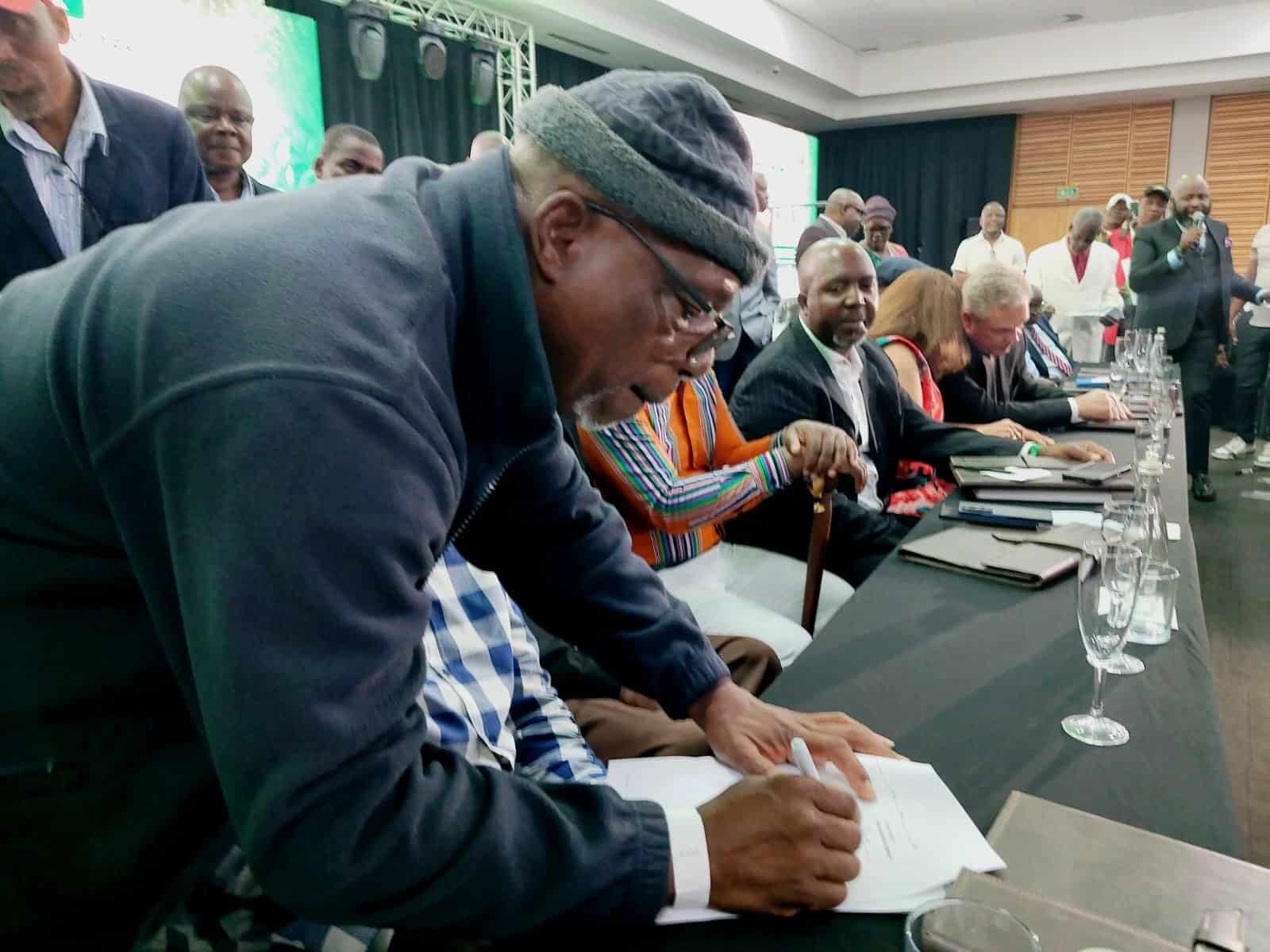
The agreement was signed by representatives from the Madonsi, Muyexe, Ndindani, Gomondwane, Mahashi, Ngirivjane and Mhlanganisweni communities, representing hundreds of families who were displaced from land that now forms part of the Kruger National Park.
Community leaders welcomed the breakthrough but stressed that the signing must be followed by swift implementation.
They told the government and SANParks that communities living around the park continue to face severe poverty, unemployment and inequality despite residing next to one of Africa’s biggest tourism attractions.
Speaking on behalf of beneficiaries, community representative Chauke said local residents want meaningful participation in the park economy.
“In the agreement we are saying people living around the area must be hired and not as cleaners but good jobs. Some of our children are well educated but unemployed. We want economic beneficiation,” said Chauke.
The communities said they wanted opportunities beyond entry-level employment and called for local people to be considered for management and executive positions within conservation institutions.
They also urged SANParks and the government to create pathways for community-owned tourism enterprises, including lodges and other commercial ventures that would generate income and employment.
Community representatives further called for bursaries and educational opportunities to help young people gain the qualifications needed to participate fully in the conservation and tourism sectors.
Another issue raised during the engagement was access to medicinal plants and traditional knowledge systems. Community leaders argued that indigenous knowledge should be recognised and incorporated into future development opportunities, saying medicinal plants found in the area could contribute to healthcare innovation and economic development.
Several speakers reminded the government that many families had been forcibly removed from the land and said this history contributed to frustrations that had occasionally surfaced during the lengthy negotiation process.
Despite those challenges, community leaders pledged to support the implementation of the agreement and work collaboratively with SANParks and the government.
At the same time, they called for transparency and accountability, warning against unnecessary legal complications that could delay benefits reaching ordinary families.
SANParks Interim Board Chairperson Beryl Ferguson acknowledged the painful history associated with the establishment of the park.
“The establishment of the Kruger National Park in 1926 came at a cost to many of the communities represented here today – communities who were dispossessed of land that they had occupied, used and cared for over generations,” she said.
Ferguson stressed that restitution is about more than financial compensation.
“It is about restoring dignity, enabling participation, and ensuring that conservation delivers meaningful value to those who were historically excluded.”
She said SANParks viewed the agreement as a turning point where accountability would shift from promises to implementation.
“As a Board, we commit to providing the oversight necessary to ensure that this scheme is implemented effectively, transparently, and in a manner that delivers real outcomes for communities,” she said.
SANParks Chief Executive Officer Hapiloe Sello also welcomed the signing, saying the organisation was committed to working with communities to ensure the framework delivers tangible benefits. She said the agreement represented an opportunity to strengthen partnerships between conservation authorities and neighbouring communities while creating a model for inclusive conservation in South Africa.
The ceremony also paused for a moment of silence led by Aucamp in honour of Ernst and Dina Marais from Mossel Bay, who were brutally murdered in the remote northern Pafuri region of the Kruger National Park earlier this month. Aucamp confirmed that the government of Mozambique is fully cooperating. He said he cannot say further to avoid jeopardising the investigations.
As the signing ceremony concluded, there was a sense that history had come full circle.
For communities who have waited decades to see recognition of their claims, Friday’s agreement represented the beginning of a new journey rather than the end of one.
As Kruger National Park enters its second century, government, SANParks and communities now face the challenge of turning signatures into opportunities, promises into jobs, and restitution into lasting prosperity.
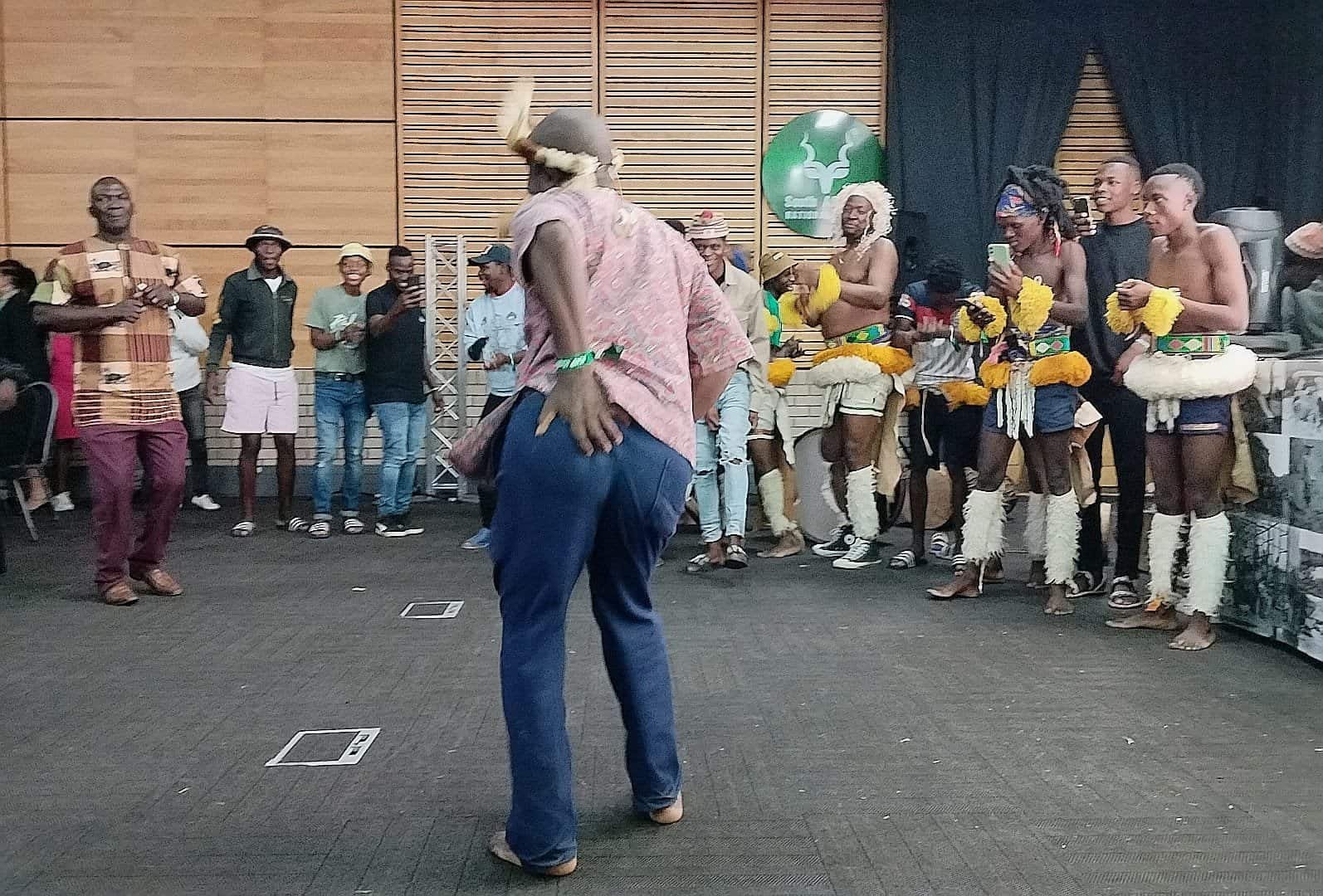
For the hundreds of community members who filled the venue with song, applause and celebration, the hope is that the next 100 years of conservation will be defined not by exclusion, but by partnership, inclusion and shared benefits.