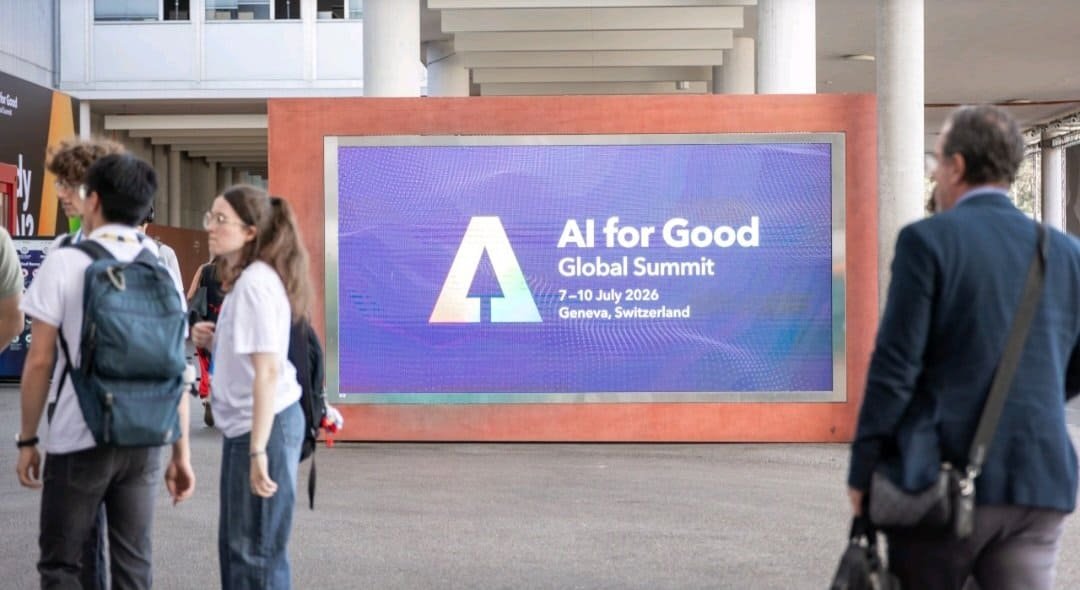
Two learner teams from Limpopo are flying the South African flag on the international stage after qualifying to compete at the prestigious Robotics for Good Youth Challenge Grand Finale in Geneva, Switzerland.
The Department of Basic Education (DBE) has congratulated the teams, describing their participation as a significant milestone that showcases the country’s growing investment in coding, robotics and science education.
The international competition, taking place from 7 to 10 July 2026 at the Palexpo International Exhibition and Convention Centre in Geneva, brings together some of the world’s brightest young innovators to develop technological solutions to real-world challenges.
Representing South Africa are Robo-Kidz from Mashupye Tladi Primary School, winners of the Junior Category, and Roborise from Bokamoso Secondary School, winners of the Senior Category.
The teams secured their places after successfully progressing through local, provincial and national rounds of the Robotics for Good Youth Challenge, outperforming competitors from across South Africa.
The Department said their achievement highlights the country’s growing capabilities in science, technology, engineering and mathematics (STEM), while demonstrating the impact of government efforts to prepare learners for careers in the digital economy.
According to the DBE, the learners’ success reflects the positive results of its continued investment in Coding and Robotics education, which has become a key pillar of South Africa’s education strategy aimed at preparing learners for the demands of the Fourth Industrial Revolution.
In recent years, the department has introduced the Coding and Robotics Curriculum and Assessment Policy Statement (CAPS), which was officially approved and gazetted before being rolled out through phased pilot programmes beginning in 2021.
The curriculum exposes learners to computational thinking, coding, robotics, digital technologies and structured problem-solving from an early age.
Education officials believe these skills are increasingly essential as technology continues to reshape industries and create new employment opportunities across the world.
The department said the programme is designed not only to improve digital literacy but also to encourage creativity, innovation and critical thinking among learners while laying a strong foundation for future careers in STEM fields.
The achievements of the Limpopo teams have also been attributed to the province’s successful implementation of the Mathematics, Science and Technology (MST) Conditional Grant.
The grant supports a range of learner development initiatives, including Coding and Robotics programmes, teacher training, science laboratories, technical education and learner enrichment activities.
Each year, around 90,000 learners benefit from programmes funded through the grant, including mathematics and science camps, Olympiads, science fairs, innovation competitions and opportunities to participate in international events.
The DBE believes these initiatives are helping identify and nurture talented young people while creating greater access to advanced learning opportunities, regardless of their background.
Acting Director for Communications and Research, Terence Khala, said the learners’ success demonstrates the value of sustained investment in future-focused education.
He said the two teams are showcasing the very best of South African education on the global stage and proving what is possible when learners are provided with quality teaching, innovative learning environments and opportunities to solve real-world problems.
Khala added that the department remains committed to expanding access to Coding and Robotics across the country while strengthening STEM education so that every learner has an opportunity to thrive in an increasingly technology-driven world.
He noted that developing future-ready skills remains one of the department’s strategic priorities as South Africa seeks to build a globally competitive workforce.
The Department also acknowledged the role played by educators, school management teams, parents, the Limpopo Department of Education and various partners who supported the learners throughout their journey to the international competition.
Officials said their dedication has been instrumental in helping the learners reach one of the world’s leading youth robotics platforms.
The Robotics for Good Youth Challenge is recognised internationally for encouraging young people to design innovative technological solutions that address social and environmental challenges using robotics and artificial intelligence.
Competitors from numerous countries participate in the annual event, making it one of the most competitive youth technology competitions in the world.
For South Africa, participation provides an opportunity not only to showcase local talent but also to expose learners to global innovation, collaboration and cutting-edge technological developments.
The Department said achievements such as those of the Limpopo teams reinforce its vision of developing a generation of digitally capable, innovative and globally competitive learners.
As the competition gets underway in Switzerland, South Africa will be hoping that Robo-Kidz and Roborise continue their impressive performances and return home with international honours.
For the Department of Basic Education, however, the greatest victory is already evident: South African learners are demonstrating that they can compete with the world’s best, thanks to growing investment in quality education, technology and innovation.