Madlanga Commission: One Year of Explosive Evidence, Now Extended to January
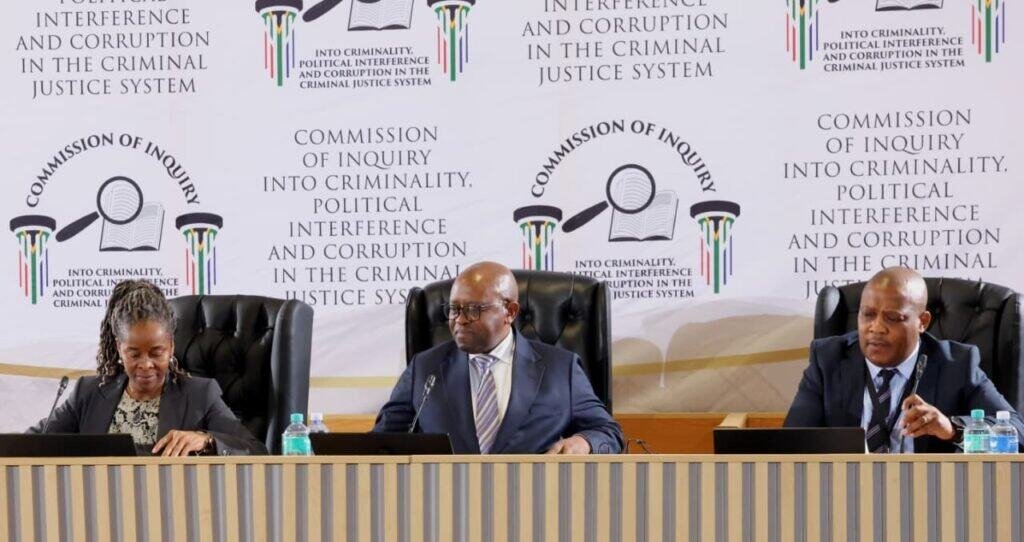
The Madlanga Commission of Inquiry will have more time to complete its work after President Cyril Ramaphosa granted what has been described as the final extension for the submission of its report.
The commission will now submit its final report on 25 January 2027, almost 16 months after public hearings began and more than a year after KwaZulu-Natal police commissioner Lieutenant-General Nhlanhla Mkhwanazi became its first witness.
The Presidency said on Saturday that the extension would allow the commission to process additional evidence, including testimony from experts who have made recommendations relevant to its terms of reference.
The latest extension comes as the inquiry marks its first anniversary and as its work continues to have consequences beyond the hearing room.
One of the most significant developments this week was the City of Ekurhuleni’s decision to terminate the employment of suspended EMPD deputy chief Julius Mkhwanazi.
Mkhwanazi had been on suspension for about 10 months while facing internal disciplinary proceedings and several criminal matters. The City said its decision followed consideration of the internal disciplinary process, evidence placed before the Madlanga Commission and the cumulative effect of the criminal matters on the employment relationship.
The City said Mkhwanazi’s senior position, the connection between the allegations and his official responsibilities, his continued incarceration and the uncertainty surrounding the criminal proceedings were among the factors considered.
It also said his prolonged absence had implications for leadership and stability within the Ekurhuleni Metropolitan Police Department.
The City stressed that the termination was an employment decision and that the criminal charges against Mkhwanazi remained before the courts. He remains presumed innocent until proven guilty.
Mkhwanazi’s name has featured prominently in evidence before the commission since the inquiry began, making his dismissal one of the clearest examples this week of how evidence emerging from the proceedings is being followed by action elsewhere.
The commission itself reached the one-year milestone on Thursday, with Justice Mbuyiseli Madlanga briefly pausing proceedings to acknowledge the anniversary and the role played by Lieutenant-General Mkhwanazi as its first witness.
The public hearings began on 17 September 2025, after Ramaphosa established the commission following Mkhwanazi’s allegations concerning criminality, political interference and corruption within the criminal justice system.
Over the past year, the inquiry has heard from a wide range of witnesses drawn from law enforcement agencies, government, politics and the private sector.
By 16 September, the commission had heard from 110 witnesses over 174 days.
They included 36 SAPS officers, 25 Hawks officers, four Johannesburg Metro Police Department officers, eight Ekurhuleni Metro Police Department and City of Ekurhuleni officials and six Tshwane Metro Police Department and City of Tshwane officials.
Other witnesses included officials from the Investigating Directorate Against Corruption and National Prosecuting Authority, IPID officials, MPs, a Cabinet minister, private individuals and experts.
The volume of evidence has also grown substantially.
The commission reported that it had received 26,352 pages of oral testimony transcripts and 105,282 pages of documentary evidence contained in 750 document bundles or files, subject to necessary redactions.
Its public hotline received 1,894 calls during the year, although 1,472 were found to be unrelated to the commission’s terms of reference. It also received 4,548 emails, with 3,295 falling outside its mandate.
The commission has dealt with applications for closed hearings and several court challenges while continuing with its public hearings.
The past week provided another example of the breadth of the inquiry’s work.
On Tuesday, Johannesburg Metro Police Department Internal Affairs head Superintendent Elmarie de Beer gave evidence about investigations involving alleged collusion between some officers and criminal syndicates.
A day later, World Bank expert Laura Pop told the commission that SAPS could require an extraordinary, once-off integrity assessment or “deep cleaning” process to address integrity failures.
Her proposal included scrutiny of officials in high-risk positions, financial integrity, associations and conflicts of interest and past conduct. She also stressed that any such process would have to include procedural safeguards and withstand legal scrutiny.
The evidence is being presented within a commission whose mandate covers alleged criminal infiltration and undue influence involving several parts of the criminal justice system, including SAPS, the Hawks, NPA, State Security Agency, correctional services and metropolitan police departments.
However, the commission has repeatedly had to distinguish allegations from findings.
The South African Community of Faith-Based Fraternals and Federations this week also stressed that testimony before a commission does not automatically amount to proof of criminal guilt and that allegations must be dealt with through due process.
The inquiry has also been marked by tragedy. Witness D, Marius van der Merwe, was assassinated in front of his family on 5 December 2025 after giving evidence to the commission.
His death has underscored concerns around the safety of witnesses and others involved in exposing alleged criminality.
The commission has previously produced interim reports which resulted in referrals and recommendations. Ramaphosa received its second interim report in May and later noted its recommendations and referrals.
The final report is now expected to bring together the extensive evidence heard during the inquiry and recommendations arising from its findings.
The commission’s work is not a substitute for the criminal justice system. Where evidence points to possible criminal conduct, investigations, prosecutions and court proceedings remain the responsibility of the relevant law enforcement and prosecuting authorities.
For now, the commission enters its second year with more evidence to process, more recommendations to consider and a new final deadline of 25 January 2027.
The Presidency said Ramaphosa had again expressed his appreciation for the commission’s work and for the manner in which law enforcement agencies were following up on testimony emerging from the hearings.
The extension means the inquiry will continue into the new year as it works towards completing what has become one of South Africa’s most closely watched investigations into the functioning of its criminal justice system.