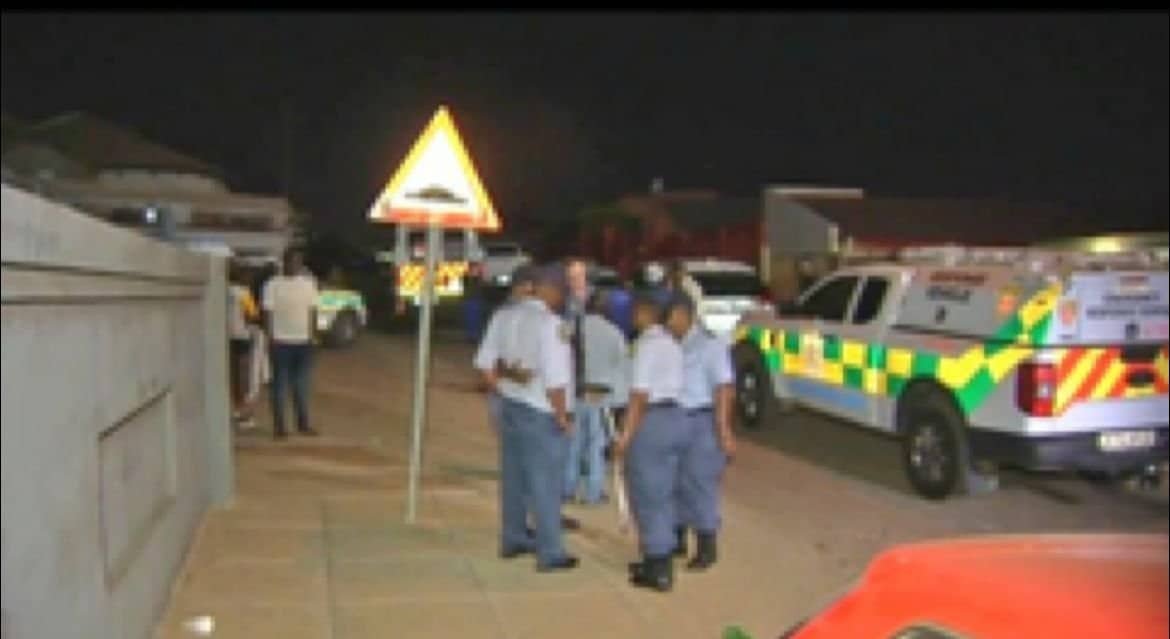
What began as a family dispute in the quiet streets of Mamelodi East turned into a tragedy that has shaken the police fraternity and left a community searching for answers.
On Tuesday, a 16-hour hostage drama ended in heartbreak when Constable Thapelo Mashigo, 32, shot and killed his 18-year-old nephew before turning the gun on himself. The standoff, which began early in the morning, saw heavily armed police officers, hostage negotiators, and the SAPS Special Task Force converge on a modest home in the township.
At the centre of it all was a mother watching her family unravel before her eyes.
Neighbours who gathered outside the home throughout the ordeal said they had hoped the situation would resolve without bloodshed.
“We stood here the whole day, praying and waiting for good news,” said one resident, who asked not to be named. “When his mother came out alive, we thought that was the breakthrough. None of us imagined it would end like this.”
According to police, Mashigo initially held both his 69-year-old mother and his nephew hostage. Negotiators managed to secure his mother’s release shortly before 11pm, but just before midnight, two gunshots rang out from inside the house. When officers entered, they found the constable and his nephew dead.
Paramedics rushed the elderly woman to hospital for observation.
Mashigo had served in the SAPS since 2019 and was based at Boschkop police station. He was most recently deployed to the regional Essential Infrastructure Task Team.
Ordinarily, his job was to protect critical facilities from criminals. But on Tuesday, the man sworn to serve and protect turned his state-issued firearm on his own family.
Details of the dispute remain unclear, though social media speculation pointed to tensions around family secrets and betrayal. One X user wrote: “So that kid neh, he thought it was his son. In fact, he raised him as his son until he discovered recently that it is actually his brother’s child. That’s according to a recording circulating during the hostage situation.”
Police have not confirmed this version of events, saying only that it was a domestic matter that spiraled out of control.
National Police Commissioner General Fannie Masemola addressed the tragedy, calling it a painful reminder of the pressures police officers face daily.
“The organisation continues to prioritise the mental health and wellbeing of its members on a daily basis,” Masemola said. “We have an in-house Employee Health and Wellness unit that is available 24/7, 365 days a year, for all police officers as well as their family members.”
He emphasised that counselling and trauma debriefing services were always within reach.
“We know that our members are exposed to extreme stressors, from violent crime scenes to the pressures of personal life. That is why we have proactive programmes such as our suicide prevention initiative, Choose Life, as well as awareness workshops on depression, bipolar disorder, and stress management,” he said.
Masemola added: “I encourage all our SAPS members across the country to prioritise their health and mental wellbeing by undergoing health screenings and check-ups regularly. Early detection is vital for timely intervention and avoiding complications. As management, we are here to support you.”
While the SAPS has promised support for Mashigo’s colleagues and family, the incident has left his neighbourhood reeling.
One neighbour described him as a quiet, reserved man. “He kept to himself, but he loved his mother. That’s why this is so hard to believe,” she said.
Outside the home, dozens of community members stood in stunned silence after news of the deaths broke. Many expressed frustration that a trained officer could succumb to such violence.
An X user, Race Dialogue SA, wrote: “Ironic that a police officer committed these crimes, which they swore to stop.”
This is not the first time SAPS has faced questions about mental health in its ranks. Officers often work long hours in high-stress environments, with limited access to professional help outside the internal structures.
Masemola admitted that more work still needs to be done. “We must never underestimate the impact of trauma and personal struggles on our members. That is why we will continue to invest in support systems, awareness campaigns, and partnerships with organisations like POLMED and GEMS, to ensure our employees have access to external specialists,” he said.
As police investigators piece together what happened inside that Mamelodi home, the incident leaves a chilling question hanging over South Africa: how does a man trained to preserve life reach a point where he takes it away from those closest to him?
For now, a family is left shattered, a community is in mourning, and the SAPS faces the urgent task of rebuilding trust in the wake of yet another tragedy from within its own ranks.