
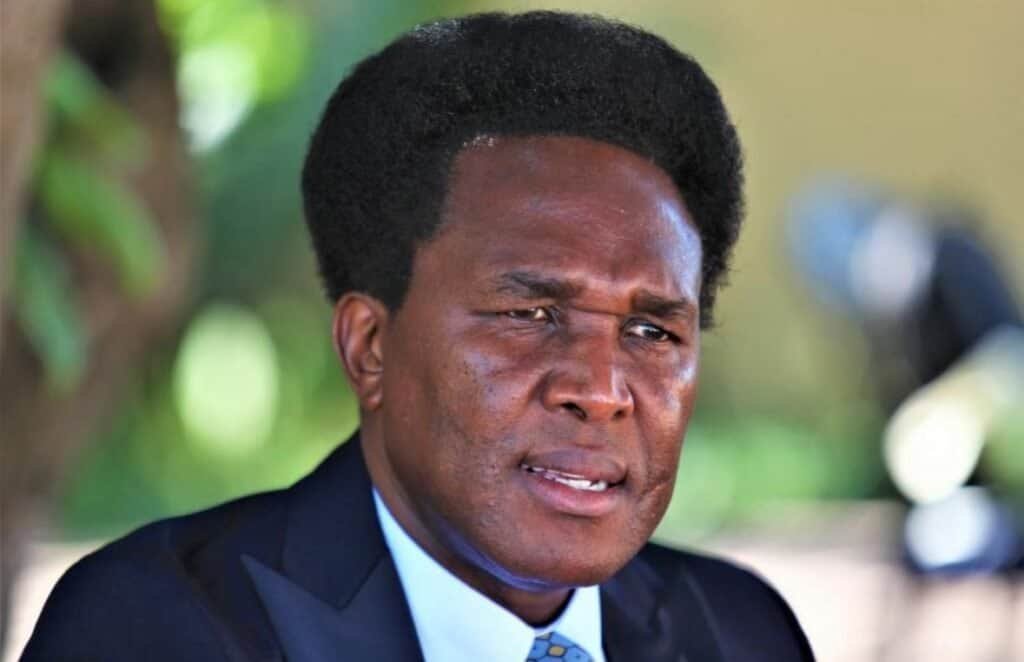
MAPUTO, 18 November 2026 – The defence team of Mozambican opposition politician Venâncio Mondlane has called for his acquittal, arguing that the prosecution has failed to establish a direct link between his public statements during the post-election crisis and the violence that swept the country following the disputed October 2024 elections.
Leading defence lawyer Mutola Escova told the Supreme Court in Maputo that the charges against Mondlane were based on statements taken out of their political context, insisting that the opposition leader had no criminal intention to incite violence or terrorism.
The defence has also characterised the proceedings as politically motivated, alleging that the case is intended to undermine Mondlane’s political future and prevent him from participating in Mozambique’s forthcoming electoral processes, particularly the 2028 municipal elections and the 2029 general elections.
“The statements of Venâncio Mondlane were not meant to influence people into committing acts of violence. There was never any criminal intention on his part, and the prosecution could not demonstrate beyond reasonable doubt a direct link between his public statements and the post-electoral violence,” Escova argued.
He maintained that the politician’s statements and calls for demonstrations, strikes and other forms of protest must be assessed within the political circumstances prevailing at the time, rather than interpreted in isolation.
“The defendant’s statements during and after the elections must be considered within their political context, even when the prosecution argues that they were the root cause of the incitement to violence and the commission of acts of terrorism,” the lawyer said.
Escova further argued that political statements made in the context of contesting an election outcome could not automatically be interpreted as criminal conduct, particularly when the opposition leader was challenging results he considered fraudulent.
The defence also questioned the reliability of the evidence underpinning the indictment, pointing to alleged discrepancies and inconsistencies in the prosecution’s case.
It called on the court to uphold the presumption of innocence throughout the proceedings and assess the evidence in its entirety, including the circumstances surrounding the messages and public interventions attributed to Mondlane.
“We therefore demand that the presumption of innocence be respected until the end of the trial and that his actions should not be considered outside the context of the messages he issued,” Escova said.
Political implications beyond the courtroom
The political implications of the case have become increasingly central to Mondlane’s response to the proceedings, with the opposition figure openly accusing the judicial system of being used to restrict his participation in future elections.
Speaking to journalists after Wednesday’s hearing, the second day of the trial, Mondlane said he believed the ultimate objective was to remove him from the political competition ahead of the 2028 and 2029 electoral cycles.
“They know that we are going to win the 2028 and 2029 elections. They know that I will crush, like a steamroller, any candidate from the ruling Frelimo party. So they want to stop me by using the judicial machinery,” he declared.
The opposition politician first contested the 2023 municipal elections as a Renamo candidate in Maputo, before running in the October 2024 presidential elections as an independent candidate, backed by his supporters.
His rejection of the official results triggered months of demonstrations, strikes and work stoppages, accompanied by episodes of violence, destruction of public and private property and a deadly security crackdown.
Five criminal charges
He faces five charges: public glorification of crime, incitement to collective disobedience, public instigation to commit a crime, instigation to terrorism and incitement to terrorism.
Prosecutors argue that his interventions, particularly through Facebook livestreams, helped mobilise demonstrations and contributed to the escalation of violence, deaths and destruction recorded across the country.
The indictment seeks to establish a connection between his public appeals and the violent incidents that followed the announcement of the disputed election results.
Mondlane, however, maintains that his interventions were part of a political campaign to challenge what he considered an illegitimate electoral outcome, rather than an attempt to encourage criminal acts.
As the proceedings continue, the defence is seeking to establish that the prosecution’s case lacks sufficient evidence to sustain the charges, while Mondlane maintains that the ultimate political consequences of the trial could extend well beyond the courtroom, potentially affecting his participation in the country’s next electoral cycles.


