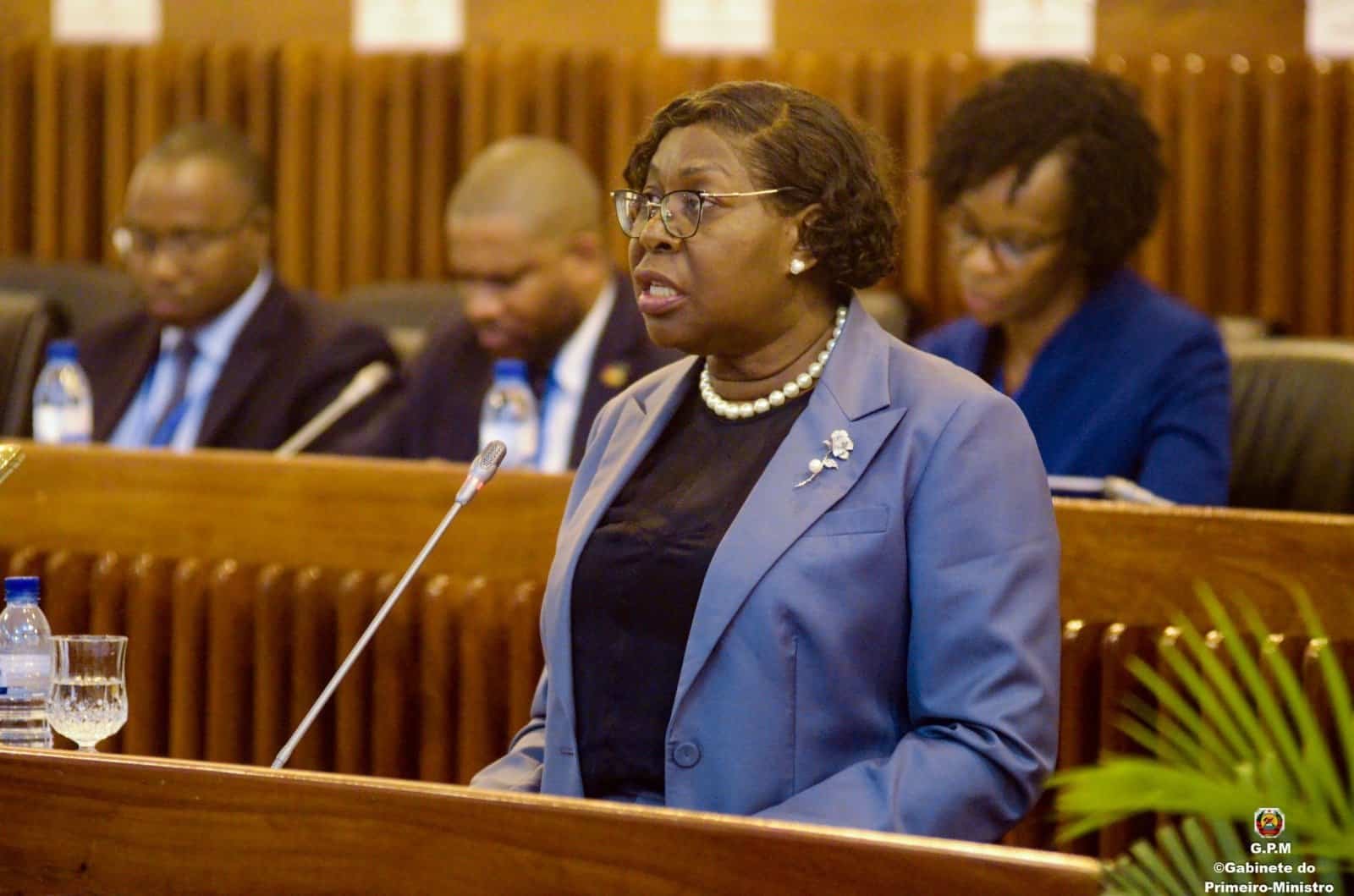
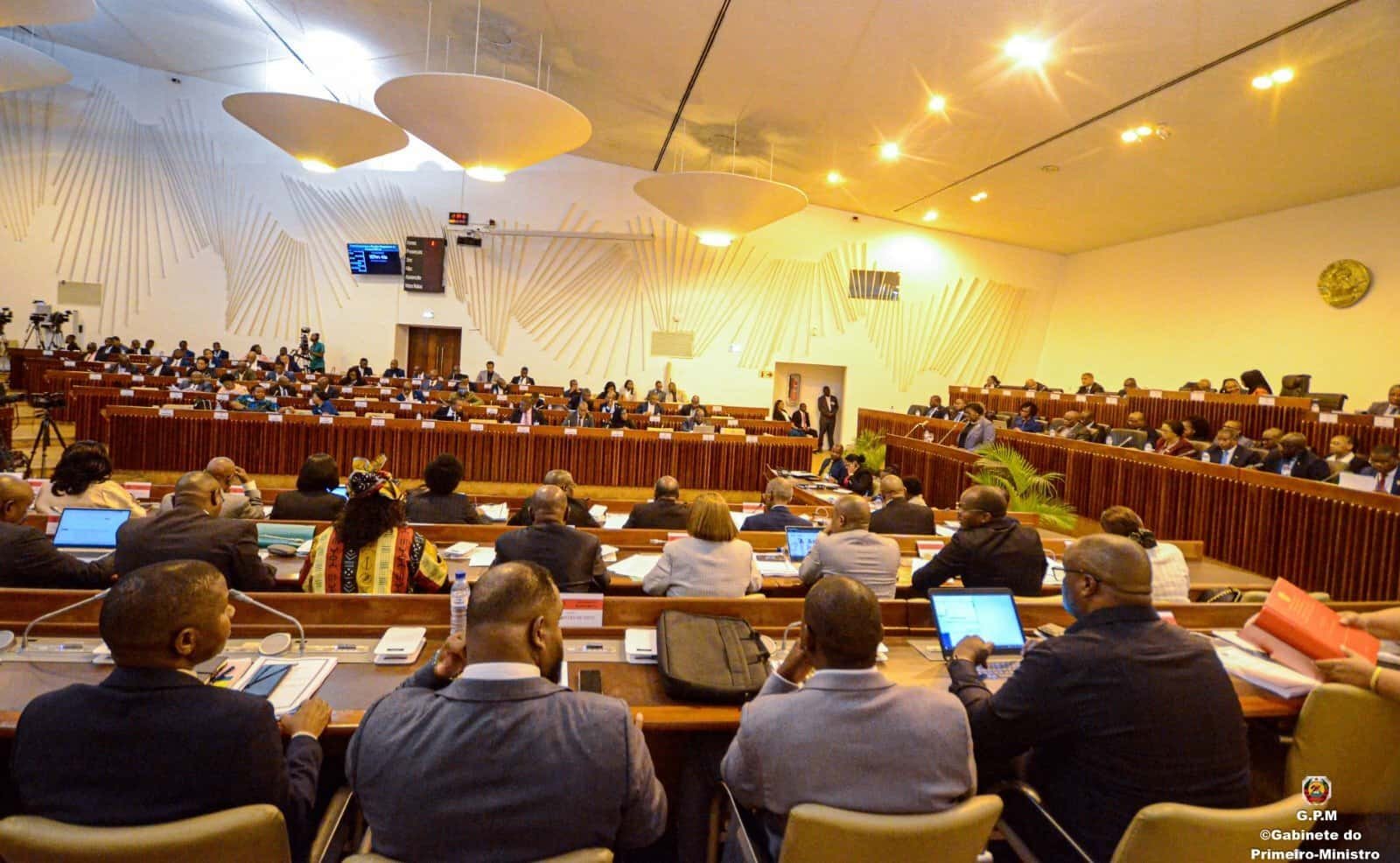
Mozambique’s Prime Minister, Benvinda Levi, has outlined an ambitious yet cautiously optimistic economic plan for 2026, as the Government seeks to steer the country back toward growth following a prolonged period of internal and external shocks. Presenting the proposed Economic, Social and State Budget Plan (PESOE) for 2026, at the Mozambican Parliament, Levi emphasised that the priorities are centred on macroeconomic stability, structural investment, economic diversification and private-sector engagement.
The PESOE 2026 is the second short-term planning and budgeting instrument underpinning the Government’s Five-Year Programme (2025–2029). According to the Prime Minister, the blueprint is designed to respond both to global economic uncertainties and to the severe domestic challenges that have strained Mozambique’s fiscal space and economic resilience.
A Difficult Backdrop
Levi acknowledged that Mozambique’s economy continues to feel the effects of the post-electoral crisis, terrorist attacks in the north, and the growing frequency of extreme climatic events. These disruptions have led to widespread destruction of infrastructure, reduced mobility of people and goods, and the paralysis of key economic and social activities.
As a result, the national economy has remained in contraction since late 2024. The fourth quarter of 2024 registered a 5.68% decline, followed by contractions of 3.92%, 0.94% and 0.85% in the first three quarters of 2025.
Internationally, the situation remains volatile. Persistent geopolitical tensions, commodity-price instability and ongoing trade disputes are expected to limit global economic growth to 3.1% in 2026, according to the IMF. Africa’s GDP is projected to grow by 4.4%, with Southern Africa trailing at 2.6%.
Targets for Economic Recovery
Despite the challenging landscape, the Government is projecting a return to growth, aiming for a GDP expansion of 2.8% in 2026. This recovery is expected to be driven by: Extractive industry: 4.4%, Construction: 3.2%, Services: 4.1%, Agriculture: 2.5% and Fisheries: 3.6%.
Other targets include maintaining average annual inflation at 3.7%, boosting exports of goods to USD 8.4 billion, and increasing Net International Reserves to USD 3.2 billion, equivalent to 4.4 months of import cover (excluding megaprojects).
The Government also anticipates over USD 5.8 billion in net foreign direct investment (FDI) in 2026, an increase from the USD 4.8 billion projected for 2025. Much of this rise will come from large-scale energy and hydrocarbon projects.
Pillars of the 2026 Growth Strategy
Levi stressed that economic diversification and improved productivity remain central to Mozambique’s long-term transformation. Key measures include:
- Strengthening linkages between agriculture and industry to reduce dependence on primary sectors and ensure a steady domestic market supply.
- Supporting local enterprise, particularly micro, small and medium-sized businesses, through mutual guarantee funds and economic recovery financing lines.
- Improving the business environment, including expanding the e-BAU one-stop service platform to 20 additional districts, to reduce bureaucratic barriers.
- Reinforcing fiscal consolidation, with reforms to customs tariffs, the tax benefits code, specific consumption tax, and simplified tax regimes for small taxpayers.
On expenditure management, the Government plans stricter control of public-sector wages, revised overtime rules, and strengthened internal auditing to promote accountability and discipline.
Sectoral Outlook for 2026
Agriculture is expected to grow by 2.5%, supported by favourable weather forecasts, rural extension services for 1.3 million households, and distribution of production inputs to over 100,000 families. The Government also aims to complete 96 agro-livestock production infrastructures and 31 facilities supporting agricultural marketing.
In fisheries, projected growth of 3.6% will be underpinned by the licensing of more than 1,400 fishing units, technical support to 12,500 fishers and fish farmers, and sanitary certification of over 78 million tonnes of fish products.
The extractive industry remains a strong driver, particularly with increased production of coal, heavy sands, gold, rubies and construction materials. Importantly, 2026 will also see the start of operations at the new integrated LPG, natural gas and light-oil infrastructure in Inhassoro, Inhambane.
The energy sector is expected to grow significantly, with a projected 7% increase in electricity generation from thermal sources, driven by improved performance at the Ressano Garcia, Temane and Maputo gas-fired plants.
Budget and Fiscal Outlook
The 2026 PESOE foresees total revenue of MZN 407 billion (24.9% of GDP) against expenditure of MZN 520.6 billion (31.8% of GDP), resulting in a budget deficit of MZN 113.7 billion, equivalent to 7% of GDP.
This deficit will be financed through: Domestic credit: 2.2% of GDP, Donor grants: 3.2% of GDP and External credit: 1.9% of GDP.
Levi noted that the projected deficit marks an improvement compared to the 8.2% deficit forecast for 2025.
A Cautious but Determined Path Forward
Prime Minister Benvinda Levi concluded that the 2026 PESOE represents a pragmatic and forward-looking response to Mozambique’s economic challenges. By balancing fiscal prudence with strategic investment, the Government aims to rebuild national resilience, attract private capital and restore growth momentum.
The success of this vision, she emphasised, will depend on effective implementation, improved governance and strengthening partnerships with the private sector, development partners and local communities across the country.