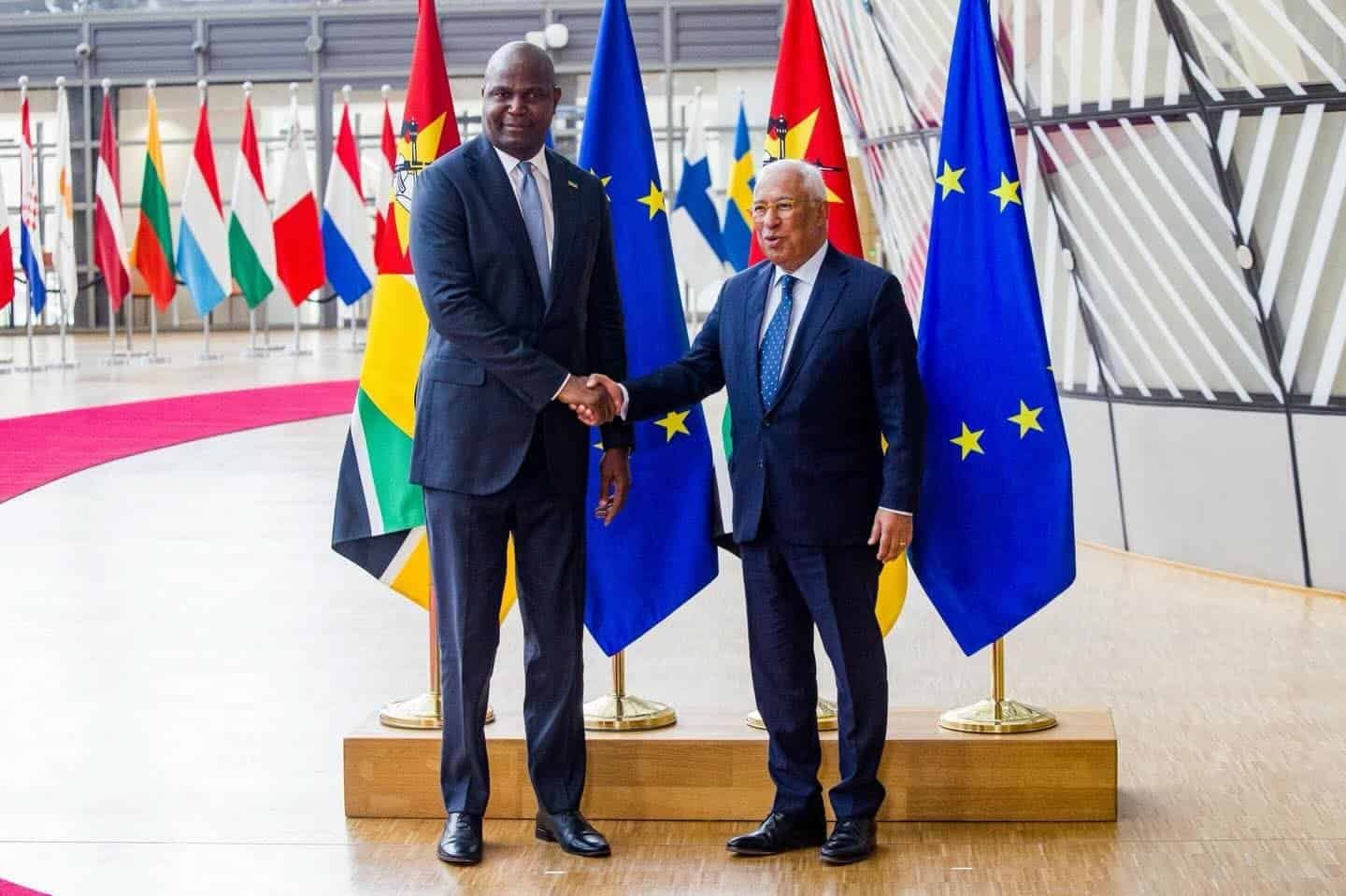
Over four packed days in Brussels, Mozambique’s President, Daniel Chapo, delivered a clear and ambitious message to European leaders and investors: the country is ready to reposition itself as a competitive destination for both technological innovation and energy investment.
The visit, held at the heart of the European Union, blended diplomacy with economic strategy, showcasing Mozambique as a nation seeking to convert its vast natural resources and youthful population into drivers of modern growth.
A digital shift: from infrastructure to intelligence
One of the defining moments of the visit came during the European Union–Mozambique Digital Open Day, where President Chapo outlined a decisive shift in how development is understood.
For decades, he noted, progress was measured by physical infrastructure. Today, however, countries are increasingly judged by their digital backbone – connectivity, data systems, platforms and, crucially, artificial intelligence.
“Digital transformation is not merely about technology,” Chapo stressed. “It is a national agenda for modernising the state, enhancing economic competitiveness and expanding opportunities for all citizens.”
Mozambique, he argued, is embracing this transition with concrete steps. These include the creation of a Ministry of Communications and Digital Transformation, alongside flagship initiatives such as the Citizen Portal, government interoperability platforms, digital certification systems and the “Paper Zero” programme aimed at reducing bureaucracy.
The President also placed strong emphasis on cybersecurity and data protection, framing them as essential pillars for building trust in a digital economy.
Beyond policy, the message to European partners was unmistakable: Mozambique is open for digital business. The event actively promoted investment opportunities in data centres, digital infrastructure and logistics modernisation, while encouraging partnerships between European and Mozambican firms.
Energy at the centre of economic transformation
If digital ambition set the tone, energy strategy provided the substance.
At the RENMOZ Europe Business Forum 2026, President Chapo presented Mozambique as a key player in the global energy transition — a country endowed with abundant hydroelectric capacity, vast solar and wind potential, and significant natural gas reserves.
“We are at a decisive moment in our development trajectory,” he told investors, positioning Mozambique as both a regional energy hub and an emerging global supplier.
Currently exporting over 1,200 megawatts of electricity within Southern Africa, the country is also strengthening its foothold in the liquefied natural gas market. These developments, Chapo argued, create “concrete opportunities for investment partnerships”.
The government’s strategy is built around four pillars: renewable energy expansion, responsible use of natural gas, green industrialisation and universal access to electricity by 2030.
Major projects such as the Temane Thermal Power Plant and the Mphanda Nkuwa Hydropower Project were highlighted as cornerstones of future capacity, while ongoing reforms aim to improve financial sustainability and regulatory transparency in the sector.
A call for European partnership
Throughout the visit, a recurring theme was the importance of international cooperation.
President Chapo underscored that no country can navigate digital transformation or energy transition alone, praising the EU’s Global Gateway initiative as a vital platform for mobilising sustainable investment.
The visit itself, at the invitation of António Costa, symbolised a renewed push to deepen ties between Mozambique and Europe.
European support, particularly in financing, institutional capacity-building and rural connectivity, was acknowledged as critical to accelerating progress on the ground.
From potential to investment
Across both the digital and energy agendas, the overarching goal was clear: to translate Mozambique’s potential into tangible investment.
Chapo repeatedly framed the country not simply as resource-rich, but as reform-driven and forward-looking, a nation ready to compete in a global economy defined by innovation and sustainability.
The Brussels engagements also set the stage for the upcoming Mozambique–EU Global Gateway Business Forum, scheduled to take place in Maputo in June, which is expected to further cement partnerships initiated during this visit.
A country at a crossroads
As the four-day mission concluded, the narrative that emerged was one of a country at a crossroads, balancing its traditional strengths in natural resources with a bold pivot towards digital transformation.
For Mozambique, the Brussels visit was more than a diplomatic exercise. It was a strategic pitch to the world: that it is ready to move beyond promise and into delivery.
Whether European investors respond at scale remains to be seen. But one thing is certain – Mozambique has made its case, loudly and clearly, on one of the world’s most influential stages.