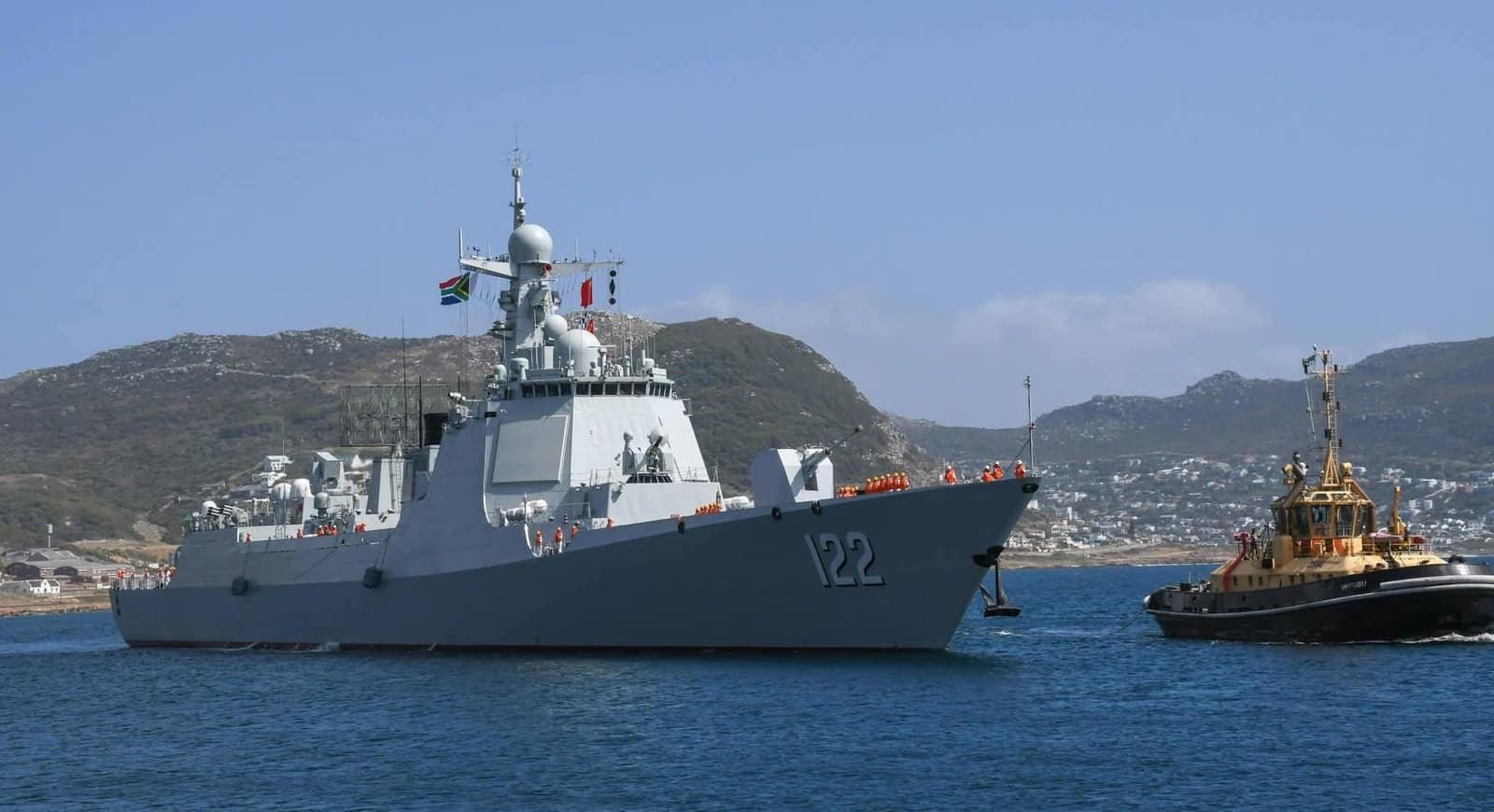
The decision by President Cyril Ramaphosa to launch a high-level investigation into the controversial Exercise MOSI III “Will of Peace” has sparked mixed reactions, with political parties, analysts and the public sharply divided over both the incident and the handling of the probe.
At the centre of the controversy is the participation of Iran’s navy in the Chinese-led naval exercise hosted in South African waters—despite a reported instruction from the President that Iran should not be involved. The development has raised serious concerns about whether directives from the Commander-in-Chief are being followed within the South African National Defence Force (SANDF).
In response, Ramaphosa has appointed a panel led by retired judge Bernard Ngoepe to investigate the matter, moving the inquiry to the Presidency in a bid to ensure independence and urgency.
Presidential spokesperson Vincent Magwenya defended the move, saying it reflects the gravity of the situation and the need for accountability.
“The President has acted decisively to ensure that all the facts are established and that accountability follows,” Magwenya said.
However, opposition parties have reacted strongly, warning that the issue goes beyond a mere procedural lapse. Several leaders described the situation as a potential breakdown in civilian control over the military—one of the key pillars of South Africa’s constitutional order.
Critics argue that if a direct presidential instruction was ignored, it raises fundamental questions about discipline, command structures and governance within the SANDF.
“This is not just about a naval exercise—it’s about whether the military is accountable to elected leadership,” one opposition figure said, adding that failure to act decisively could erode public trust in state institutions.
Defence experts echoed similar concerns, with some suggesting the incident could point to deeper systemic issues within the defence force. Analysts noted that joint military exercises such as MOSI III are typically tightly coordinated, making any deviation from presidential directives particularly concerning.
Others, however, have welcomed the President’s intervention, arguing that relocating the probe to the Presidency signals seriousness and may prevent political interference.
Public reaction has also been swift and divided, particularly on social media platform X, where the debate has centred on accountability and transparency.
One user supported the move, writing: “Moving the Exercise Will for Peace probe to the Presidency isn’t a sidestep; it’s an elevation. The President has invoked his authority as Commander-in-Chief… Accountability cranked up.”
But critics questioned the secrecy surrounding the investigation. “A month and possibly longer to probe this circus confidentially and the findings may or may not be released to the public? We are not a serious country,” another user posted.
Concerns have also been raised about the confidentiality of the process, with the Presidency indicating that proceedings will be held behind closed doors due to national security considerations. Ramaphosa will ultimately decide whether any part of the findings will be made public.
The panel—comprising legal and military experts, including Justices Kathleen Satchwell and M.M. Leeuw—has been given sweeping powers to summon officials and access classified information. It is expected to report back within one month.
As pressure mounts, the spotlight is now on whether the probe will deliver meaningful accountability—or deepen concerns about transparency and governance within South Africa’s defence structures.