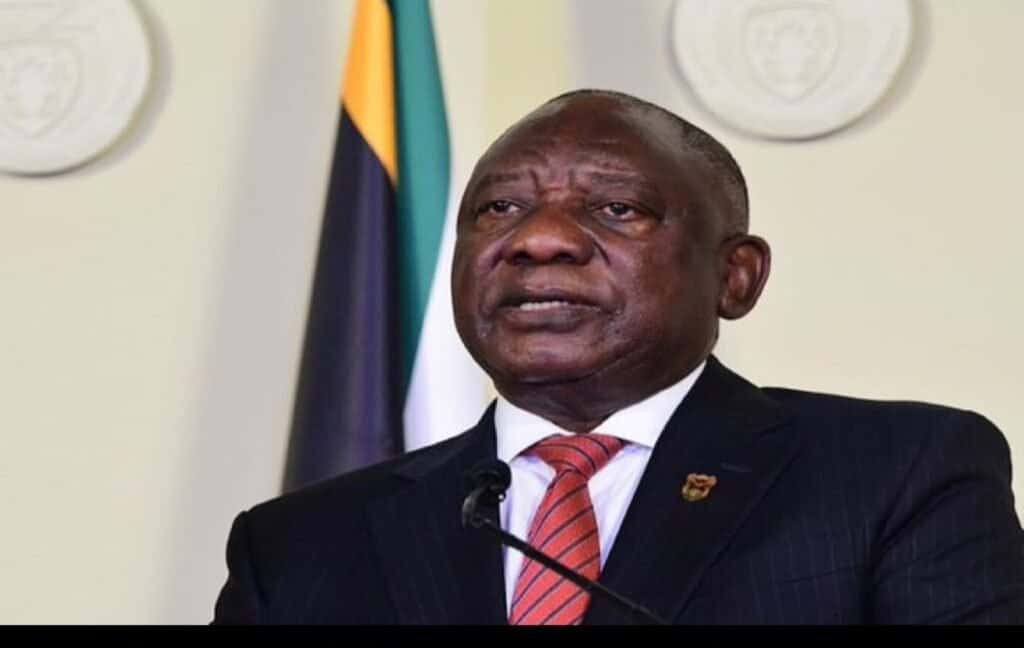
The approval of salary increases for politicians and other public office-bearers has sparked a fierce reaction from the National Education, Health and Allied Workers’ Union (NEHAWU), which has accused President Cyril Ramaphosa of being insensitive to the economic hardships confronting millions of South Africans.
The union’s criticism comes as the country’s unemployment rate has climbed to 33.7%, with another 70,000 job seekers becoming discouraged and leaving the labour force in the third quarter of 2026.
On Tuesday, NEHAWU said it was unacceptable for public office-bearers to receive salary increases while ordinary South Africans continued to battle unemployment, poverty, inequality and the rising cost of living.
Ramaphosa earlier determined salary increases of between 3.5% and 4% for public office-bearers for the 2026/27 financial year, following recommendations by the Independent Commission for the Remuneration of Public Office-Bearers.
The increases are effective from April 1, 2026, meaning the affected office-bearers will receive the adjustments retrospectively.
Members of the National Executive, including Cabinet ministers, Members of Parliament (MPs), premiers, members of provincial executive councils and provincial legislators, will receive a 3.5% increase.
Judges, magistrates, traditional leaders and members of independent constitutional institutions will receive a 4% increase.
The adjustments mean Cabinet ministers’ annual salaries will increase from approximately R2.79 million to R2.89 million, while ordinary MPs will earn about R1.37 million annually, up from R1.32 million.
Premiers will also see their annual salaries increase from approximately R2.63 million to R2.73 million.
However, the decision has not gone down well with NEHAWU, which described the increases as completely unprincipled and insensitive to the country’s harsh socio-economic realities.
The union said the decision sent a deeply troubling message about the priorities of those entrusted with public leadership.
“We find this decision completely unprincipled and insensitive to the harsh socio-economic realities confronting the overwhelming majority of South Africans, particularly workers and the working class,” NEHAWU said.
The union argued that the increases were being approved against the background of an economy struggling with low growth, persistent unemployment and deepening inequality.
Its criticism comes as the latest labour market figures show that South Africa’s official unemployment rate increased by 0.1 of a percentage point, from the previous quarter’s 33.6% to 33.7% in the third quarter of 2026.
The additional 70,000 discouraged job seekers leaving the labour force further highlights the difficulties facing people who have been unable to secure employment.
For NEHAWU, the decision to increase politicians’ salaries while millions of people remain economically vulnerable reflects misplaced government priorities.
The union also turned its attention to the impact of austerity measures, arguing that government policies centred on cutting expenditure have weakened the state’s ability to deliver essential services.
It said years of budget cuts, the freezing of vacancies and failure to fill critical posts had systematically undermined the public service.
Public servants, particularly those working in essential services, were increasingly expected to perform their duties under difficult conditions without adequate staffing and resources.
NEHAWU questioned how government could justify improving the remuneration of public office-bearers while workers responsible for delivering healthcare, education and other essential services continued to face inadequate working conditions and persistent remuneration challenges.
“The public service has been systematically weakened through years of budget cuts, the freezing and non-filling of critical vacancies, understaffing and the erosion of institutional capacity,” the union said.
It added that the implementation of austerity measures had severely affected the state’s capacity to fulfil its constitutional obligations, particularly towards working-class communities and the rural poor.
The union further warned that unemployment, poverty and inequality continued to threaten the livelihoods of workers and their families.
“Public Office Bearers should not be exempted from the conditions and plight that confronts the rest of the country,” NEHAWU said.
It called on Ramaphosa to reconsider his decision and urged government to prioritise the country’s pressing socio-economic challenges.
Meanwhile, the salary determination follows recommendations by the Independent Commission for the Remuneration of Public Office-Bearers, which is constitutionally mandated to advise the President on the salaries, allowances and benefits of people holding public office.
In making its recommendations, the commission considers factors including the country’s economic conditions, fiscal affordability, inflation forecasts, wage settlement data, stakeholder submissions and the responsibilities attached to different public offices.
Ramaphosa said his determination took into consideration the serious economic challenges facing the country.
He thanked the commission for its work and urged public office-bearers to uphold their mandates and honour the public trust and expectations associated with their responsibilities.
But NEHAWU’s objection has placed the spotlight on the growing disconnect between the remuneration of political office-bearers and the economic realities confronting ordinary South Africans, particularly workers in an already strained public service.