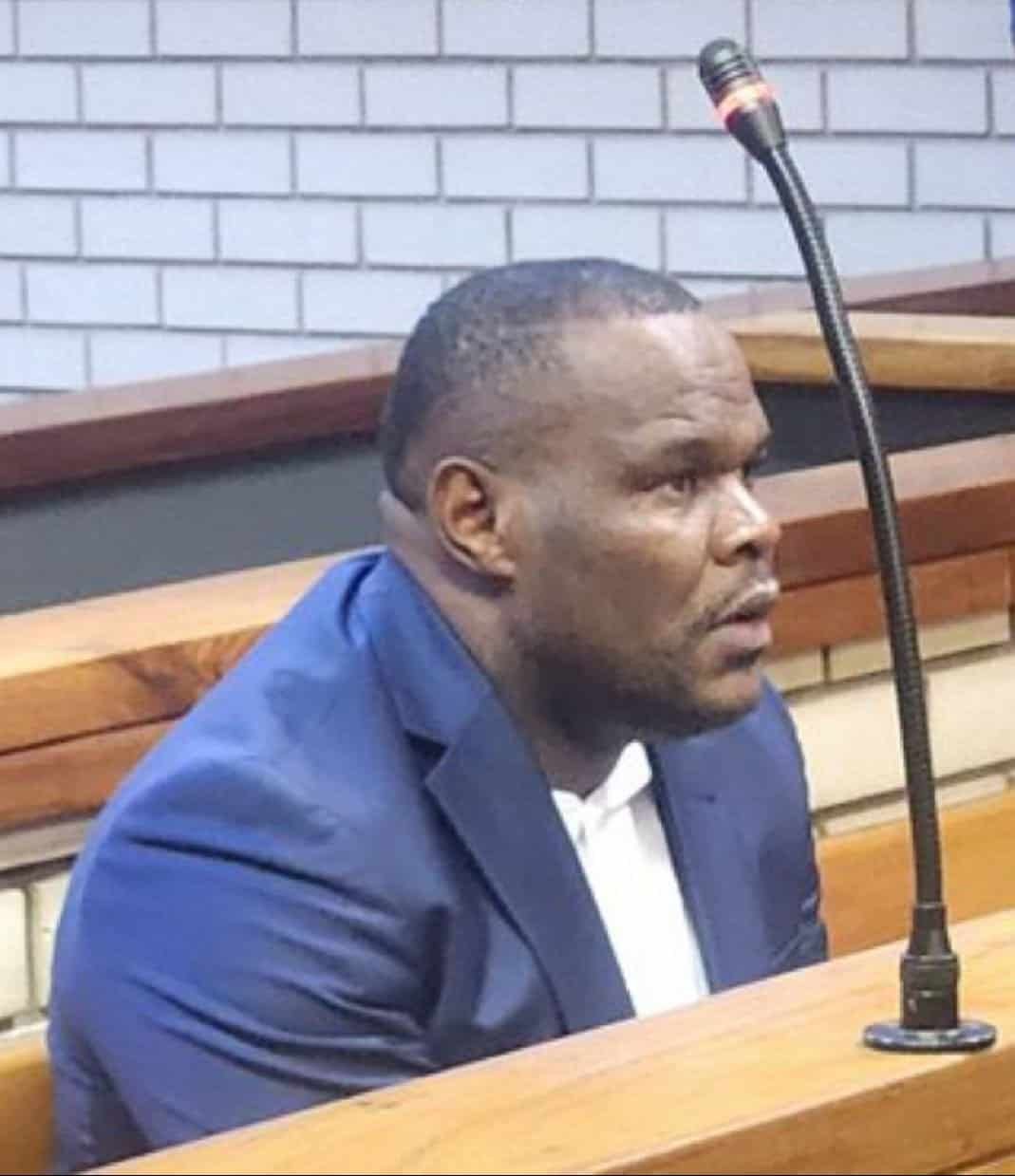
Suspended police sergeant Fannie Nkosi will learn his fate on Wednesday as the Pretoria North Magistrate’s Court prepares to deliver judgment in his bail application, while parallel testimony at the Madlanga Commission continues to cast a spotlight on his relationship with senior municipal official Gareth Mnisi.
Nkosi, 42, appeared in the Pretoria North Magistrate’s Court on Monday, where Magistrate Thandi Theledi confirmed that a ruling on his bail bid would be handed down on 22 April 2026. Until then, Nkosi remains in custody.
The suspended member of the South African Police Service (SAPS) is facing a raft of serious charges, including unlawful possession of explosives and ammunition, as well as defeating the ends of justice. His arrest on 2 April followed a police search at his residence, where authorities allegedly uncovered a cache of weapons and sensitive materials. According to the state, these included firearms, ammunition, a hand grenade, official case dockets, and approximately R50,000 in cash.
Prosecutors have strongly opposed Nkosi’s release on bail, arguing that the nature of the items found and the potential risk to ongoing investigations justify his continued detention. The state is expected to argue that Nkosi’s position within law enforcement, coupled with the seriousness of the charges, raises concerns about possible interference with witnesses or evidence.
Nkosi’s legal team, however, is pushing for his release, maintaining that he is not a flight risk and that there are conditions that could be imposed to mitigate any concerns raised by the prosecution. The defence is also expected to challenge the strength of the state’s case, particularly around the circumstances under which the items were allegedly discovered.
The case has attracted growing public attention, not only because of Nkosi’s role as a police officer but also due to emerging links to proceedings at the Madlanga Commission of Inquiry.
At the commission, suspended City of Tshwane Chief Financial Officer Gareth Mnisi continued his testimony on Monday, shedding light on his personal and professional relationship with Nkosi. Mnisi told the commission that the two men developed a close friendship during a difficult period in his life, particularly while he was going through what he described as a “painful and hostile divorce.”
According to Mnisi, Nkosi became a trusted confidant, offering emotional support and advice. “He was a good listener,” Mnisi told commissioners, portraying the relationship as primarily personal rather than professional.
However, evidence presented before the commission suggests that their interactions may have extended into areas of governance and procurement. Mnisi was questioned extensively about Nkosi’s repeated requests for updates on compliance related to a municipal tender identified as TMPD 01-2024-25.
Mnisi admitted that Nkosi had raised the issue multiple times, particularly in March 2025, but insisted that he eventually became irritated and chose to ignore the requests. He testified that after the third inquiry, he stopped engaging on the matter, claiming he had communicated his disinterest during a phone call.
Commissioners, however, appeared unconvinced. They pointed out that Mnisi had previously responded positively to Nkosi’s messages, even thanking him for reminders, which may have encouraged continued engagement. The panel also questioned inconsistencies in Mnisi’s account, particularly his claim that certain messages could not be linked despite occurring on the same day.
Further testimony revealed that Nkosi became involved in matters relating to municipal service providers. Mnisi told the commission that he mentioned Nkosi in connection with a planned meeting between Umashi Dhlamini and a representative from Gubis85 Solutions, a company reportedly owed money by the City of Tshwane. According to Mnisi, Nkosi had overheard a conversation about delayed payments and subsequently took an interest.
Despite this, Mnisi maintained that he never shared confidential or sensitive municipal information with Nkosi.
The commission also heard evidence regarding politically sensitive communications. Mnisi explained that a message he forwarded to Nkosi about a meeting involving representatives from ActionSA and the Economic Freedom Fighters (EFF) was originally sent to him by Tshwane Deputy Mayor Eugene Modise. He said the message was intended as a warning about individuals allegedly attempting to manipulate the tender process.
In a further controversial revelation, evidence before the commission indicated that in private exchanges, Nkosi and Mnisi referred to EFF leader Julius Malema using a derogatory term, “Mbungulu”.
This has added a political dimension to the proceedings, raising questions about the tone and content of communications between public officials.
Mnisi also confirmed that he had purchased a gift for Nkosi but denied any suggestion that it was intended to influence procurement decisions or secure favourable outcomes in municipal tenders.
As both the criminal case and the commission proceedings unfold, Nkosi’s situation underscores broader concerns about governance, accountability, and the intersection between law enforcement and municipal administration.
All eyes will now turn to Wednesday’s bail ruling, which could determine whether Nkosi prepares his defence from behind bars or under supervised release, even as scrutiny intensifies over his connections and conduct.