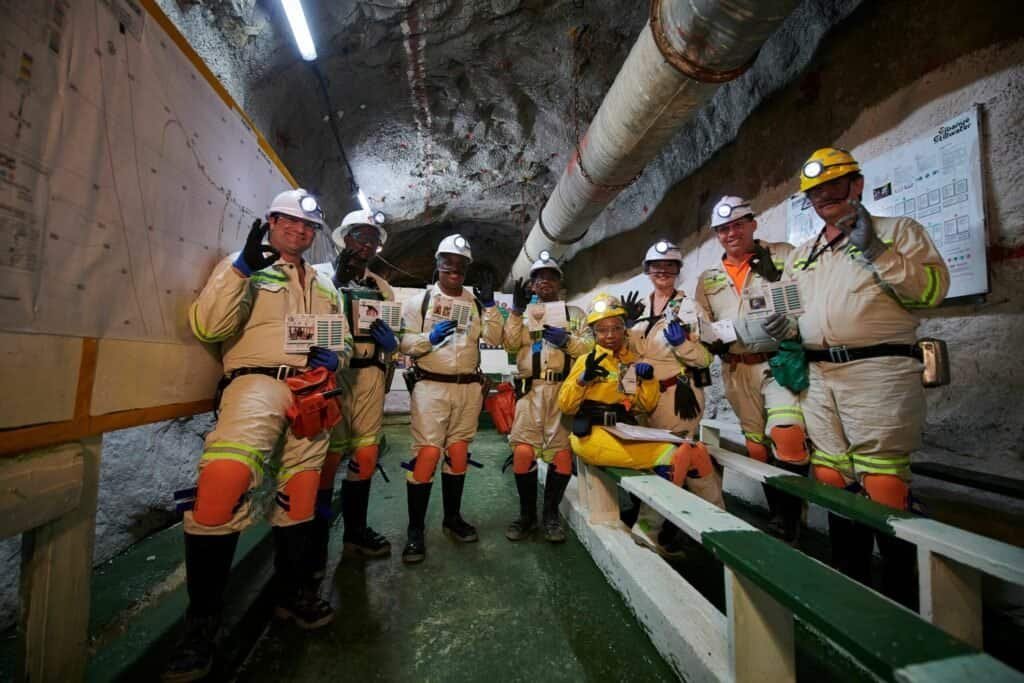
The National Union of Mineworkers (NUM) is opposing Sibanye-Stillwater’s proposed restructuring of its Kwezi shaft in Rustenburg, with up to 1 114 jobs potentially affected as the mining company begins consultations in terms of Section 189A of the Labour Relations Act.
Sibanye-Stillwater announced on Tuesday that it would enter into consultations with organised labour and affected non-unionised employees over the proposed restructuring of the mature platinum group metals (PGM) operation.
The proposed restructuring could affect approximately 781 permanent employees and 333 contractor employees, bringing the total number of potentially affected workers to 1 114.
However, NUM Rustenburg Regional Chairperson July Radibe said some workers have already been transferred to other Sibanye-Stillwater operations.
Speaking to SAFM on Wednesday, Radibe said the union remained hopeful that jobs could be saved through transfers to other operations within the company.
“What brings comfort to our table as National Union of Mineworkers is that Sibanye is not only having Kwezi operations in Rustenburg. They’ve got a lot of operations in Rustenburg where cross-transfer can be made in terms of us saving jobs. Others have already been transferred to other operations. So, we are having comfort that we will do excise and make sure that we save as many jobs as we can.
“Remember, in terms of contract, when you’ve got contracts in your operation, when the lifespan of the operation comes to an end, these are contractors can be given a new scope in other operations.
“When we embark on the section 189 process, the company will have to now present the rationale as to why are we embarking on this process. And the law will then guide us that if we don’t agree to the rationale, it will indicate that we don’t agree to the rationale, based on also the minutes of the future forum that will be taking place.
“And if it comes to a push that our members or employees will be forcefully retrenched, there are other legal routes that we can take, either to challenge the company if we are not agreeing to the rationale of the company,” Radibe concluded.

In a statement issued yesterday, Sibanye-Stillwater said Kwezi is nearing the end of its economic life after mining reached the limits of the approved mining licence area.
The company has also attributed the deterioration in the shaft’s outlook to delays in its proposed Kwezi Shallows project, which was intended to access shallow up-dip mineral resources and extend the productive life of the operation.
According to Sibanye-Stillwater, stakeholder objections, appeals and delays in obtaining the necessary approvals prevented the project from progressing as planned.
The depletion of additional reserves has consequently accelerated the decline in Kwezi’s mining inventory and weakened the shaft’s long-term sustainability, the company said.
Kwezi recorded a loss of approximately R208 million in 2024 and R91 million in 2025, according to Sibanye-Stillwater.
Although improved PGM prices helped the shaft achieve positive margins during the first half of 2026, the company forecasts that Kwezi will return to losses in the second half of the year as production declines.
Despite the financial challenges cited by the company, the NUM is expected to use the Section 189A consultation process to challenge the proposed job cuts and push for alternatives that could preserve employment.
Radibe indicated that the union would scrutinise the rationale for the restructuring and consider legal avenues if workers were ultimately subjected to forced retrenchments.
Sibanye-Stillwater has stressed that no final decision has been made on the proposed restructuring.
The company said the consultation process would consider measures to avoid or minimise job losses, mitigate the impact on affected employees and examine alternatives that could improve Kwezi’s viability.
The company reported that Kwezi produced 20 658 4E ounces during the first half of 2026, accounting for less than 3% of Sibanye-Stillwater’s total managed and attributable South African PGM production of 734 645 4E ounces.
Sibanye-Stillwater CEO Richard Stewart acknowledged the uncertainty created by the consultation process for employees and their families.
“Unfortunately, given the depletion of economically mineable reserves and the corresponding declining financial outlook, it is necessary to commence consultations regarding the future of Kwezi shaft,” Stewart said.