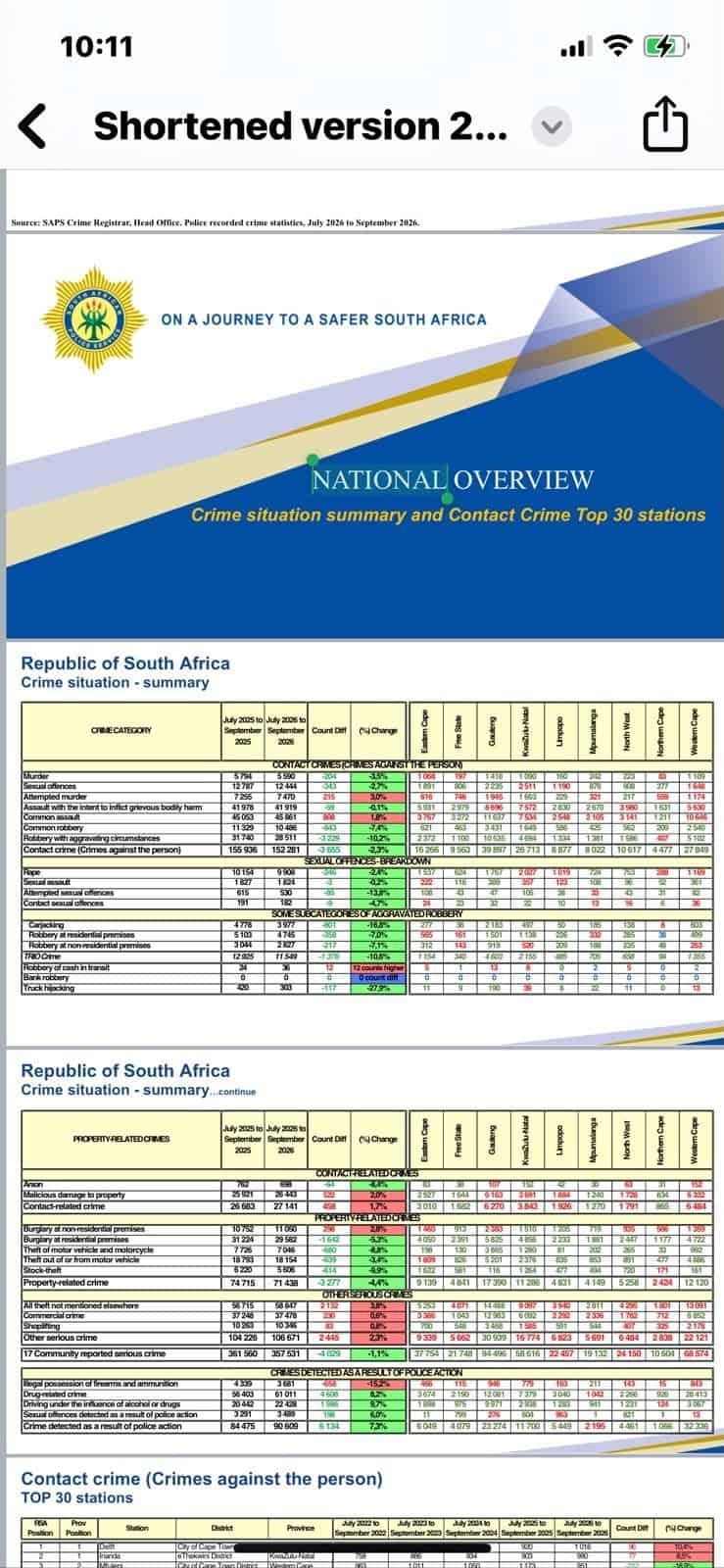
South Africa recorded 9,908 rapes, 7,470 attempted murders and 5,590 murders between July and September this year, with the latest crime statistics exposing the continued scale of violent crime despite improvements in several categories.
The figures mean that an average of 108 rapes were reported to police every day, equivalent to one every 13 minutes over the 92-day reporting period.
The attempted murder figures are equally concerning, with 7,470 cases recorded, an increase of 215 compared with the same period last year. This translates to approximately 81 attempted murders every day, or one every 18 minutes.
The country also recorded an average of 60 murders daily, highlighting the persistent threat facing communities across the country.
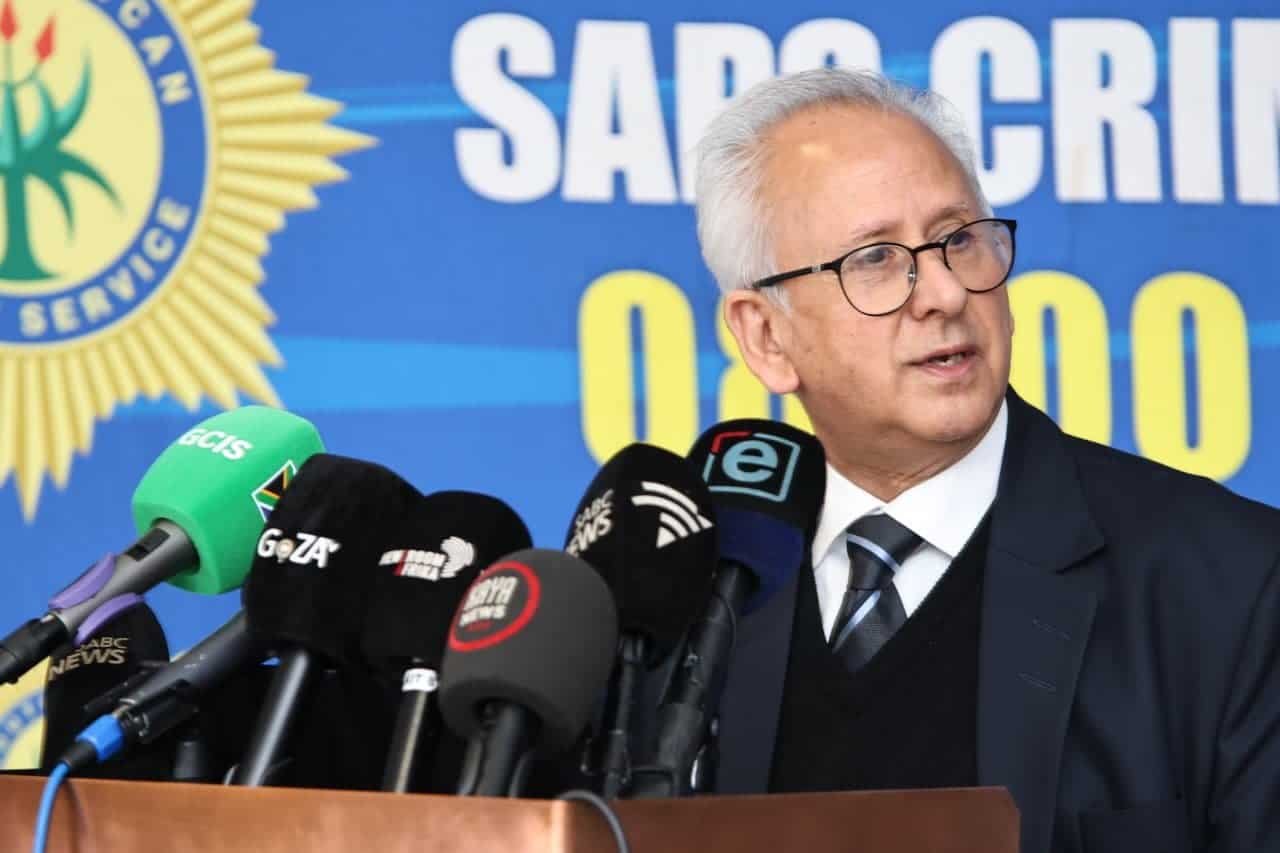
Acting Police Minister Firoz Cachalia released the second-quarter crime statistics for the 2026/27 financial year in Pretoria on Friday, acknowledging that while there had been improvements in several violent crime categories, the levels of violence remained unacceptably high.
He said the statistics were being released at a sombre time following the killings of police officers and two mass shootings that claimed 17 lives in Gauteng and KwaZulu-Natal.
Last week, Lieutenant-Colonel TG Sithole, a station commander, was killed during a shootout while leading an operation in response to a business robbery near Greytown in KwaZulu-Natal.
Earlier this week, Sergeant Madikizela was killed during an operation in Lwandeni, Mthatha, in the Eastern Cape.
Cachalia also referred to the killings of nine people near Atteridgeville in Gauteng and eight people in Sweetwaters, KwaZulu-Natal, saying such incidents were often linked to organised crime.
The minister said the latest figures showed progress in some areas but also exposed serious challenges requiring more focused policing and crime prevention.
“Crime statistics are not merely numbers. Our first duty is to acknowledge these experiences, and our second is to act decisively,” he said.
Despite the increase in attempted murders, the country recorded 5,590 murders during the quarter, a 3.5% decrease compared with the 5,794 recorded during the corresponding period last year.
Reported sexual offences also declined, although the reduction remained relatively small. The statistics showed 9,908 rape cases, compared with 10,154 in the previous corresponding period, representing a 2.4% decrease.
However, the number of reported cases remains alarming, particularly considering the vulnerability of children and women.
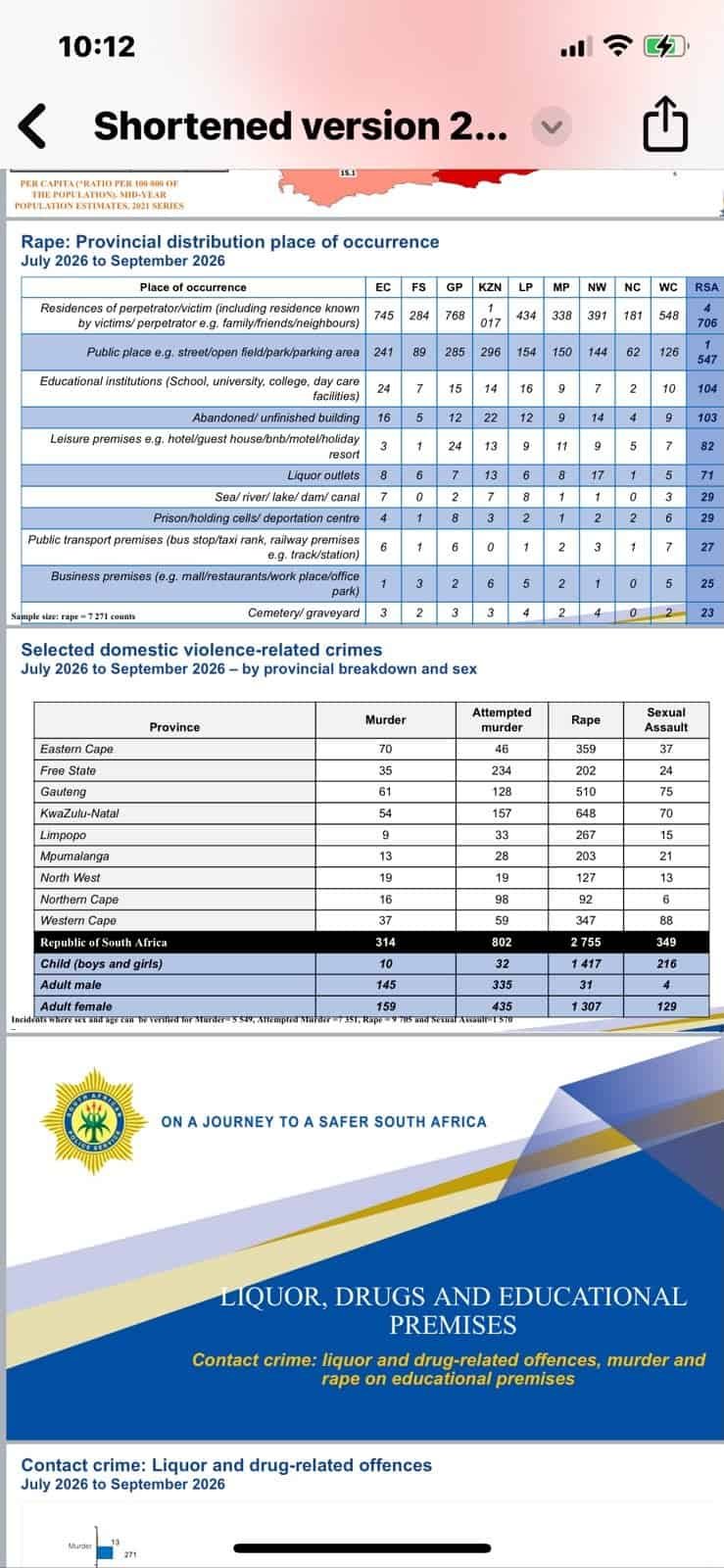
Of the 9,705 rape cases in which the victims’ sex and age could be verified, 4,362 involved children under the age of 18, while 5,116 victims were adult women and 227 were adult men.
Cachalia said protecting women and children required more than improved police investigations, calling for society to confront attitudes and behaviours that normalise violence and abuse.
He said police needed to improve their response when survivors reported sexual offences, ensure professional treatment, strengthen investigations and work with the justice system to hold perpetrators accountable.
The statistics also highlighted the relationship between alcohol abuse and violent crime.
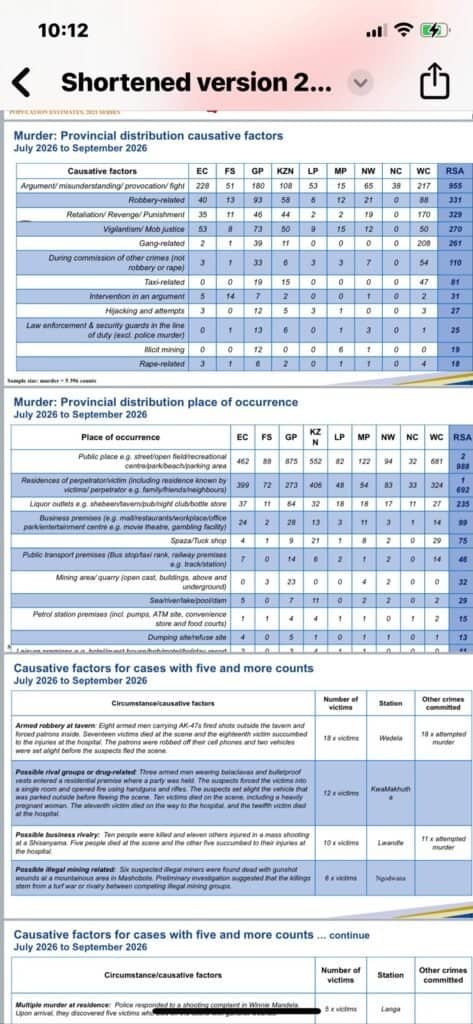
During the three months, police recorded 8,201 alcohol-related contact crimes. These included 271 murders, 589 attempted murders, 1,483 rapes and 5,858 assaults with intent to inflict grievous bodily harm.
A further 235 murders occurred in or around liquor outlets, including shebeens, taverns, pubs, nightclubs and bottle stores.
Cachalia said alcohol did not excuse criminal conduct but acknowledged that excessive drinking and poorly regulated environments could contribute to situations in which arguments escalated into violence.
He said police would strengthen compliance operations against unlicensed liquor outlets and businesses that repeatedly violated their licence conditions.
He also called on provincial liquor authorities and municipalities to enforce responsible trading hours and take action against outlets selling alcohol to minors.
Firearms also remained a major contributor to the country’s murder rate.
According to the statistics, firearms were used in 2,552 murders during the quarter, making them the most frequently recorded instrument used in killings.
The Western Cape recorded 732 firearm-related murders, followed by Gauteng with 675 and KwaZulu-Natal with 560.
Cachalia said police would intensify efforts to recover illegal firearms, investigate their supply chains and use forensic investigations to link recovered weapons to crime scenes.
He warned that firearms increased the likelihood of fatal outcomes during disputes, robberies, domestic conflicts and attacks involving organised criminal groups.
The minister also highlighted the dangers posed by poorly maintained public spaces.
Nearly 3,000 murders during the reporting period occurred in public places, including streets, open fields, parks, recreational centres, beaches and parking areas.
The police analysis also identified 1,547 reported rapes in public places.
A further eight murders and 103 rape incidents were recorded in abandoned or unfinished buildings.
Cachalia said municipalities, property owners and government departments needed to work together to secure abandoned buildings, improve street lighting, clear overgrown areas and maintain public spaces.
He argued that crime prevention could not be left to police patrols alone, as neglected infrastructure and unsafe public environments created opportunities for criminal activity.
Provincial figures also showed significant differences in crime patterns, with particular areas continuing to experience disproportionately high levels of violence.
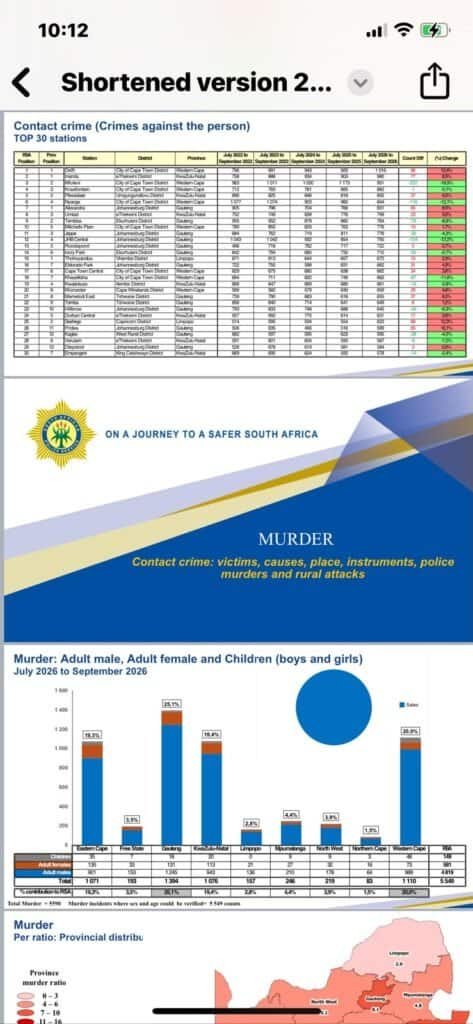
The minister said the Eastern Cape had the highest risk of murder, followed by the Western Cape and KwaZulu-Natal, although he emphasised that violence was concentrated in particular localities rather than evenly distributed across the provinces.
The Western Cape accounted for approximately 80% of gang-related murders and almost 60% of taxi-related murders, while Gauteng recorded the highest number of robbery-related murders.
At police station level, Delft in the Western Cape recorded 1,016 contact crime cases, followed by Inanda in KwaZulu-Natal with 980.
However, improvements were recorded at several stations. Mfuleni reported 222 fewer contact crimes than the same period last year, while Nyanga recorded 116 fewer, Johannesburg Central 104 fewer and Khayelitsha 87 fewer.
Crime activist Yusuf Abramjee welcomed the reductions in several categories but warned that South Africans should not mistake improving statistics for a victory against crime.
“The declines in murder, carjacking, truck hijacking, business and residential robberies, and sexual offences are welcome news – but they are not good enough!” Abramjee said.
He welcomed the reported reduction of more than 1,600 murders compared with the same period last year, as highlighted by the minister, as well as a 16.8% decline in carjackings and a 27.9% decrease in truck hijackings.
Business and residential robberies also declined by 7% each.
However, Abramjee said thousands of South Africans continued to experience violent crime every quarter and that declining figures did not necessarily mean people felt safer in their neighbourhoods.
“For me, the real measure of progress is not only whether the statistics improve, but whether people actually feel safer in their neighbourhoods, whether victims get justice, whether criminals are arrested and prosecuted, and whether communities can reclaim spaces they have surrendered to fear,” he said.
He called for sustained action, accountability, stronger policing and a criminal justice system that delivers results.
Cachalia acknowledged that policing alone could not resolve the country’s crime crisis, saying government needed to address underlying factors such as alcohol abuse, access to illegal firearms, family violence, social disorder and neglected infrastructure.
He said the Integrated Crime and Violence Prevention Strategy adopted by Cabinet would form part of government’s broader approach to reducing violent crime.
The minister said police would prioritise targeted operations against criminal networks, illegal firearms, extortion, kidnappings and organised robberies, while strengthening partnerships with municipalities, communities and other government departments.
He maintained that the reductions in certain crime categories demonstrated that focused policing could produce results, but warned that the continued scale of violent crime required urgent and sustained intervention.
“There is no acceptable level of murder, rape, kidnapping or violent assault,” Cachalia said.