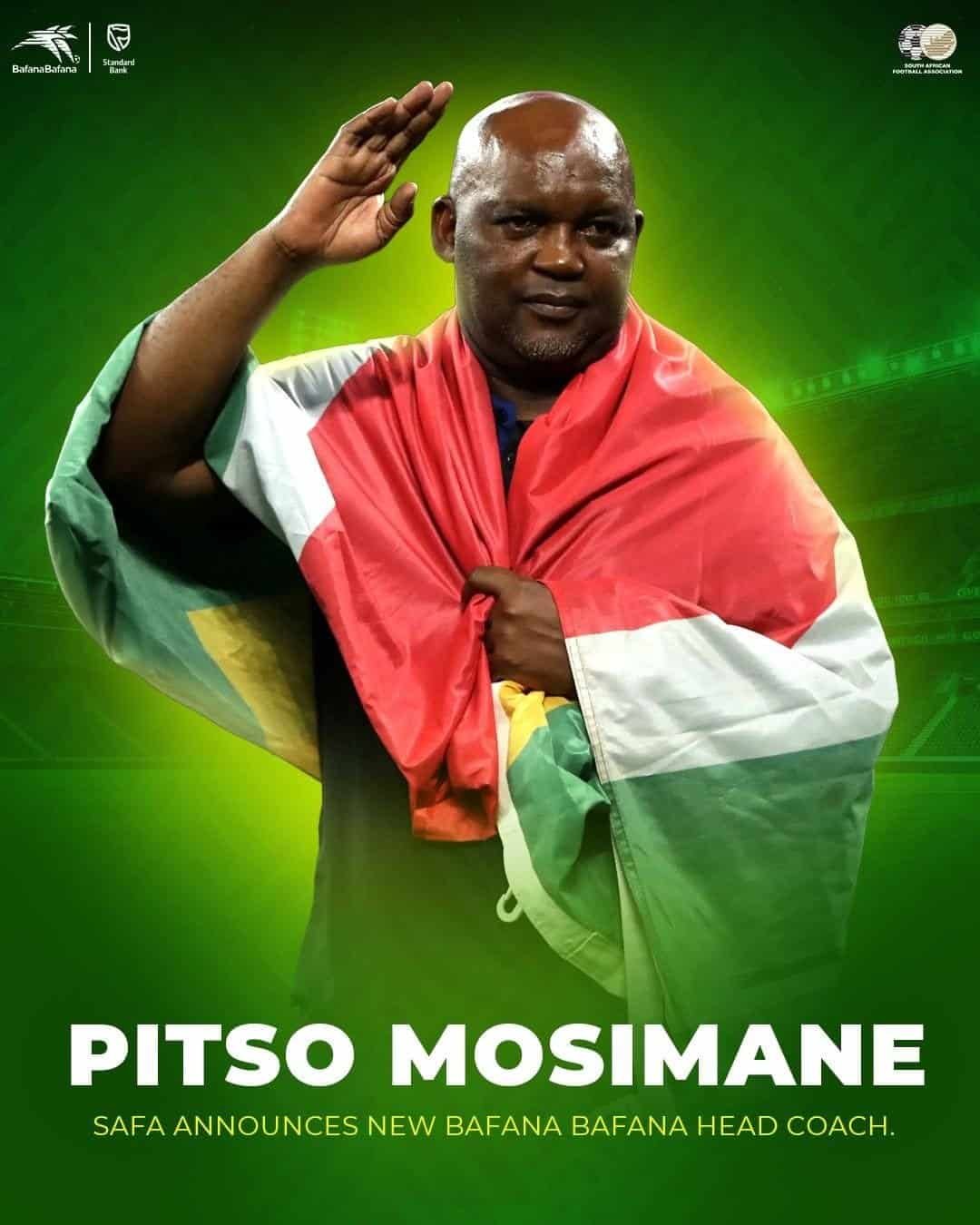
Pitso “Jingles” Mosimane has returned to the Bafana Bafana hot seat with a powerful declaration that his second coming to the national team is about something far bigger than football, a club or even himself.
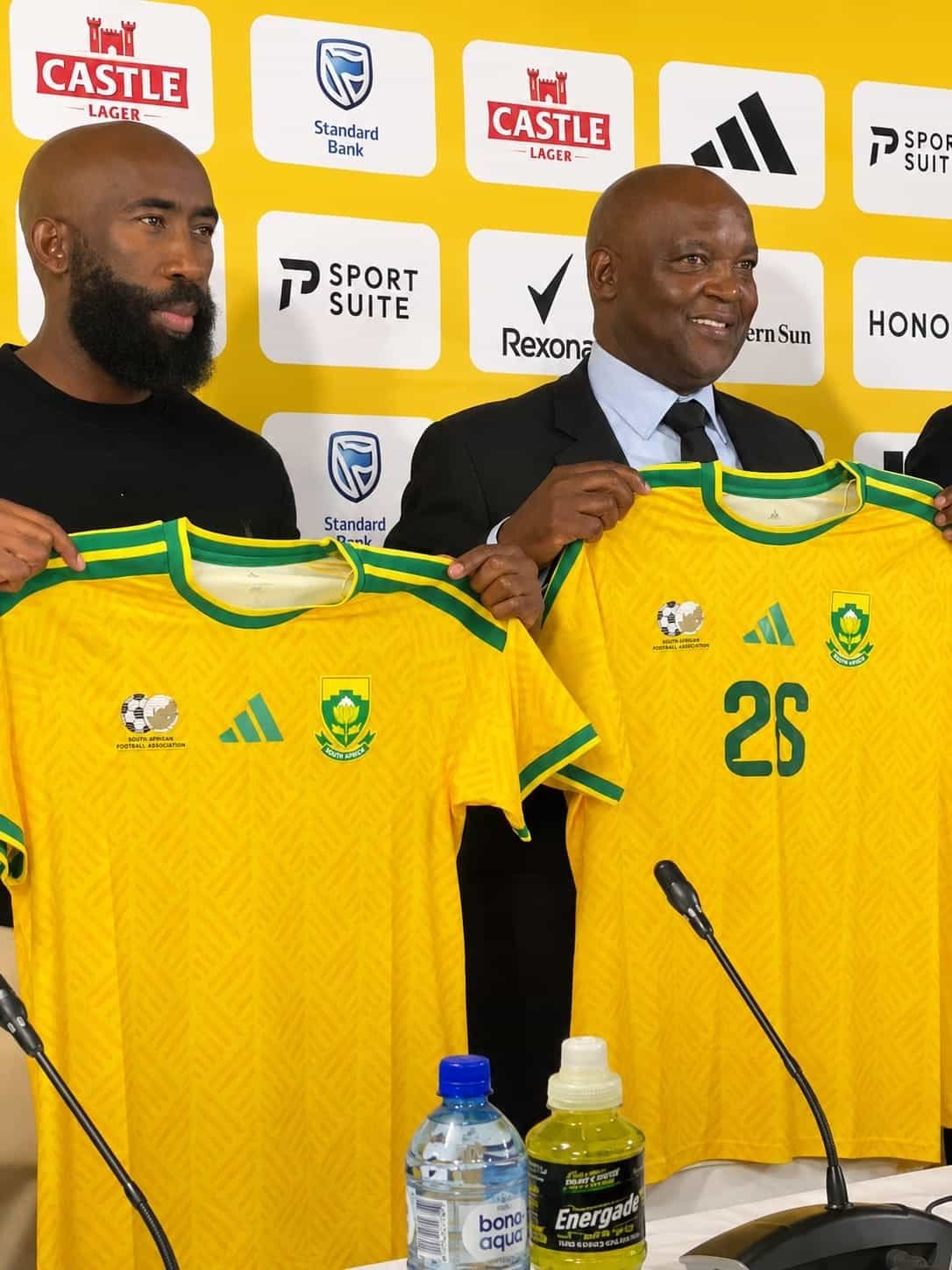
The highly decorated South African coach was officially unveiled as the new Bafana Bafana head coach on Tuesday during a media briefing at SAFA House in Nasrec, Johannesburg, bringing an end to weeks of uncertainty over who would succeed Belgian coach Hugo Broos.
For the coach, who was born in Kagiso, west of Johannesburg, the appointment represents an emotional return to the national team he previously led between 2010 and 2012.
“This is a special day for me in my football career,” Mosimane said during his unveiling. “I’ve learned that there are moments in this game that are bigger than a match, moments that are bigger than a club, and certainly bigger than any individual. For me, this is one of those moments.”
Mosimane returns to the national team with a vastly different résumé from the one he had when he first took charge.
His first permanent spell with Bafana began after the 2010 FIFA World Cup ended in 2012 after South Africa failed to qualify for the Africa Cup of Nations.
Fourteen years later, he returns as one of the most successful coaches in African football.
After leaving Bafana, Mosimane went on to enjoy a highly successful tenure at Mamelodi Sundowns, where he established the club as a dominant force in domestic football and guided them to their historic 2016 CAF Champions League triumph.
He later moved to Egyptian giants Al Ahly, where he added two more CAF Champions League titles to his collection, cementing his reputation as one of the continent’s elite coaches. CAF recognises Mosimane as a three-time African champion.
That wealth of experience will now be brought to a Bafana Bafana side whose expectations have risen sharply following its historic 2026 FIFA World Cup campaign.
South Africa reached the knockout stages of the tournament for the first time, giving Mosimane the difficult task of building on the foundation laid by Broos rather than starting from scratch.
Mosimane said he was returning with a deep understanding of the responsibility attached to leading the country’s senior men’s national team.
“I take this responsibility knowing that I still have something to give in football, especially in my country,” he said. “I do so with many, many, many years of experience at the moment, but also with an even deeper appreciation of what it means to lead Bafana Bafana.”
For Mosimane, the national team job carries a responsibility that cannot be compared with coaching a club.
“I know this is simply not a coaching job,” he said. “This is bigger than Pitso Mosimane.”
He further explained the difference between managing a club and managing the national team.
“When you coach a club, you represent a badge, a community, and millions of supporters. But when you coach Bafana Bafana, you represent your country.”
That national responsibility is likely to place Mosimane under intense scrutiny from the beginning of his second tenure.
He inherits a team that has just experienced one of the most significant periods in its history. Broos leaves behind a side that not only qualified for the 2026 World Cup but also progressed to the knockout stage, raising the bar for whoever took over the reins.
Mosimane has therefore been handed a team with momentum, but also one carrying greater expectations.
His immediate challenge will be preparing Bafana for the 2027 Africa Cup of Nations qualifying campaign. South Africa is scheduled to face Guinea and Eritrea in back-to-back qualifiers as the campaign gets under way.
But his return is significant for another reason. It gives Mosimane an opportunity to rewrite the final chapter of his first Bafana tenure.
When he left the national team in 2012, his departure followed the disappointment of failing to qualify for the 2012 Africa Cup of Nations. His subsequent career, however, changed the perception of him dramatically.
At Sundowns, he won domestic trophies and conquered Africa. At Al Ahly, he repeated that continental success and further enhanced his reputation on the international stage.
Now, more than a decade later, he has returned to the very position that once represented one of the most difficult moments of his career.
The challenge will be to translate his club success and continental experience into sustained international success.
Mosimane, however, is embracing the responsibility rather than shying away from it.
“I understand the weight of this role, the expectations that come with it, and what this team means to South Africa,” he said. “I accept with pride and determination and humility. I accept the challenge.”
The words captured the tone of his return: experienced, reflective and conscious of the significance of leading his country.
For Mosimane, the Bafana job is no longer simply about tactics, formations and results. He thanked Broos for laying a solid foundation and setting the bar higher for Bafana.