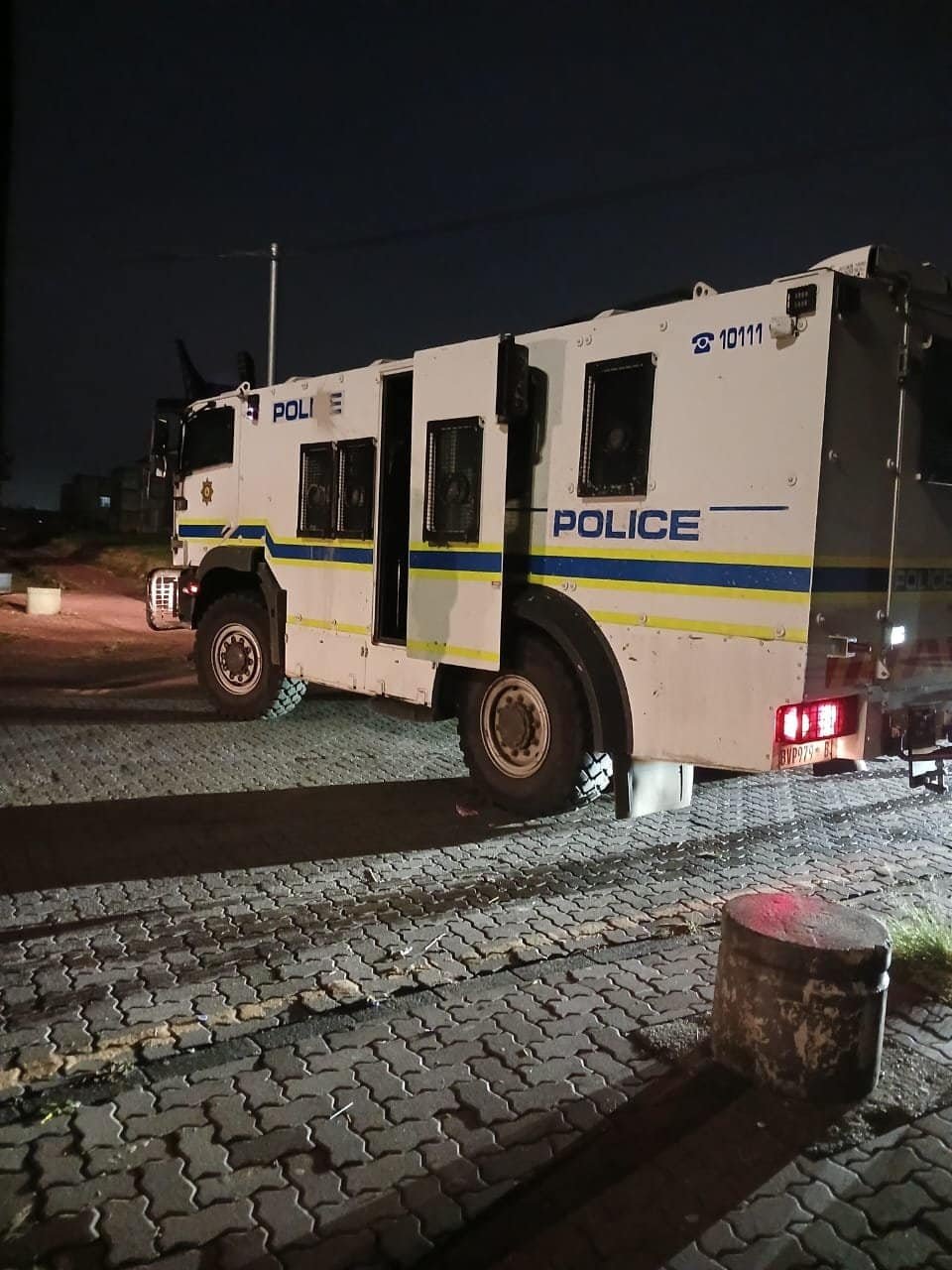
A birthday celebration turned into a bloodbath late Saturday night after a police captain allegedly opened fire on his girlfriend—also a police officer—and her brother, killing both before turning the state-issued firearm on himself.
The shocking incident unfolded in Protea Glen, Soweto, where family and friends had gathered to celebrate the birthday of the female officer. What began as a joyous evening ended in horror as multiple gunshots rang out, leaving two people dead and three others injured. The captain, who held the rank of Captain in the SAPS, reportedly died by suicide moments later.
Police confirmed that two counts of murder, three counts of attempted murder, and an inquest docket have been opened at the Protea Police Station.
According to early eyewitness accounts, the captain allegedly pulled his girlfriend aside during the celebration, where they were seen having a private exchange. Suddenly, partygoers reported seeing the officer pull out a firearm and shoot the woman point-blank, before turning the gun on her brother, who had attempted to intervene.
The shooter allegedly continued firing into the crowd, injuring three civilians. The motive for the killings is not yet clear, but police sources suggest the captain may have suspected infidelity or domestic tension. Minutes later, he reportedly turned the gun on himself.
The names of the deceased have not yet been officially released, pending family notification.
Gauteng Provincial Police Commissioner Lieutenant General Tommy Mthombeni expressed deep shock and sorrow following the incident.
“We give our members these tools to protect themselves against criminals, so it is very disheartening to see the very same tools being used to kill their loved ones,” said Mthombeni.
“I urge our members to make use of Employee Health and Wellness services to help them with personal and work-related stress. No life should ever be lost this way.”
This tragedy is not an isolated case. It joins a growing list of intimate partner femicides and domestic murders committed by police officers – the very people entrusted to protect citizens.
Earlier this year, a constable in the Eastern Cape was arrested after allegedly shooting and killing his ex-wife, also a police officer, at her workplace before attempting to take his own life. In Limpopo, a warrant officer fatally stabbed his girlfriend and later committed suicide in his police vehicle.
These incidents continue to raise alarm among advocacy groups and law enforcement watchdogs about the role of state weapons in gender-based violence and femicide (GBVF), particularly when committed by armed officers.
The Independent Police Investigative Directorate (IPID) has launched an investigation into the Protea Glen incident. Speaking to journalists, IPID spokesperson Phaladi Shuping confirmed that such cases are deeply troubling and must be treated with urgency.
“These tragedies highlight the need for stronger psychological support, tighter firearm controls, and improved vetting in the SAPS,” said Shuping.
“We are seeing too many officers using their state-issued weapons in acts of domestic terror. This is not just a policing issue—it’s a national crisis.”
According to IPID’s 2024/2025 annual report, at least 87 cases of domestic violence involving police officers were reported, with 21 ending in fatalities. The number is expected to rise in the 2025 report.
Gender-based violence experts say the trend reflects systemic failure within both SAPS and broader state institutions.
“These incidents are the product of a deeply broken system that does not screen, support, or hold officers accountable,” said Thuli Dhlamini, a Johannesburg-based GBVF policy analyst.
“When a man in uniform murders his partner with a state-issued weapon, the state must accept part of the blame. It’s time for zero tolerance on abuse within the ranks.”
Dhlamini said that South Africa’s fight against GBVF cannot succeed unless law enforcement becomes part of the solution—not the source of the problem.
“What kind of message does it send when those sworn to protect instead become the perpetrators of our worst nightmares?” she asked.
According to Stats SA’s 2025 crime and violence report, a woman is killed every four hours in South Africa—often by someone she knows. The United Nations has labelled South Africa one of the most dangerous places for women outside of a war zone, particularly in cases involving armed domestic partners.
More disturbingly, a University of Cape Town GBVF Study found that nearly 1 in 10 police officers involved in domestic disputes had previously shown signs of aggression or instability at work, but were not removed or disarmed.
Calls are growing for urgent police reform, including routine mental health assessments for all officers, and immediate suspension of firearm licenses for officers involved in domestic violence complaints.
Stronger internal discipline within SAPS, and the creation of a dedicated GBVF Rapid Response Unit within IPID.
For now, the community of Protea Glen is left grappling with trauma, anger, and the pain of lives violently cut short.
As South Africa is soon to observe Women’s Month in August, this horrific case serves as a chilling reminder that femicide and police-perpetrated violence are still raging epidemics in the country — and that time is running out to act.
If you or someone you know is in danger or facing abuse, contact the GBV Command Centre at 0800 428 428 or dial 1207867# for help.