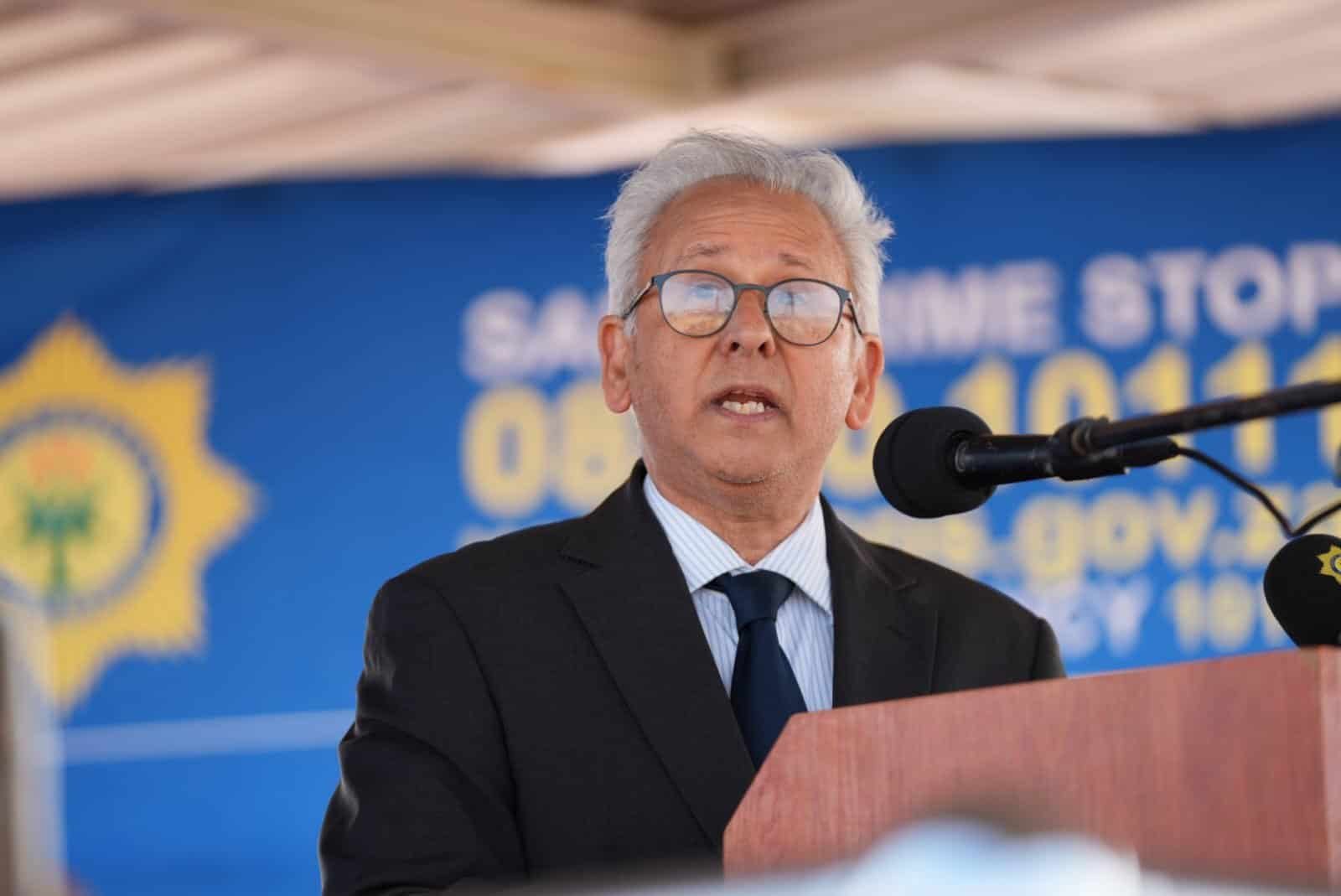
South African police have intensified preparations ahead of the planned anti-immigration demonstrations expected to take place across the country on 30 June, with Acting Police Minister Firoz Cachalia expected to inspect and address a major law enforcement parade at FNB Stadium on Friday afternoon as authorities enter the final phase of operational readiness.
The parade follows a week of high-level security engagements involving the South African Police Service (SAPS), intelligence structures, provincial police leadership and representatives of the private security industry as the government seeks to prevent a repeat of the widespread violence and looting experienced during the July 2021 unrest.
Authorities have consistently maintained that while South Africans have a constitutional right to protest peacefully, law enforcement will respond decisively to any acts of violence, intimidation, road blockades, attacks on businesses, looting or damage to property.
The Acting Minister will be joined at Friday’s parade by Gauteng Premier Panyaza Lesufi, Acting National Commissioner Lieutenant General Puleng Dimpane, the co-chairpersons of NATJOINTS, provincial commissioners and senior SAPS management.
Following the parade, Dimpane, NATJOINTS Chairperson Lieutenant General Tebello Mosikili, PSIRA Chief Executive Officer Manabela Chauke and representatives from leading private security companies, including Bidvest Protea Coin, Fidelity Services Group, SBV Services, SSP, Servest and G4S, among others, are expected to brief the media on collaborative measures aimed at ensuring safety before, during and after the planned demonstrations.
The inclusion of these companies has, however, raised questions about whether black-owned private security companies are being adequately represented in engagements involving one of South Africa’s largest industries.
During Wednesday’s engagement with the private security industry, Cachalia described the sector as a critical partner in maintaining national stability and combating crime.
He said the meeting reaffirmed government’s commitment to proactive planning, intelligence sharing, operational coordination and joint responses where necessary.
“The private security industry is a critical partner in the fight against crime and in maintaining stability,” Cachalia said.
“With hundreds of thousands of security officers deployed throughout the country and significant technology and operational resources at its disposal, the industry serves as an important force multiplier for law enforcement.”
He noted that private security officers often serve as the first eyes and ears on the ground in communities, shopping centres, business districts, industrial areas and residential neighbourhoods.
According to Cachalia, partnerships such as the Eyes and Ears Initiative and collaboration with Business Against Crime South Africa continue to strengthen crime prevention efforts by improving situational awareness and intelligence sharing.
He said extensive planning had already been completed ahead of the demonstrations.
“The SAPS, working closely with other law enforcement agencies, including the metro police and private security, are fully prepared for the planned demonstrations on 30 June.”
He added that operational plans had been finalised, resources mobilised, and communication channels strengthened between SAPS, PSIRA, private security companies and other stakeholders.
“Our objective is straightforward. We will protect lawful and peaceful demonstrations as provided for in our Constitution. At the same time, we will act decisively against any individual or group that seeks to engage in criminal conduct.”
Cachalia warned that authorities would not tolerate attempts to exploit the demonstrations through violence, intimidation, attacks on businesses, destruction of property or road blockades.
“We must work together. We must stand together. We must share resources. We must share information. We must support one another in the interest of public safety,” he said.
However, while the government has repeatedly emphasised partnership and inclusivity, African Times was struck by the composition of the private security companies publicly identified as participating in the engagement.
The companies announced by the government and expected to participate in Friday’s media briefing include Bidvest Protea Coin, Fidelity Services Group, SBV Services, SSP, Servest and G4S. African Times could not identify any prominent black-owned private security company among those publicly announced, despite black-owned firms constituting a significant and growing component of South Africa’s private security industry.
This prompted African Times to seek clarity from the Private Security Industry Regulatory Authority (PSIRA), which attended the meeting in its capacity as the regulator of the sector.
African Times asked what criteria had been used to select participating companies, whether black-owned security firms had been considered for inclusion, whether the companies reflected the demographic and ownership profile of the industry, and what message the composition of the meeting sent to black-owned companies.
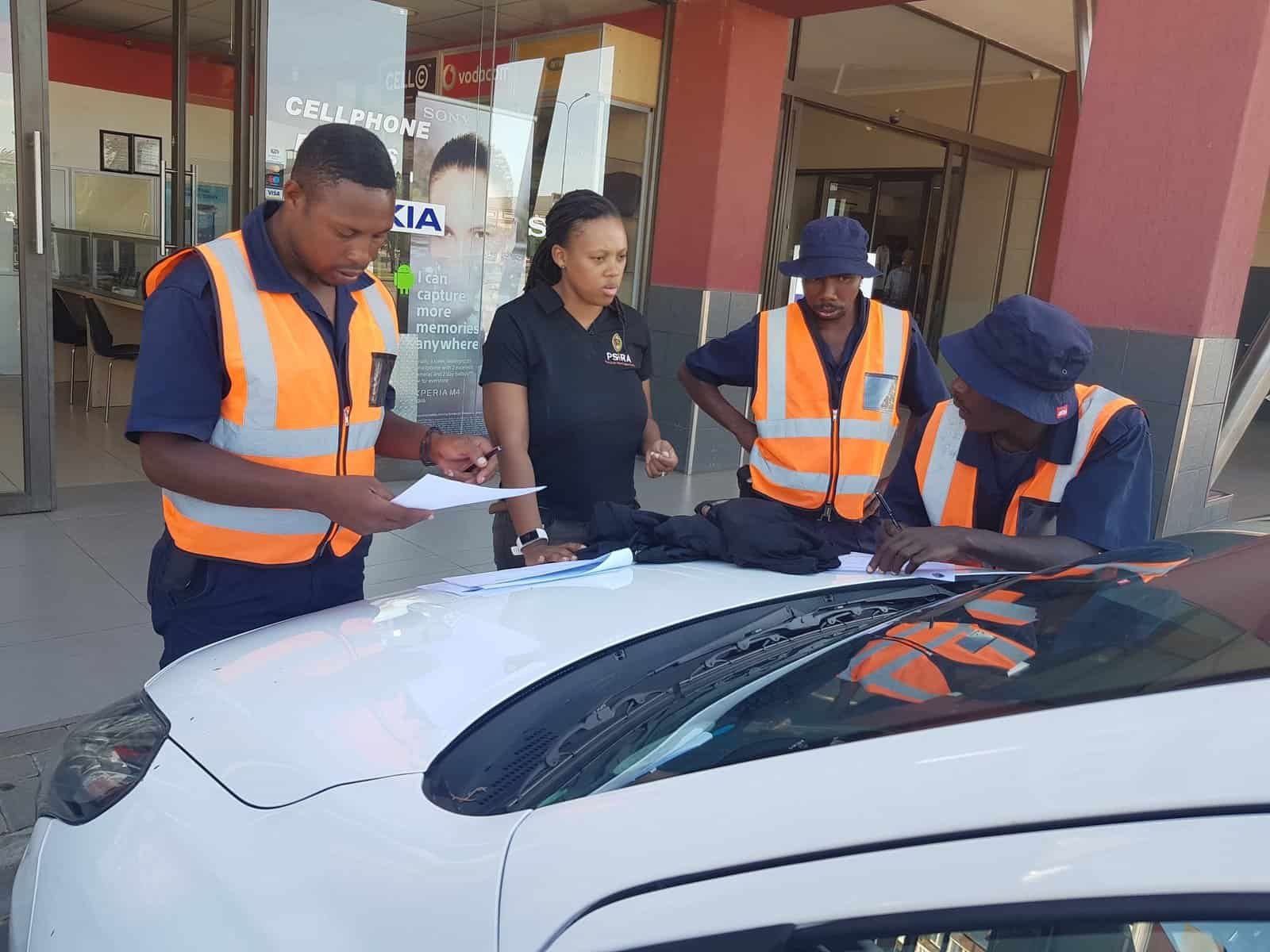
Responding to African Times, PSIRA spokesperson Bonang Kleinbooi rejected suggestions that the process had excluded companies on racial grounds.
“PSiRA nominated ten of the largest private security companies, taking into account companies across different ownership profiles,” Kleinbooi said.
“Invitations were subsequently extended to twenty companies, and those who attended represented a mix of racial and ownership backgrounds. Attendance was voluntary.”
Kleinbooi added that PSIRA remained committed to advancing transformation in the sector.
“PSiRA remains committed to inclusivity and transformation within the sector. During the meeting, the participating companies collectively nominated Fidelity to represent them on the matter under discussion.”
While PSIRA maintains that invitations reflected different ownership profiles, it has not disclosed the full list of the twenty companies that were invited or identified which black-owned companies were represented at the engagement.
That omission is likely to fuel further questions from an industry where transformation remains an important issue. The private security sector employs hundreds of thousands of security officers and has increasingly become an essential partner to the police in crime prevention, infrastructure protection and public order operations. Many black-owned security companies have expanded significantly over the years and have argued that they should be afforded equal opportunities to participate in strategic national security engagements.
The debate also comes against the backdrop of heightened public tension over immigration, with several organisations planning demonstrations on 30 June.
Government has acknowledged growing public concerns around illegal immigration while urging communities to pursue lawful avenues rather than vigilantism or violence.
Police say all operational plans have now been finalised and that sufficient resources have been deployed to ensure the demonstrations remain peaceful while protecting lives, businesses and public infrastructure.
This is a developing story.