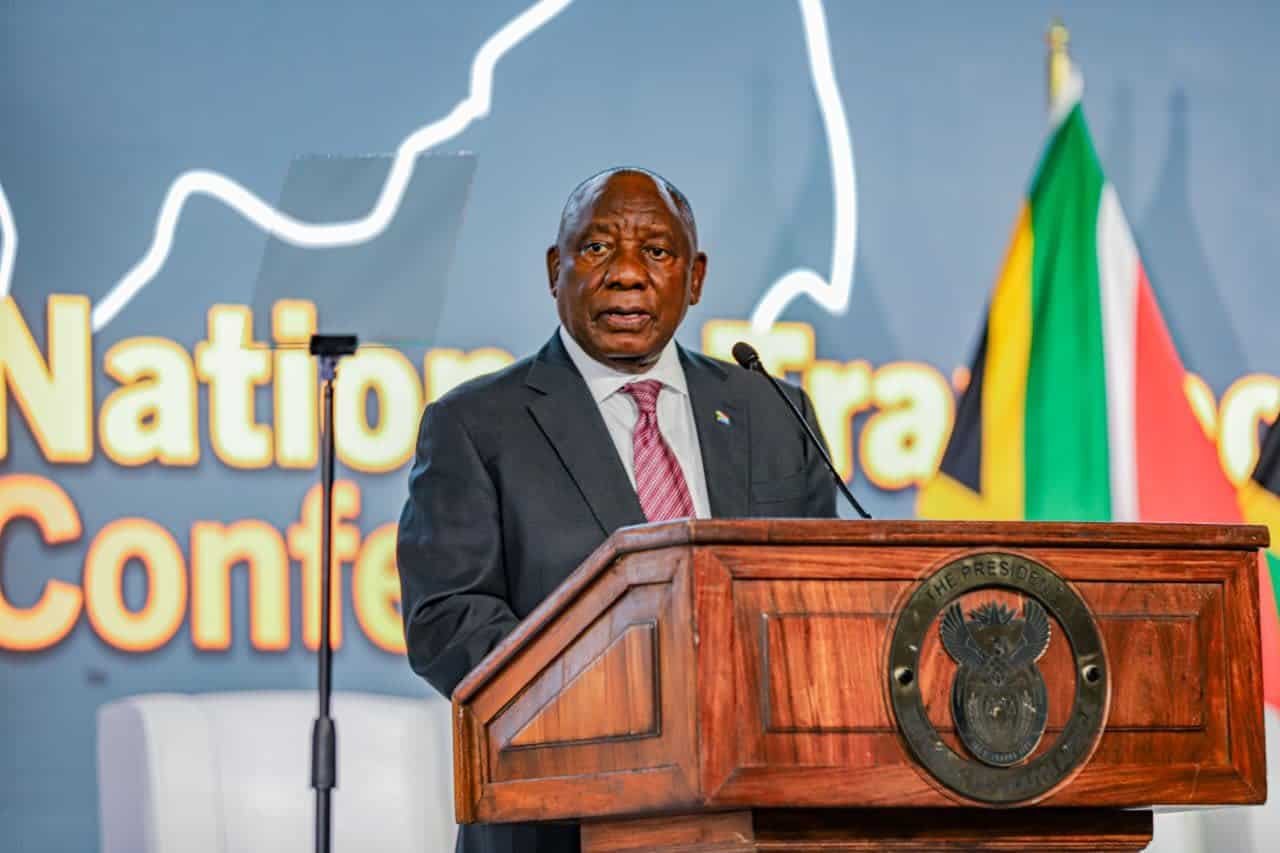
President Cyril Ramaphosa has called for urgent reforms in South Africa’s transport and logistics system, warning that inefficiencies are costing the country’s economy nearly R1 billion a day and undermining its competitiveness.
Delivering the keynote address at the inaugural National Transport Conference at Gallagher Convention Centre on Monday, Ramaphosa said a modern and efficient transport system was essential for economic recovery, job creation and inclusive growth.
The conference, hosted by the Department of Transport, has brought together government officials, business leaders, labour representatives and regional partners to discuss the future of South Africa’s transport sector.
Ramaphosa said the country’s transport network remains the backbone of economic activity, linking factories, mines and farms to markets both locally and internationally.
“When our transport arteries are blocked or inefficient, growth stalls, costs rise and opportunity diminishes,” he said. “But when they flow freely, the country thrives.”
He emphasised that improving transport infrastructure would not only boost trade and investment but also help reduce inequality by connecting communities to jobs, education and essential services.
South Africa’s freight network, however, remains heavily dependent on road transport. Ramaphosa said about 69% of freight currently moves by road, placing significant strain on national roads and contributing to safety risks.
To address this imbalance, the government is prioritising rail reforms through the implementation of the National Rail Policy of 2022 and the National Freight Logistics Roadmap of 2023. These policies aim to restore rail as the backbone of the country’s logistics network.
Under the reforms, private operators will be allowed access to the national rail system through the Transnet Rail Infrastructure Manager, while strategic infrastructure remains publicly owned.
Ramaphosa said train slots capable of transporting 24 million tonnes of freight annually have already been conditionally allocated to 11 train operating companies, with the first private operator expected to begin operations in April 2027.
Government has also set a target of moving 250 million tonnes of freight by rail by 2029, up from 160 million tonnes moved in the last financial year, which represented a 5.5% increase from the previous year.
Meanwhile, the state-owned logistics company Transnet recorded revenue of R82 billion in the 2024–2025 financial year, nearly 8% higher than the year before.
Ramaphosa said an extensive maintenance and upgrading programme is underway to address port backlogs and improve operational performance. The work is being coordinated through the National Logistics Crisis Committee, which was established to stabilise the country’s struggling logistics system.
Passenger rail services are also undergoing a gradual revival. The Passenger Rail Agency of South Africa has restored 37 of its 40 priority passenger corridors and introduced more than 300 locally manufactured train sets as part of efforts to rebuild commuter rail capacity.
Government is targeting 116 million passenger journeys in the current financial year, with a long-term goal of reaching 600 million trips annually by 2029.
Ramaphosa said reliable passenger rail would help lower commuting costs for working-class South Africans while improving access to employment opportunities.
Despite the push to strengthen rail, the president acknowledged that road transport remains critical to the economy. Government manages more than 31,000 kilometres of national roads through the South African National Roads Agency.
Major infrastructure projects such as the Moloto Road upgrade and the construction of the Msikaba and Mtentu bridges in the Eastern Cape have created more than 35,000 jobs and supported over 2,000 small businesses, he said.
However, road safety remains a serious concern. More than 12,000 people die on South Africa’s roads each year, although the latest festive season recorded the lowest number of crashes in five years following increased enforcement.
Ramaphosa said the government aims to halve road deaths by 2030.
The president also highlighted the importance of the maritime and aviation sectors to trade and regional integration. More than 90% of South Africa’s trade by volume moves by sea, making efficient ports essential to the country’s economic future.
He noted that global geopolitical tensions, including conflict in the Middle East, have highlighted the strategic value of South Africa’s ports as alternative shipping hubs.
Industry stakeholders also used the conference to highlight the challenges facing the minibus taxi sector. The South African National Taxi Council said the industry is under growing financial pressure due to rising vehicle costs, maintenance expenses and limited access to affordable financing.
SANTACO President Abnar Tsebe is expected to participate in a panel discussion on taxi industry reform, focusing on funding, subsidisation and formalisation.
Closing his address, Ramaphosa proposed the establishment of a permanent Transport Council to bring together government, the private sector and transport operators across land, air and sea.
He said stronger collaboration would help stabilise the sector and ensure transport plays a central role in driving South Africa’s economic growth.