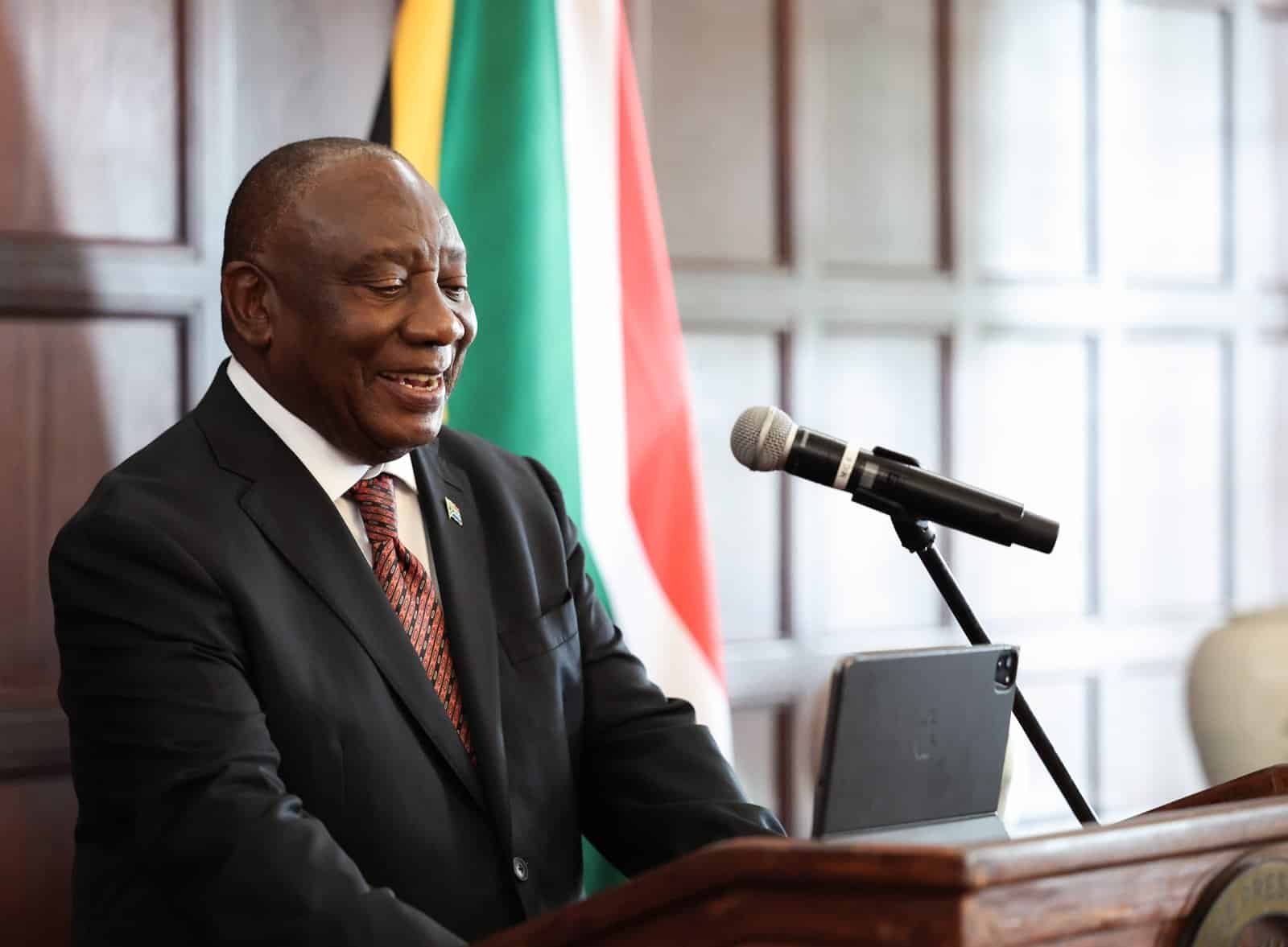
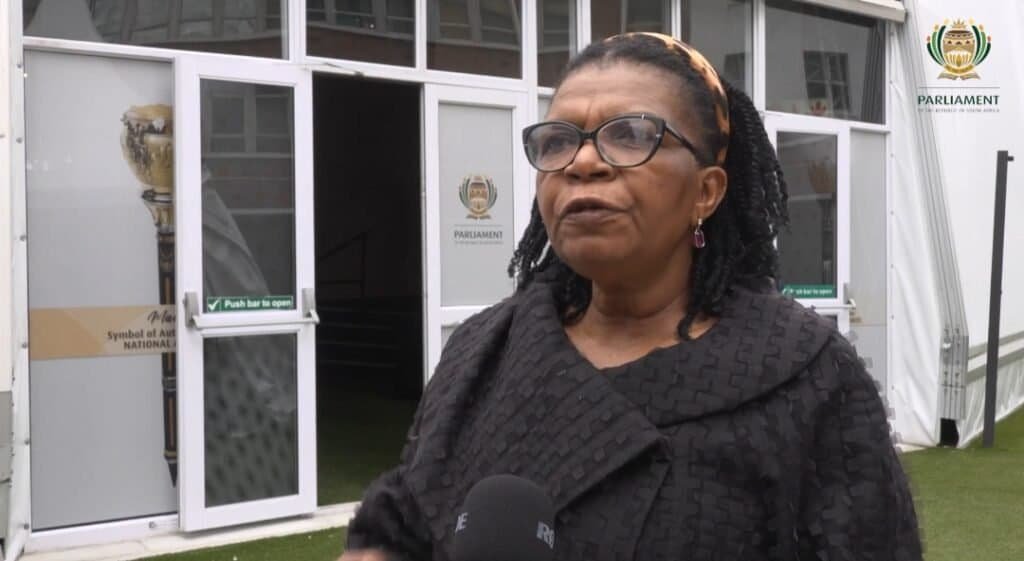
President Cyril Ramaphosa’s newly reshuffled Cabinet will officially take office on Wednesday afternoon when new ministers and deputy ministers are sworn in at the Union Buildings, but the ceremony is already being overshadowed by the controversial return of former minister Dina Pule to the executive.
The swearing-in follows Ramaphosa’s announcement of a Cabinet reshuffle on Tuesday night after consultations within the Government of National Unity (GNU), with changes affecting several key portfolios.
While most of the appointments have been welcomed by coalition partners, it is Pule’s appointment as Minister of Social Development that has ignited fierce political backlash and reopened debate about accountability in public office.
Her appointment comes only weeks after the dramatic removal of former Social Development Minister Sisisi Tolashe, whose tenure ended amid mounting controversy and public criticism, leaving one scandal-plagued minister being replaced by another whose political career was previously derailed by ethical findings.
Wednesday’s ceremony at the Union Buildings will see Pule, along with newly appointed ministers Willem Aucamp and David Maynier, as well as four new deputy ministers, take the oath of office before beginning their duties.
The Presidency said the appointments are intended to strengthen governance within the GNU following consultations with Democratic Alliance (DA) leadership.
However, the DA has made it clear that while it supports its own nominees entering Cabinet, it fundamentally opposes Pule’s return.
DA spokesperson on Social Development, Nazley Sharif, described the appointment as “shocking” and said Ramaphosa had ignored serious findings that previously forced Pule from office.
The party argued that the Social Development portfolio, responsible for billions of rand in social grants and programmes supporting South Africa’s poorest citizens, required a minister with “impeccable credentials.”
The criticism revives one of the ANC’s most embarrassing Cabinet controversies during former president Jacob Zuma’s administration.
Pule served as Communications Minister between 2011 and 2013 before becoming embroiled in allegations surrounding the 2012 ICT Indaba in Cape Town.
Investigations found that her romantic partner, businessman Phosane Mngqibisa, improperly benefited from the high-profile government-sponsored conference through business interests linked to the event.
The Public Protector found Pule guilty of maladministration, improper conduct and breaches of the Executive Ethics Code after determining that she failed to declare her relationship and allowed a conflict of interest to develop.
The report concluded that her conduct violated the ethical standards expected of Cabinet ministers.
The findings triggered political outrage and intensified pressure on Zuma to act.
Parliament’s ethics committee later found that Pule had breached Parliament’s Code of Ethical Conduct, while then Speaker Max Sisulu reprimanded her for betraying her oath of office and bringing Parliament into disrepute.
The matter was also referred for criminal investigation.
In July 2013, Zuma removed Pule from Cabinet during a reshuffle, ending her brief stint as Communications Minister.
Her political career never fully recovered, making Tuesday night’s announcement one of the most unexpected appointments of Ramaphosa’s presidency.
The ANC, however, has thrown its full weight behind Pule’s return.
In a statement issued after the reshuffle announcement, the governing party congratulated Pule and expressed confidence that she would serve with dedication while improving the lives of South Africa’s most vulnerable citizens.
The ANC said the appointments reflected the President’s constitutional powers and reaffirmed its commitment to working collectively within the GNU.
Ramaphosa’s decision has nevertheless renewed criticism from opposition parties and governance activists who argue that leaders previously found guilty of ethical misconduct should not be entrusted with Cabinet positions again.
For critics, Pule’s appointment appears inconsistent with Ramaphosa’s long-standing promises to build an ethical state and restore public confidence in government following years of State Capture.
The reshuffle itself also reflects the evolving dynamics within the GNU.
The DA secured several prominent appointments, including Willem Aucamp as Agriculture Minister and David Maynier as Minister of Forestry, Fisheries and the Environment.
John Steenhuisen moves into the position of Deputy Minister of Trade, Industry and Competition, while Alexandra Abrahams becomes Deputy Minister of Electricity and Energy, Jack Bloom joins Water and Sanitation as Deputy Minister, and Yusuf Cassim takes up the Deputy Higher Education portfolio.
DA leader Geordin Hill-Lewis said the party’s representatives had been selected to demonstrate “the DA difference” in government by promoting clean governance, accountability and service delivery.
He said the party expected every representative serving in the GNU to uphold high ethical standards and remain focused on practical results.
The contrast between the DA’s emphasis on integrity and Ramaphosa’s decision to reinstate Pule has further exposed tensions within the coalition government.
For Ramaphosa, the decision represents another difficult balancing act between managing ANC internal politics, rewarding experienced party figures and maintaining credibility on ethical governance.
As the new ministers prepare to take the oath of office on Wednesday afternoon, attention is expected to focus less on the constitutional formalities and more on one question that has quickly come to define this reshuffle: why, after being removed from Cabinet in disgrace more than a decade ago, has Dina Pule been given a second chance at one of the government’s most sensitive portfolios?