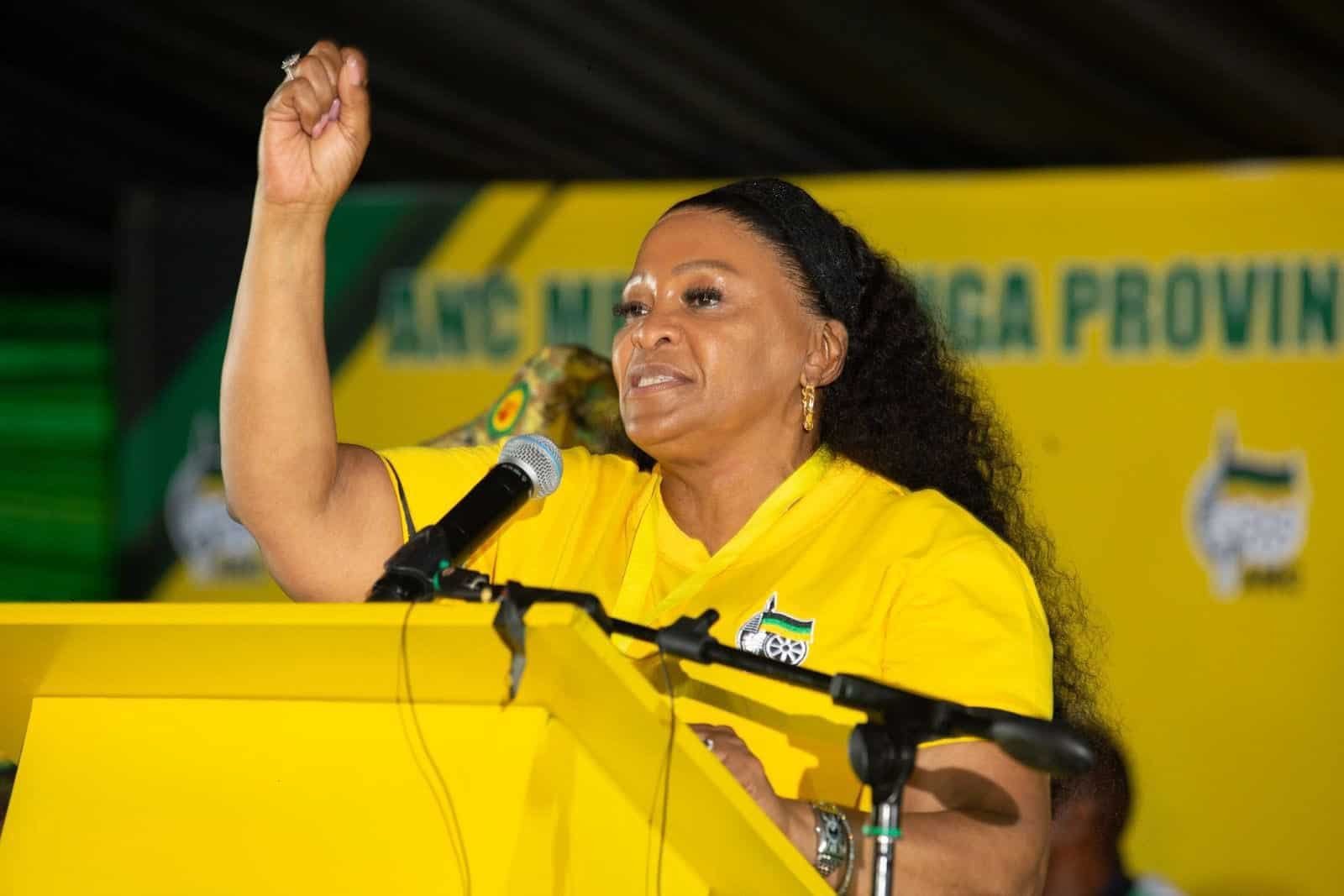
A ruling ordering Katleho Mokonyane and her business partner, Bonelela Mgudlwa, to repay more than R14 million linked to irregular Covid-19 contracts has triggered a wave of public anger, with many South Africans questioning accountability in corruption cases.
The Special Tribunal handed down the decision last week following an investigation by the Special Investigating Unit (SIU), which found that the contracts awarded by the Mpumalanga Department of Health in 2020 were unlawful and procedurally flawed.
While the legal findings have been widely reported, it is the public reaction that is now dominating the conversation.
Frustration over accountability
On social media platform X, users expressed frustration not only with the individuals implicated, but with what they see as a broader culture of impunity.
One user remarked that corruption during the Covid-19 pandemic appeared to have benefited politically connected individuals, adding that young people were often unfairly criticised despite facing limited opportunities.
Another user questioned why financial recovery orders are not consistently followed by criminal prosecutions, arguing that consequences for corruption should extend beyond repayment.
A third post criticised what it described as a pattern where politically exposed families become linked to lucrative state tenders, particularly during times of national crisis.
The case has reignited long-standing concerns about whether enough is being done to hold those involved in state corruption fully accountable.
What the Tribunal found
The Tribunal ruled that Mokonyane and Mgudlwa’s company improperly secured contracts worth approximately R14.3 million for the supply of medical jumpsuits and surgical masks.
Investigators found that:
- No competitive bidding process was followed
- Only one company submitted quotations
- Mandatory bid committees were bypassed
- The supplier lacked proper regulatory licensing
- Potential conflicts of interest were not disclosed
As a result, the Tribunal declared the contracts invalid from the outset and ordered the pair to repay the full amount, along with legal costs.
The SIU argued that these failures undermined basic procurement rules designed to ensure fairness and transparency in the use of public funds.
Defence dismissed
In their defence, Mokonyane and Mgudlwa maintained that the goods were delivered and used by the department, and that there was no legal requirement for their company to hold specific regulatory certification at the time.
They also argued that any non-disclosure of relationships did not influence the outcome of the contract award.
However, the Tribunal rejected these arguments, stating that proper procurement procedures cannot be ignored, even during emergency situations such as the Covid-19 pandemic.
Spotlight on political links
The case has also drawn attention due to Katleho Mokonyane’s connection to senior ANC leader Nomvula Mokonyane, raising renewed concerns about political proximity and access to state contracts.
Although no direct finding was made against the senior Mokonyane, public discourse has increasingly focused on the role of politically connected individuals in government procurement processes.
For many observers, the case reflects deeper systemic issues rather than an isolated incident.
Broader concerns resurface
The controversy has revived debate about Covid-19 procurement, a period marked by urgent spending but also widespread allegations of corruption.
The SIU has, in recent years, pursued multiple investigations aimed at recovering funds lost through irregular contracts. However, public sentiment suggests that many South Africans remain unconvinced that justice is being fully served.
Calls for stronger action, including criminal prosecutions and stricter oversight, have grown louder in the wake of the Tribunal’s decision.
No response yet
At the time of publication, neither Mokonyane, Mgudlwa, nor their legal representatives had issued a public response to the ruling.
As the fallout continues, the case is likely to remain in the spotlight. not only for its legal implications, but for what it reveals about public trust in government systems.
For now, the strongest reaction is coming from ordinary South Africans, many of whom see the ruling as a step forward, but not the final word on accountability.