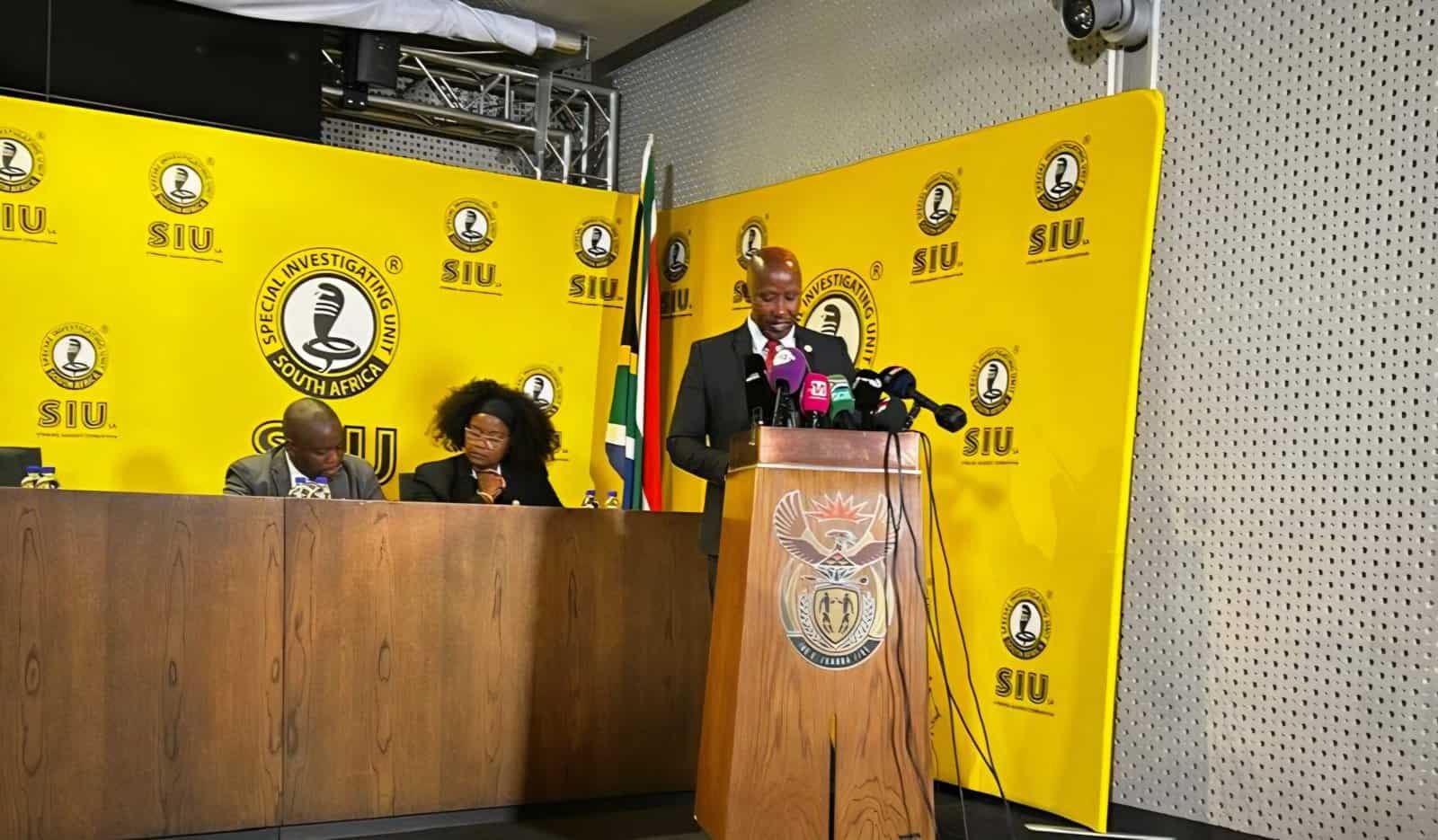
South Africa’s immigration system was turned into a “marketplace” where visas and permits were effectively sold, the Special Investigating Unit (SIU) revealed on Monday in its interim report into corruption at the Department of Home Affairs.
The report, presented by acting SIU head Leonard Lekgetho, paints a damning picture of a coordinated internal corruption network involving Home Affairs officials, intermediaries and foreign nationals.
According to the SIU, adjudicators and facilitators within the department allegedly worked together to bypass official procedures, approving visa and permit applications in exchange for bribes. Evidence gathered includes WhatsApp messages and banking records showing payments made to officials to secure approvals.
Lekgetho said the investigation uncovered a pay-for-approval scheme in which corrupt officials received an estimated R16.3 million in bribes.
“The system was manipulated to benefit those who could pay, rather than those who qualified,” he said.
The probe, which began in May 2024 following a whistleblower tip-off, also revealed that certain border control systems were compromised through corrupt practices.
High-profile individuals have been implicated, including self-proclaimed prophet Shepherd Bushiri, Nigerian televangelist Timothy Omotoso, and Nigerian rapper 3GAR, whose real name is Prince Daniel Obioma.
According to the SIU, these individuals allegedly worked with Home Affairs officials to manipulate documentation and secure permanent residency.
Cellphone analysis revealed direct communication between officials and applicants, with payments ranging from R500 to R3,000 allegedly made via e-wallet transfers to fast-track or unlawfully approve applications.
“The SIU received information that foreign nationals were colluding with syndicates involving corrupt officials to secure permits without merit,” Lekgetho said. “Permits were issued without proper assessment of asylum claims.”
The interim report forms part of a wider investigation authorised under a 2024 proclamation by President Cyril Ramaphosa, covering alleged maladministration in visa processes over nearly two decades.
Home Affairs Minister Leon Schreiber said the findings expose “the deepest and darkest” failures within the department, describing the report as a turning point.
“For the first time, we are seeing the full extent of how a handful of officials exploited loopholes in manual systems to cause enormous damage,” Schreiber said.
He confirmed that disciplinary action is already underway against those implicated. Since April 2025, 20 officials have been dismissed, while dozens more have faced suspensions and warnings.
Schreiber added that he has requested the department’s director-general to work with other government departments to ensure that dismissed officials are not re-employed elsewhere in the public service while facing criminal proceedings.
The investigation has also identified more than 2,000 study visas that were fraudulently issued through these syndicates. Processes are now underway to cancel those visas, with further steps expected to deport or prosecute those involved.
Several cases have already been referred for criminal prosecution, with calls for the National Prosecuting Authority to prioritise them.
Schreiber said the corruption was made possible by outdated, paper-based systems that allowed officials too much discretion.
To address this, the department is rolling out a new Electronic Travel Authorisation (ETA) system, aimed at automating visa processing and reducing human interference.
The system uses biometric verification and machine learning to assess applications and detect fraudulent documents. Since its initial rollout, it has already rejected more than 30,000 visa applications that did not meet requirements.
“We are shutting down the space for manipulation by removing manual processes entirely,” Schreiber said.
The department plans to expand the system to all visa categories and integrate it with border control systems, including facial recognition at airports and land ports of entry.
Officials say the long-term goal is to ensure that every visa issued to enter South Africa is processed through secure, automated systems.
While the SIU’s report focuses on wrongdoing, Schreiber also acknowledged the role of ethical officials within Home Affairs, calling for a cultural shift within the department.
“This is a moment for all officials to stand up and reject corruption,” he said.
The SIU’s investigation is ongoing, with a final report expected to provide further details on the scale of the corruption network and those involved.