President Cyril Ramaphosa has engaged in a critical phone call with United States President Donald Trump as South Africa stares down the possibility of damaging US tariffs that could hit key sectors and cost thousands of jobs.
The early morning call on Wednesday, 6 August 2025, focused on bilateral trade and came amid growing concern that Washington may soon impose punitive tariffs on South African exports — a move that could severely disrupt trade relations and push the already fragile local economy further into uncertainty.
The Presidency confirmed the engagement through a brief statement on Thursday, 7 August 2025, noting that both leaders “undertook to continue with further engagements” and that trade teams on both sides would take the negotiations forward.
“The Presidents discussed bilateral trade matters and the ongoing review of key agreements,” said Presidential Spokesperson Vincent Magwenya. “They recognised the complex global economic environment and agreed to deepen engagement going forward.”
While the tone of the discussion was described as “cordial,” insiders say no firm commitments were made, leaving industry stakeholders nervous about what lies ahead.
The backdrop to this high-level call is the ongoing review of South Africa’s preferential access to US markets under the African Growth and Opportunity Act (AGOA). If the US decides to withdraw or downgrade South Africa’s AGOA status, major export sectors — including agriculture, automotive manufacturing, and clothing — could be hit with higher tariffs.
More than R50 billion worth of exports rely on AGOA preferences, and over 70,000 jobs — many of them held by youth and women in rural areas — are tied to the value chains now at risk.
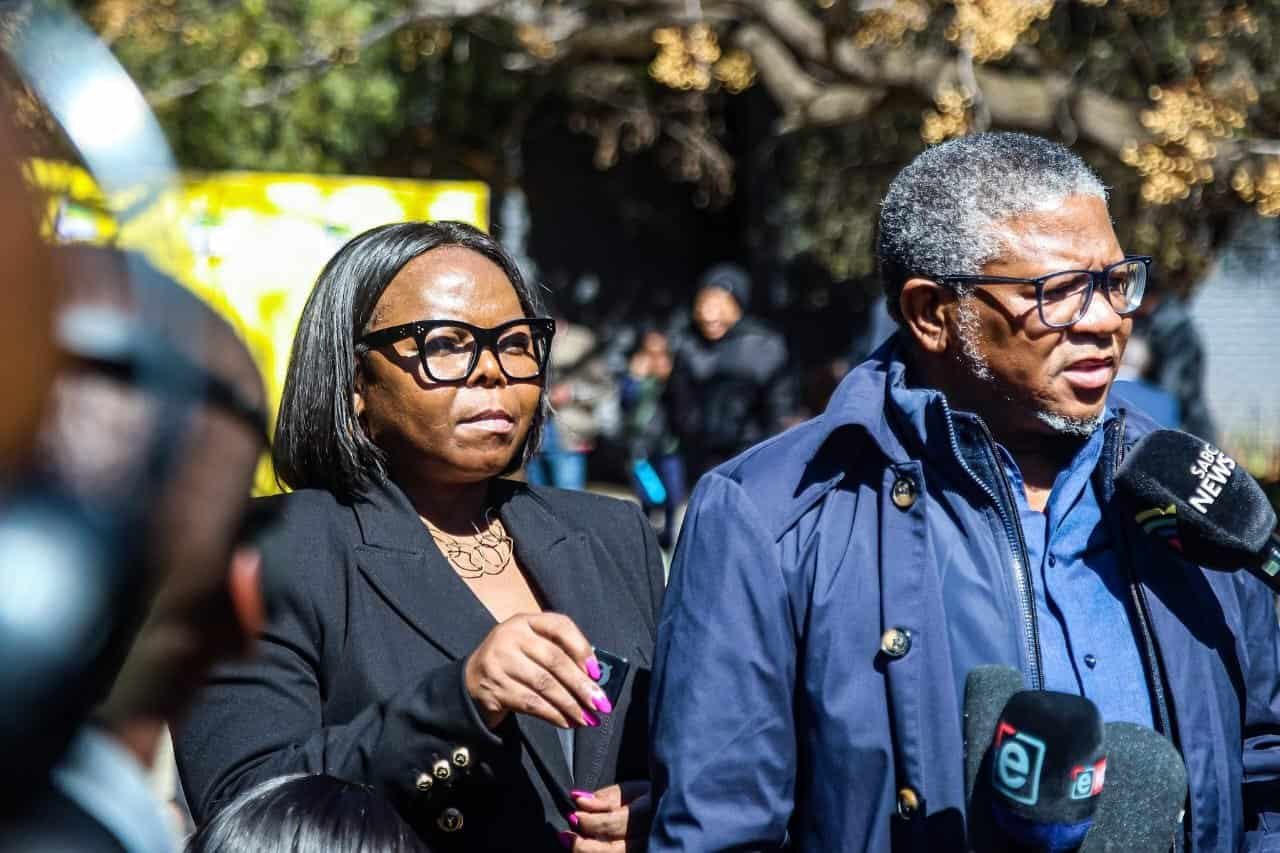
In a media briefing this week, ANC Secretary-General Fikile Mbalula sought to calm fears, insisting that the government was handling the issue responsibly.
“We are not panicking,” Mbalula told journalists at Luthuli House. “President Ramaphosa is dealing with this matter through diplomatic and structured trade engagements. The call with Trump shows we are engaging at the highest level.”
He also warned against what he called “alarmist rhetoric,” dismissing suggestions that the government had failed to act quickly enough.
“These kinds of reviews are normal in international trade. South Africa remains committed to open, fair trade — but we will also not be bullied into abandoning our sovereignty,” Mbalula said.
The Democratic Alliance (DA), however, isn’t convinced.
“This government is sleepwalking into an economic disaster of its own making,” said DA official. “We warned months ago that the US was unhappy with South Africa’s policy inconsistencies, particularly its dealings with sanctioned countries and its ambiguous foreign policy.”
DA said the government’s failure to act decisively has placed critical jobs and livelihoods on the line.
“Thousands of workers in the citrus, wine, auto, and textile sectors are now in limbo because the ANC would rather play global politics than protect our economy.”

The Economic Freedom Fighters (EFF) also weighed in — but from a very different angle.
“Ramaphosa’s call to Trump is a form of economic begging. Instead of building a self-sufficient economy and aligning with BRICS, he is on the phone with imperialist powers asking for leniency,” said EFF national spokesperson Sinawo Thambo.
The party slammed the ANC’s reliance on Western markets, arguing that the country’s trade strategy is too exposed to the whims of the Global North.
“This is the price we pay for decades of under-investment in African industrialisation. The president should be focused on empowering township economies, not pleading with foreign billionaires.”
Relations between Pretoria and Washington have been strained over the past two years. Among the sore points are: alleged arms shipments to Russia, which South Africa has denied; the country’s ambiguous stance on global conflicts such as the Russia-Ukraine war and the Gaza crisis; and concerns over governance, corruption, and regulatory uncertainty deterring US investors.
US trade officials have been openly critical of what they call South Africa’s “unpredictable alignment,” raising fears that the country’s AGOA privileges are now at risk of being revoked or downgraded.
Trade analysts say the phone call may be a last-ditch effort to stabilise relations and avoid economic fallout.
“The fact that Ramaphosa spoke to Trump directly shows how serious this is,” said Dr. Zanele Dlamini, a trade policy expert. “But unless there’s a swift and convincing diplomatic campaign, we may not avoid tariffs.”
Negotiations between South Africa’s Department of Trade, Industry and Competition (DTIC) and the Office of the US Trade Representative (USTR) are ongoing. The final decision on AGOA eligibility is expected by late September.
With youth unemployment hovering at 43.4%, and millions of young South Africans unable to find work, any loss of trade access could deal a severe blow to the economy and deepen the country’s social crisis.
For now, South Africans must wait and watch — as their president plays diplomatic chess with a leader known for his unpredictability.