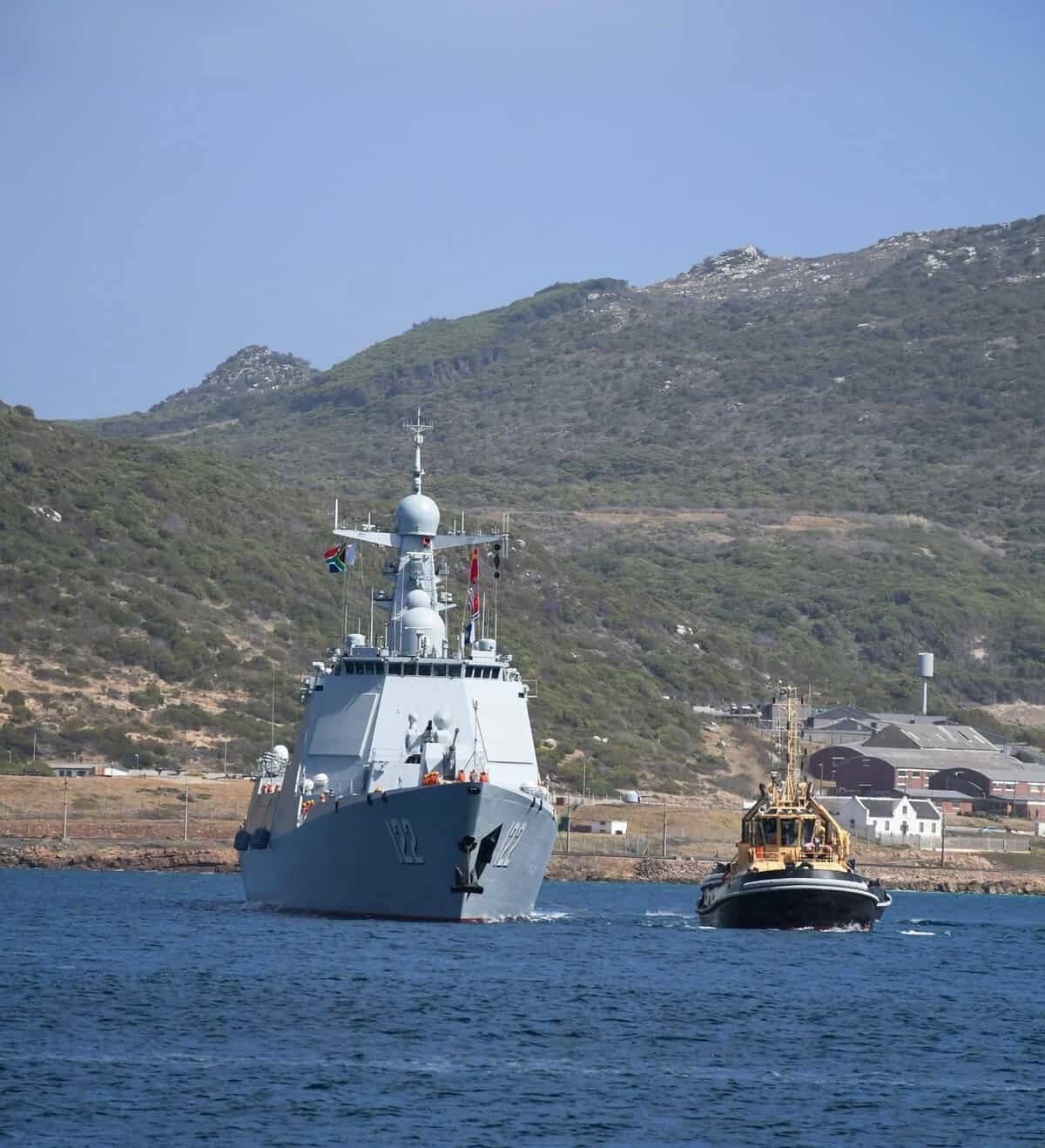
President Cyril Ramaphosa has received a report from a panel investigating the circumstances surrounding the controversial naval Exercise MOSI III Will of Peace 2026, which proceeded despite his instruction that Iran’s navy should no longer participate.
The President instituted the probe in February 2026 following questions about the failure to heed his instruction that the navy of the Islamic Republic of Iran must withdraw from the Chinese-led exercise, which took place in South African waters.
The panel was chaired by Justice B.M. Ngoepe, assisted by Justice M.M. Leeuw and Rear Admiral (Junior Grade) P.T. Duze.
Ramaphosa had initially directed the panel to complete its investigation and report back to him within one calendar month of its establishment. However, the panel presented compelling reasons for an extension of the period allocated to complete its work.
The Presidency confirmed on Tuesday that the report had been submitted to the President.
Ramaphosa expressed his gratitude to Ngoepe and the other panel members for their dedication and diligence in carrying out their mandate.
The President will now study the report and carefully consider its recommendations.
However, the findings will not be made public at this stage.
“Due to national security considerations, the work of the panel, including the report, remains confidential,” said Vincent Magwenya, spokesperson to the President.
The investigation follows months of controversy surrounding the participation of Iranian naval forces in the multinational maritime exercise, which took place off the Western Cape coast in January.
Exercise Will of Peace 2026 was launched in Simon’s Town on January 9 and involved South Africa, China, Russia, Iran and the United Arab Emirates. Other countries, including Brazil, Ethiopia and Indonesia, were involved as observers.
The exercise was presented as an opportunity for participating navies to strengthen maritime cooperation, improve coordination and conduct joint maritime safety operations.
However, Iran’s participation became a diplomatic flashpoint, particularly because of deteriorating relations between Pretoria and Washington.
The controversy intensified after reports emerged that Ramaphosa had instructed that Iran should no longer participate in the drills. The instruction was reportedly intended to limit the diplomatic fallout from hosting Iranian naval forces at a time when Tehran was facing international condemnation over its handling of anti-government protests.
Despite the reported instruction, Iranian naval vessels remained in South African waters, and an Iranian vessel was listed among those participating in the exercise.
The developments raised questions about whether the President’s instruction had been communicated, understood and implemented by the relevant authorities.
The United States strongly criticised Iran’s involvement in the exercise. The US embassy in Pretoria expressed concern over reports that South African defence authorities had failed to comply with the President’s instruction.
Washington’s criticism added to existing tensions between the two countries over South Africa’s foreign policy, including its relationships with Russia, China and Iran.
The controversy also prompted questions about South Africa’s stated commitment to a non-aligned foreign policy and whether the exercise risked damaging its diplomatic and economic relations with Western partners.
The African Growth and Opportunity Act (AGOA), which provides eligible sub-Saharan African countries with preferential access to the US market for certain goods, was also a concern amid uncertainty over future trade relations.
At home, the incident triggered demands for clarity from political parties and renewed scrutiny of the chain of command within the South African National Defence Force.
The initial response came from Defence and Military Veterans Minister Angie Motshekga, who announced an inquiry into the circumstances surrounding Iran’s participation.
Ramaphosa subsequently moved the investigation to the Presidency, appointing a panel to conduct an independent investigation and report directly to him.
The probe was intended to establish what happened during the planning and execution of the exercise, including the circumstances surrounding the instruction relating to Iran.
The panel’s report is expected to inform the President’s consideration of the matter and any action that may follow.
However, with the report classified as confidential on national security grounds, the Presidency has not disclosed its findings or indicated whether any officials could face consequences.
The President will consider the report and its recommendations before deciding on the next steps.