President Cyril Ramaphosa has sounded the alarm over South Africa’s low investment levels, saying the country must urgently accelerate infrastructure development to unlock economic growth, create jobs and improve the lives of millions of people.
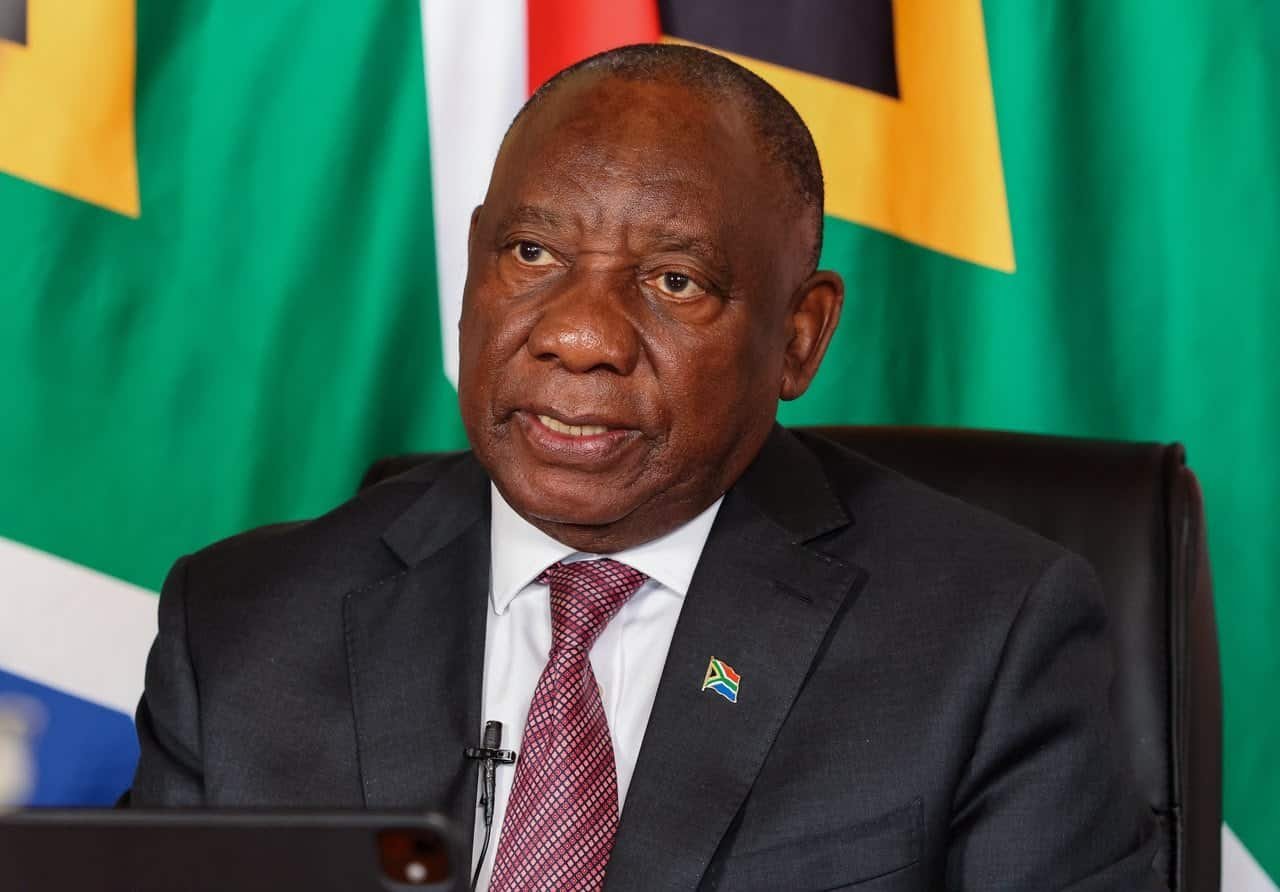
Speaking at the sixth Sustainable Infrastructure Development Symposium of South Africa in Cape Town on Tuesday, Ramaphosa warned that South Africa’s infrastructure investment remained far below the level required to achieve sustained economic growth.
He said gross fixed capital formation, which measures investment in productive assets including infrastructure, machinery and equipment, stood at about 14% of GDP in 2025.
That figure is less than half of the 30% investment level envisaged in the National Development Plan for 2030.
“These figures should concern us,” Ramaphosa said.
“And they should motivate us to work with greater urgency and diligence to build the infrastructure our country needs.”
The president’s warning comes as government’s Strategic Integrated Projects portfolio has expanded dramatically, growing from about R340 billion in 2020 to more than R1.67 trillion.
The portfolio currently includes 195 public and private infrastructure projects across priority sectors.
Ramaphosa said 32 projects worth about R48 billion had been completed, while another 55 projects valued at more than R407 billion were currently under construction.
But he said government now needed to focus less on the size of its project pipeline and more on ensuring projects actually reach construction and deliver tangible benefits.
“We must focus on conversion,” he said.
“We need to convert plans into prepared projects, convert prepared projects into investment, and convert investment into construction.”
Ramaphosa said the ultimate goal was to convert construction into infrastructure that supports economic activity and improves people’s lives.
He said South Africa’s ability to grow depended on reliable electricity, sufficient water, efficient ports and railways, functioning roads, digital connectivity and municipalities that could provide basic services.
Infrastructure, he said, affected everything from whether households had clean water and functioning sanitation to whether businesses could operate efficiently and commuters could travel safely and affordably.
The president said government had previously struggled with a fragmented infrastructure system that contributed to delays, escalating costs and projects that never got off the ground.
He said the Infrastructure Development Act and Infrastructure South Africa had helped strengthen coordination and improve the preparation of strategic projects.
But he identified project preparation as one of the country’s biggest infrastructure weaknesses.
“South Africa does not suffer from a shortage of infrastructure proposals,” Ramaphosa said.
“Our constraint is that too many of these projects are not adequately prepared.”
He stressed that there was a significant difference between a project that was needed and one that was ready for investment.
Through Infrastructure South Africa’s R600 million project preparation facility, 26 projects have received or are receiving development support.
Ramaphosa highlighted the Matjhabeng Local Municipality as an example of the potential impact of properly preparing projects.
Infrastructure South Africa spent R1.8 million preparing and packaging a project to replace more than 1,700 kilometres of water pipes.
That relatively small investment helped unlock an R800 million debt financing facility from the Development Bank of Southern Africa.
The Adopt-a-Municipality pilot programme is also preparing and packaging projects aimed at unlocking R7 billion in investment, particularly in water and sanitation, electricity and energy, and waste management.
Ramaphosa warned that municipal infrastructure could not be fixed simply by throwing more grants at struggling municipalities.
“Providing another grant without addressing the underlying capability of the institution is not sufficient,” he said.
“Building a new asset without making provision for its operation and maintenance is not sustainable.”
He also announced the release of the third edition of the Construction Book, which provides investors with greater visibility of funded and investment-ready infrastructure projects expected to enter procurement over the next 12 to 18 months.
The latest edition contains more than 170 projects worth an estimated R264 billion.
Ramaphosa said government would publish quarterly performance reports to track whether projects were progressing from the pipeline to implementation.
He also linked South Africa’s infrastructure drive to regional economic integration, saying roads, railways, ports, power lines, data cables and pipelines were essential to connecting Southern African economies.
He said infrastructure investment could link mines to factories, farms to markets, energy projects to businesses and companies to customers across the region.
But he cautioned that physical infrastructure alone would not deliver regional integration.
Countries also needed to harmonise regulations, policies, standards and institutional arrangements.
Ramaphosa said government could not deliver the infrastructure required by the country and continent on its own.
He called for stronger partnerships between government, business, development finance institutions, commercial lenders, infrastructure professionals, universities and training institutions.
The president said South Africa had a substantial infrastructure challenge but also an opportunity to accelerate investment and economic growth.
“If we continue to improve the quality of project preparation and strengthen the institutions responsible for delivery, we can significantly increase the pace and scale of infrastructure investment,” he said.
For Ramaphosa, the message was clear: South Africa has the projects, but it now needs to turn them into roads, railways, water systems, energy infrastructure and other assets that can drive the economy.
The country, he said, must build now if it is to create the foundations for growth for generations to come.