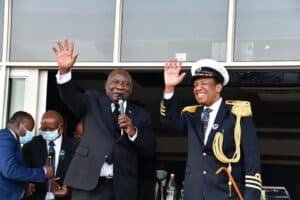
President Cyril Ramaphosa delivered the closing remarks at the G20 Social Summit held at the Birchwood Conference Centre in Ekurhuleni on Thursday, urging global cooperation, inclusive development and respect for national sovereignty. The summit brought together delegates from civil society, business, labour, youth, women, media and parliamentary formations to contribute to the G20 agenda ahead of the Leaders’ Summit.
President Ramaphosa opened his address by emphasising the principle of Ubuntu, highlighting the interconnectedness of humanity. “We are acknowledging the personhood, value and dignity of the one we are greeting. We are affirming the cherished principle of Ubuntu: I am because we are,” he said. The summit, he added, reflected this spirit of shared responsibility and solidarity.
He highlighted two historic events from 1955 that shaped global cooperation and human rights. The first was the Asian-African Conference in Bandung, Indonesia, where nations of the Global South committed to peace, equality, solidarity and cooperation. The second was South Africa’s Congress of the People in Kliptown, where the Freedom Charter was adopted during the height of apartheid. The Charter’s declaration that “There shall be Peace and Friendship” remains a guiding principle for equality and justice, he said.
President Ramaphosa noted the historic nature of the G20 Social Summit, the first to be held on African soil, and stressed that it takes place during a period of global uncertainty. Political polarisation, poverty, conflict, war and climate change threaten development, while inequality and disparities in access to financial resources limit progress toward the 2030 Agenda for Sustainable Development. He said Africa continues to strive toward the aspirations of the African Union’s Agenda 2063: The Africa we Want.
The summit, he explained, has focused on ensuring that the interests of developing economies are elevated on the G20 agenda. Efforts include addressing poverty, inequality and underdevelopment, reforming international financial systems, promoting equal development rights, and encouraging investments in sustainable development and environmental conservation.
In a statement that drew attention from many delegates, President Ramaphosa said that no nation should attempt to dictate terms or exert undue influence over South Africa or the G20 process. “We will not be bullied by any nation,” he said. Observers noted that his remarks appeared to refer to warnings issued by the Trump administration earlier this week, which cautioned Pretoria about proceeding with the G20 Social Summit without the participation of the United States.
President Ramaphosa stressed that decisions from the G20 Leaders’ Summit must be informed by civil society and grassroots organisations. He highlighted the full participation of Women20, Youth20, Business20, Civil20, Labour20, Parliament20 and Media20, saying their engagement ensures policies reflect the needs and experiences of people. Deliberations at the summit addressed digital inclusion, equitable transformation, climate justice, sustainable finance, media freedom, democracy, child protection, women’s rights and youth opportunities.
The president highlighted gender equality as central to social progress. He condemned gender-based violence and femicide, stressing the importance of men and boys in challenging harmful norms and promoting gender justice. He also reaffirmed South Africa’s commitment to the Global Leaders Network for Women’s, Children’s and Adolescents’ Health and to mobilising resources for vulnerable populations.
President Ramaphosa called for an inclusive transition to low-carbon economies, investment in water security, and protection for vulnerable communities in global trade. He said the summit’s deliberations provide governments with practical insights on what works, what must change, and how to strengthen global cooperation.
He concluded by linking the summit to historic efforts for solidarity and justice. “Just as the Bandung Conference elevated the voice of the Global South and the Conference of the People harnessed global solidarity against apartheid, this year’s G20 Social Summit must be remembered for having given practical meaning to global solidarity,” he said. He thanked delegates and urged continued cooperation between governments and civil society to advance sustainable global development.
President Ramaphosa said the Social Summit should guide the G20 agenda toward equality, sustainability and shared prosperity, setting a new course for the world and creating a future that benefits all people.