When the floods came to Mozambique in early 2000, they did not arrive quietly. Rivers burst their banks, villages vanished beneath brown, churning water, and thousands of families were driven onto rooftops, anthills and treetops in a desperate bid to survive. It was one of the darkest chapters in the country’s recent history, and yet, from that devastation, a story of extraordinary humanity emerged.
Rosita was born in a tree.
Her mother, fleeing the rising waters in Chibuto district, Gaza province, climbed into the branches as floodwaters swallowed everything below. With no shelter, no medical assistance and no certainty of survival, she gave birth there, suspended above the torrent. The image of the newborn baby held aloft in a tree, surrounded by endless floodwater, travelled across the world. Rosita became an instant symbol of hope amid despair, of life refusing to yield to catastrophe.
The floods of 2000 were relentless. Torrential rains, combined with cyclonic weather, overwhelmed river systems across southern Mozambique. Compounding the disaster, the opening of floodgates at South African dams, intended to protect infrastructure upstream, sent massive volumes of water downstream into Mozambique, inundating already saturated plains. Whole communities were cut off overnight.
Rescue came from the sky. South African National Defence Force (SANDF) helicopters criss-crossed the flooded landscape, plucking survivors from trees, rooftops and tiny patches of dry ground. Images of air crews winching mothers clutching babies from the waters became defining scenes of the crisis. Among those stories, Rosita’s birth stood apart — a moment of fragile triumph in a sea of loss.
For Mozambicans, Rosita was more than a child rescued by fate. She embodied resilience. At a time when hundreds had died, and millions were displaced, her survival suggested that the nation itself might endure and recover.
Today, that symbol has taken on a quieter, more painful meaning.
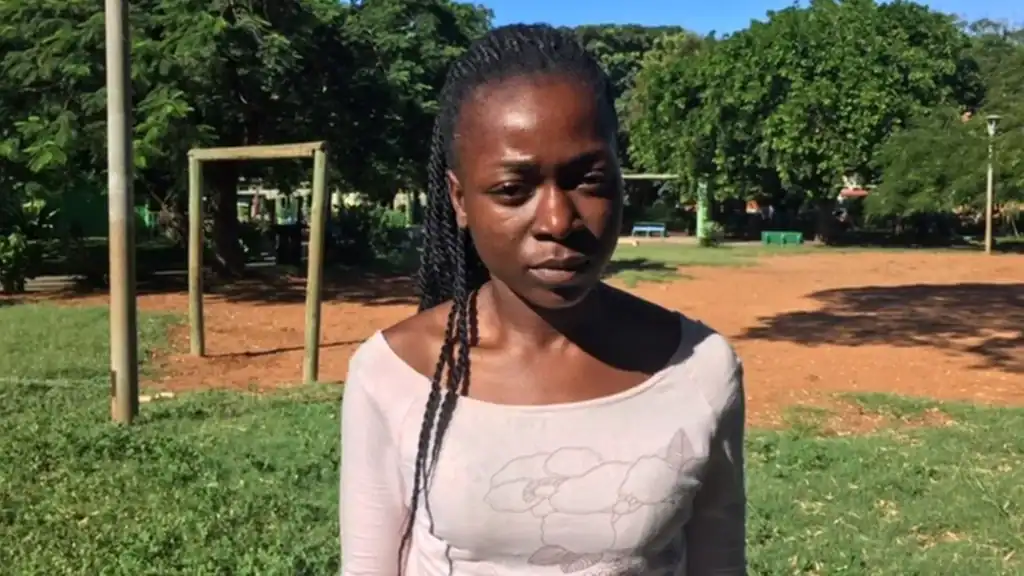
Rosita has died. According to available information, she passed away due to illness. She was the daughter of Chibuto, a young woman whose life began in one of Mozambique’s hardest hours and whose name remained etched in the country’s collective memory.
Her death has stirred reflection far beyond her family and community. It recalls the trauma of the floods — the loss, the courage, the solidarity that crossed borders. It also reminds Mozambicans of how deeply natural disasters and the decisions surrounding water management across the region can shape human lives in lasting ways.
Rosita’s story began in chaos, fear and uncertainty, but it carried a message of hope that endured for decades. Though her life has now ended, the image of the baby born in a tree during the floods of 2000 remains one of the most powerful symbols of Mozambique’s capacity to survive, to stand back up, and to find humanity even in the worst of times.
From a Tree in the Floods to a Voice for a Nation Rosita Pedro entered the world at a moment when Mozambique itself seemed to be slipping beneath the waters. Born at the top of a tree during the devastating floods of 2000, she became one of the most enduring images of that national tragedy — a newborn life clinging to hope while entire communities were submerged.
Her story travelled far beyond the banks of the Limpopo and the plains of Gaza province. The photograph and account of her birth were carried across continents, turning Rosita into a global symbol of survival. As she grew older, that symbol became a human voice. Rosita travelled the world as a living testimony to the catastrophe that had scarred Mozambique, sharing her story and helping to raise funds to support families and communities affected by the floods across the country.
Wherever she went, Rosita represented more than her own extraordinary beginning. She spoke for thousands who had lost homes, livelihoods and loved ones. Her presence reminded international audiences that behind statistics and satellite images were real lives — mothers, children and futures interrupted by disaster.
Despite the weight of her story, those who knew her remember a young woman full of life, warmth and dreams. She was only 25 years old and would have celebrated her 26th birthday in March. Her passing, due to illness, has been met with deep sadness across Mozambique and beyond.
For many Mozambicans, Rosita belonged to a generation shaped by the floods of 2000 — a generation that learned early about loss, resilience and solidarity. Her life showed how tragedy can be transformed into purpose, and how even the most fragile beginnings can inspire collective action and compassion.
Rosita Pedro’s journey may have begun in the branches of a tree, surrounded by floodwaters, yet it carried her across the world and into the hearts of many. Though her life has been cut short, her story remains woven into the national memory. Her legacy will endure, and her memory will remain alive among Mozambicans.