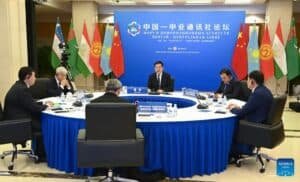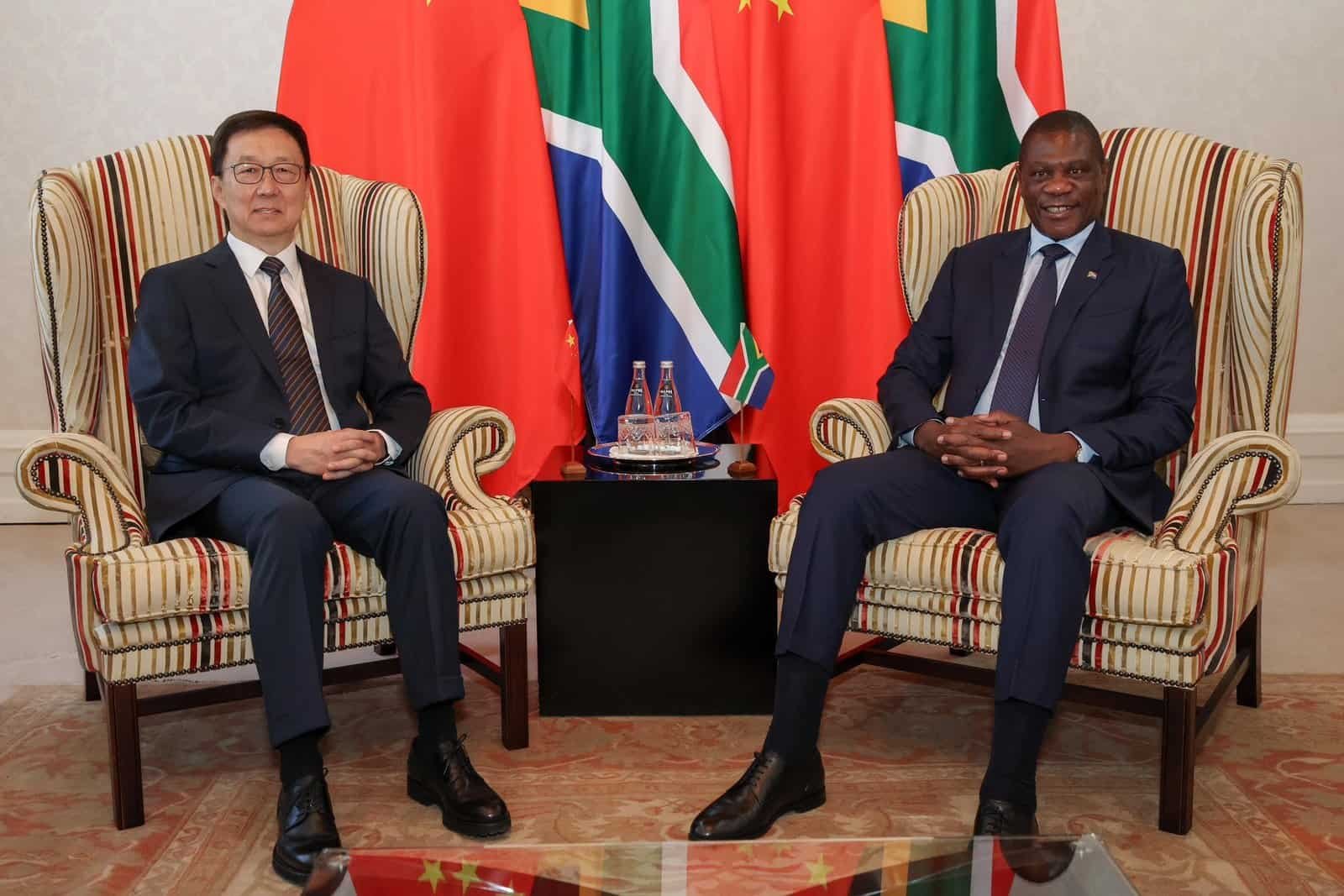
South Africa and China have reaffirmed their long-standing diplomatic and economic partnership, with Deputy President Paul Mashatile hosting Chinese Vice President Han Zheng during the 9th South Africa-China Bi-National Commission (BNC) and a high-level Economic and Trade Forum in Cape Town this week.
The engagements, held at Tuynhuys and later at the Mount Nelson Hotel, form part of ongoing efforts to deepen cooperation between the two nations under the theme “South Africa-China Relations in an Era of Global Transformation: Advancing Shared Modernisation.”
The BNC, established in 2000, remains the highest-level structured platform for bilateral cooperation between South Africa and China. It focuses on strengthening diplomatic ties, expanding trade relations, and fostering collaboration across key sectors such as science and technology, education, infrastructure, and cultural exchange.
Addressing business leaders and government officials at the Economic and Trade Forum, Mashatile described the conclusion of the 9th BNC session as a “significant milestone” in the relationship between the two countries.
“This is a journey that began with a single step in the year 2000, founded on equality, mutual respect and shared progress,” Mashatile said. “Together, we have built bridges of trade and investment and opened doors of opportunity for our people.”
China remains South Africa’s largest trading partner, with bilateral trade continuing to grow steadily. According to Mashatile, trade between the two countries increased by 6.4%, rising from 34.2 billion US dollars in 2024 to 36.4 billion US dollars in 2025. This growth reflects the expanding economic ties and the importance of China in South Africa’s global trade strategy.
Chinese investment in South Africa has also seen notable growth, with over 100 foreign direct investment projects valued at more than 8 billion US dollars, creating nearly 5,700 jobs. At the same time, South African companies have invested hundreds of millions of dollars into China across sectors such as healthcare, information technology, financial services, and manufacturing.
Despite these gains, Mashatile emphasised the need to diversify South Africa’s exports beyond raw materials and strengthen local industrial capacity. He said the government is prioritising value-added exports, particularly in emerging industries such as electric vehicle and battery manufacturing.
“There is still much work to be done to restructure our trade patterns,” he noted. “Our goal is to move beyond exporting raw commodities and instead develop industries that add value to our resources.”
A key development highlighted during the forum was the Framework Agreement for the China-Africa Economic Partnership Agreement (CAEPA), which is expected to boost trade and investment by reducing costs for Chinese importers of South African goods while opening new markets for local industries.
The agreement could pave the way for duty-free access for certain South African exports to China, making locally produced goods more competitive and encouraging further industrialisation. It is also expected to strengthen South Africa’s position as a preferred destination for Chinese investment.
Mashatile pointed to several sectors with strong investment potential, including agriculture, renewable energy, mineral beneficiation, infrastructure, and the emerging hydrogen economy. He said South Africa’s natural resources and strategic location make it an attractive gateway to the broader African market.
“Our agriculture and agro-processing sectors present opportunities to produce high-value exports, while investment in mineral beneficiation will ensure we unlock the full potential of our resources,” he said.
Energy cooperation was also identified as a critical area, particularly in renewable energy. Mashatile highlighted opportunities for collaboration in solar, wind, and energy storage technologies, noting that such partnerships would support South Africa’s transition to a greener economy while ensuring energy security.
The automotive sector, especially the development of next-generation vehicles and related technologies, was also flagged as a priority. Mashatile said expanding manufacturing capacity and investing in high-tech industries would position South Africa as a hub for innovation on the continent.
One of the most promising areas of cooperation, he added, is green hydrogen. With its abundant renewable energy resources, South Africa has the potential to become a leading global producer and exporter of clean fuels.
The forum also brought together a delegation of Chinese companies operating in sectors such as biotechnology, engineering, construction, and finance. Their presence, Mashatile said, demonstrates growing confidence in South Africa as an investment destination.
He cited companies like Hisense as examples of successful Chinese investments that have expanded operations locally while gaining access to African markets.
Mashatile concluded by urging both governments and the private sector to translate commitments into tangible outcomes that drive economic growth, job creation, and development.
“We must ensure that our collaboration delivers real benefits for our people and contributes to Africa’s broader development agenda,” he said. “Together, we can build a future defined by resilience, inclusivity, and shared success.”
The SA-China engagements this week underscore the strategic importance of the partnership as both countries navigate a rapidly changing global economic landscape.