A war of words has erupted between the South African Communist Party (SACP) and the African National Congress (ANC), highlighting growing tensions within the governing alliance ahead of the 2026 local government elections.
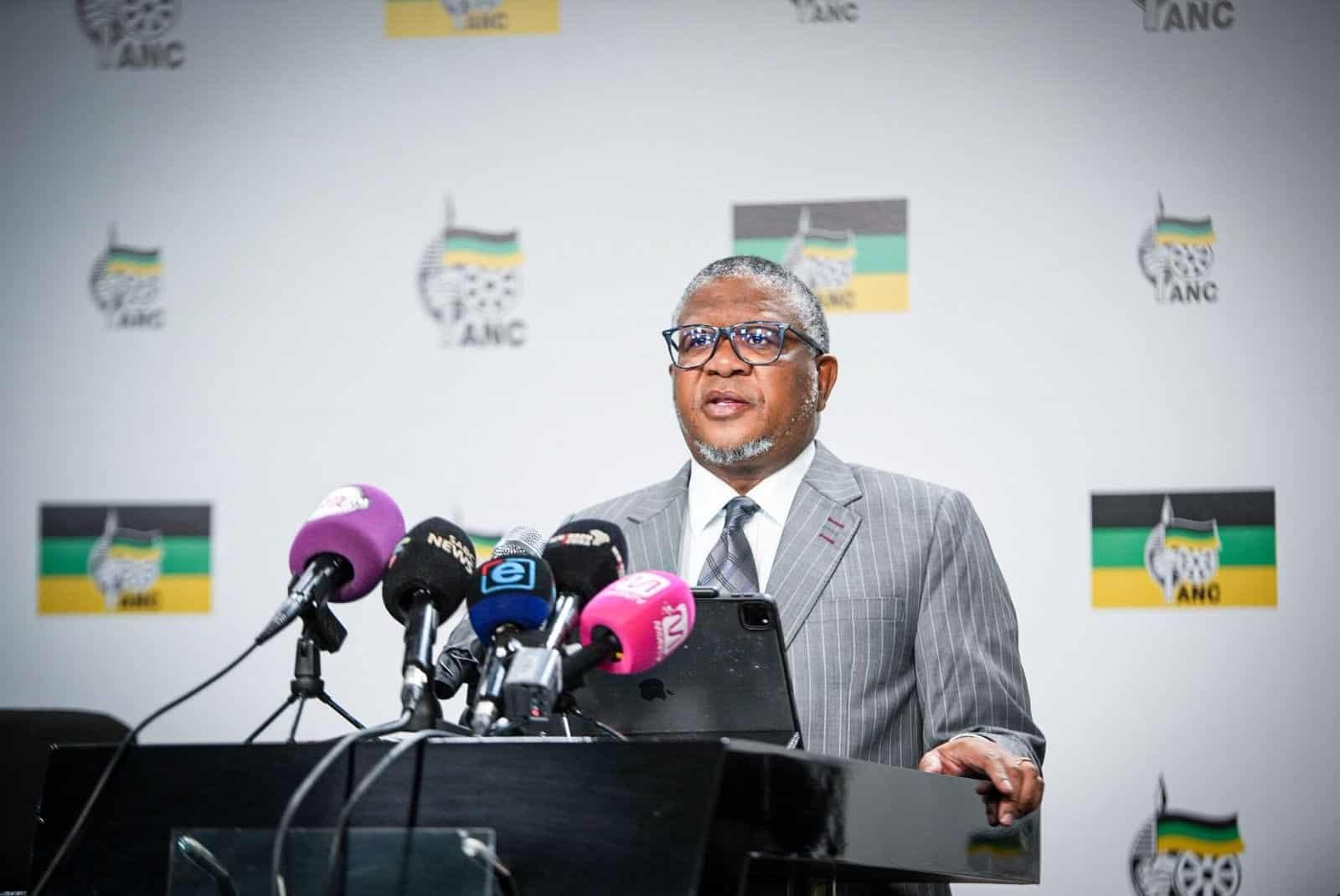
The dispute unfolded on Thursday, when SACP General Secretary Solly Mapaila addressed the media, followed later by ANC Secretary-General Fikile Mbalula, each outlining sharply contrasting positions on the future of the alliance and the SACP’s decision to contest elections independently.
Mapaila struck a defiant tone, rejecting what he described as pressure from the ANC for the SACP to clarify its electoral stance within a ten-day period. He argued that the party would not be coerced into abandoning its independent programme.
“The SACP will not be dictated to by any organisation,” Mapaila said, adding that the party’s leadership viewed recent statements from ANC officials as unnecessarily confrontational. He characterised the approach as heavy-handed and warned that such tactics risk damaging long-standing relations within the alliance.
The SACP’s decision to contest elections independently marks a significant shift from decades of electoral cooperation with the ANC, historically anchored within the tripartite alliance alongside the Congress of South African Trade Unions (COSATU). Mapaila emphasised that the move was the result of an internal assessment of challenges facing municipalities, including governance failures, declining service delivery and waning public trust.
“Our decision is rooted in the realities confronting communities on the ground,” he said. “We believe a different approach is necessary to rebuild confidence and advance the interests of the working class.”
Mapaila also urged SACP members to remain disciplined amid the dispute, cautioning against resignations or unilateral decisions outside party structures. He said the party would protect its members from what he termed “undue pressure” and would continue to roll out its electoral strategy.
At the same time, Mapaila adopted a measured stance on the broader relationship with the ANC, stressing that the SACP was not seeking to sever ties. “We are not responding with hostility,” he noted, adding that members who choose to remain solely within the ANC would be respected.
The ANC, however, has framed the issue as one of organisational discipline and constitutional compliance. Addressing the media after the SACP briefing, Mbalula defended the party’s position, saying the ANC was obligated to ensure clarity among its members ahead of the elections.
“The ANC constitution is clear,” Mbalula said. “Members cannot campaign against the organisation while still enjoying its privileges. This is about maintaining unity and coherence.”
The ANC’s stance follows a Special National Executive Committee (NEC) meeting earlier this month, where the party resolved that all members must declare whether they will campaign for the ANC or another political formation. The decision effectively places SACP members with dual membership in a difficult position.
ANC Deputy Secretary-General Nomvula Mokonyane previously indicated that while the party acknowledges the SACP’s right to contest elections independently, it cannot allow its resources or structures to be used in ways that undermine its campaign.
Despite the firm tone, Mbalula insisted that the ANC was not seeking to expel SACP members, nor to dismantle the alliance. Instead, he said the party remains committed to its historic partnership, but within clearly defined organisational rules.
“This is not about ending the alliance,” he said. “It is about ensuring that all members act in line with the constitution of the ANC, particularly during an election period.”
The ANC has warned that failure to comply with its directives could result in disciplinary action, a move that has heightened concerns among alliance partners about the future of their cooperation.
Beyond the immediate dispute, both parties acknowledged broader political challenges facing the country. The ANC pointed to declining electoral support, governance weaknesses and increasing political fragmentation as key risks ahead of the 2026 polls. It argued that unity among progressive forces remains essential to defending the gains of democracy.
The SACP, however, countered that the real threat lies not in its independent electoral participation, but in deeper systemic issues such as state capture, inequality and declining public confidence in institutions.
Analysts say the standoff reflects a critical moment for the alliance, which has underpinned South Africa’s political landscape since the end of apartheid. The SACP’s independent electoral ambitions, combined with the ANC’s insistence on organisational discipline, signal a potential reconfiguration of long-standing political relationships.
While both sides have reaffirmed their commitment to the alliance in principle, the tone and substance of Thursday’s briefings suggest that tensions are far from resolved.
With the 2026 local government elections approaching, the coming weeks are expected to be decisive. The SACP’s internal deliberations, as well as the ANC’s enforcement of its NEC resolutions, will likely determine whether the alliance can adapt to the new political reality or faces a deeper rupture.
For now, both parties appear to be holding their ground — underscoring a fragile balance between cooperation and competition within South Africa’s governing alliance.