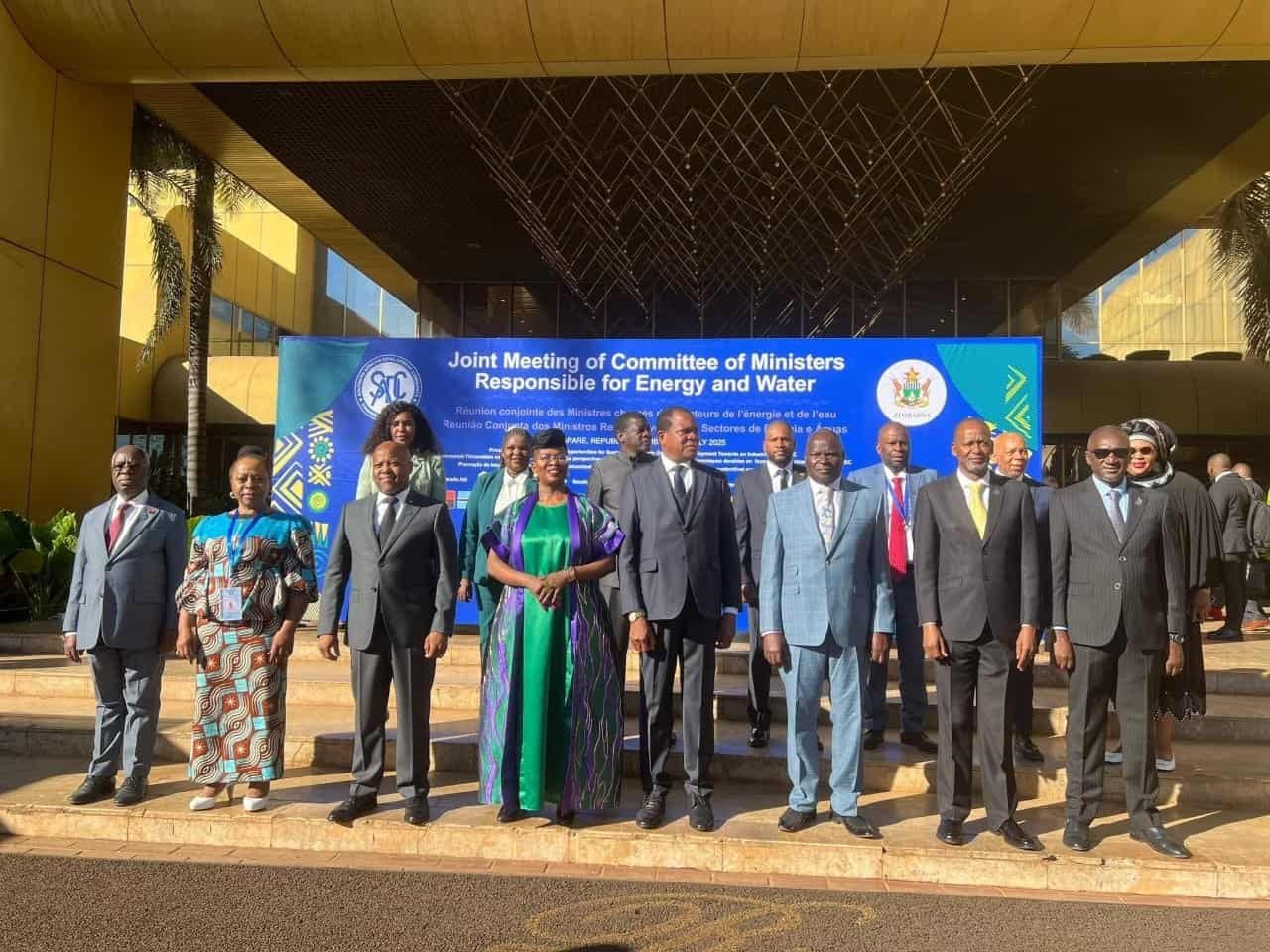
Southern African ministers have called for urgent action to fast-track energy reforms and improve water security in the region, following a week-long high-level meeting that ended on 4 July in Harare.
The Joint Meeting of SADC Ministers Responsible for Energy and Water brought together officials from across the region to assess progress and agree on concrete steps to tackle power shortages, water scarcity, and infrastructure challenges.
According to a media statement issued by the SADC Secretariat on 7 July, key discussions focused on major projects such as the Grand Inga Hydropower Project, the Congo River Water Transfer Concept, and clean cooking initiatives under the SMART programme.
“The region continues to face a shortfall of over 4,200 megawatts, mostly due to droughts caused by El Niño, ageing infrastructure and limited transmission capacity,” said Elias M. Magosi, Executive Secretary of SADC, in his opening remarks.
Despite the challenges, the region added 2,885 megawatts of new generation capacity between 2024 and 2025, bringing the total to more than 85,000 MW. Projects planned for the next two years are expected to add another 28,000 MW.
The ministers urged countries such as South Africa, Namibia, Zimbabwe, and Mauritius to finalise their internal processes and sign the amended Protocol on Energy by August 2025. They also called for faster rollout of new power projects and stronger investment in regional transmission networks.
The statement noted that countries involved in the Inga III Transmission Line Project should sign the inter-governmental memorandum of understanding (MoU) by August to unlock financing. The SADC Secretariat and Southern African Power Pool (SAPP) were directed to lead resource mobilisation.
The meeting also endorsed the launch of RETRADE-SA, a new programme aimed at expanding the regional electricity market and supporting decarbonisation efforts.

In support of a fair energy transition, ministers backed the creation of a regional Just Energy Transition (JET) Framework and highlighted the need to promote clean cooking solutions. Tanzania was commended for its leadership in this area.
In the water sector, ministers reviewed progress on several transboundary projects, including the Lesotho Highlands Water Project-Phase II, which is set to increase hydropower in Lesotho and boost South Africa’s water supply.
Other ongoing initiatives include the Songwe River Basin Programme between Malawi and Tanzania, the Lesotho-Botswana Water Transfer Project, and the Congo Water Transfer Concept. Additionally, groundwater grant projects across 13 countries have already benefited more than 600,000 people.
Ministers approved a new Regional Water Policy for 2025 and directed the SADC Secretariat to review and update the Protocol on Shared Watercourses to reflect current challenges, including royalties from cross-border infrastructure.
Closing the meeting, Zimbabwe’s Minister of Lands, Agriculture, Fisheries, Water and Rural Development, Dr. Anxious Jongwe Masuka, urged ministers and the SADC Secretariat to act quickly.
“Access to energy and water is not only a basic human right, but also a critical driver of public health and economic development,” said Dr. Masuka. “We must move with urgency to turn our plans into real benefits for our people.”
The meeting also marked the 30th anniversary of the Southern African Power Pool (SAPP), the continent’s oldest and most active regional energy trading platform.
Ministers ended the session by reaffirming their commitment to regional integration, sustainable development, and finding innovative ways to finance infrastructure in the face of climate change and economic pressures.