
South Africa’s fight against poaching is showing renewed momentum, with recent enforcement operations and court convictions underscoring a coordinated push to clamp down on environmental crime across the country.
Over the long weekend, ranger teams from South African National Parks (SANParks) recorded a series of successful operations in Table Mountain National Park, targeting activities ranging from abalone poaching to theft and illegal harvesting of protected plant species.
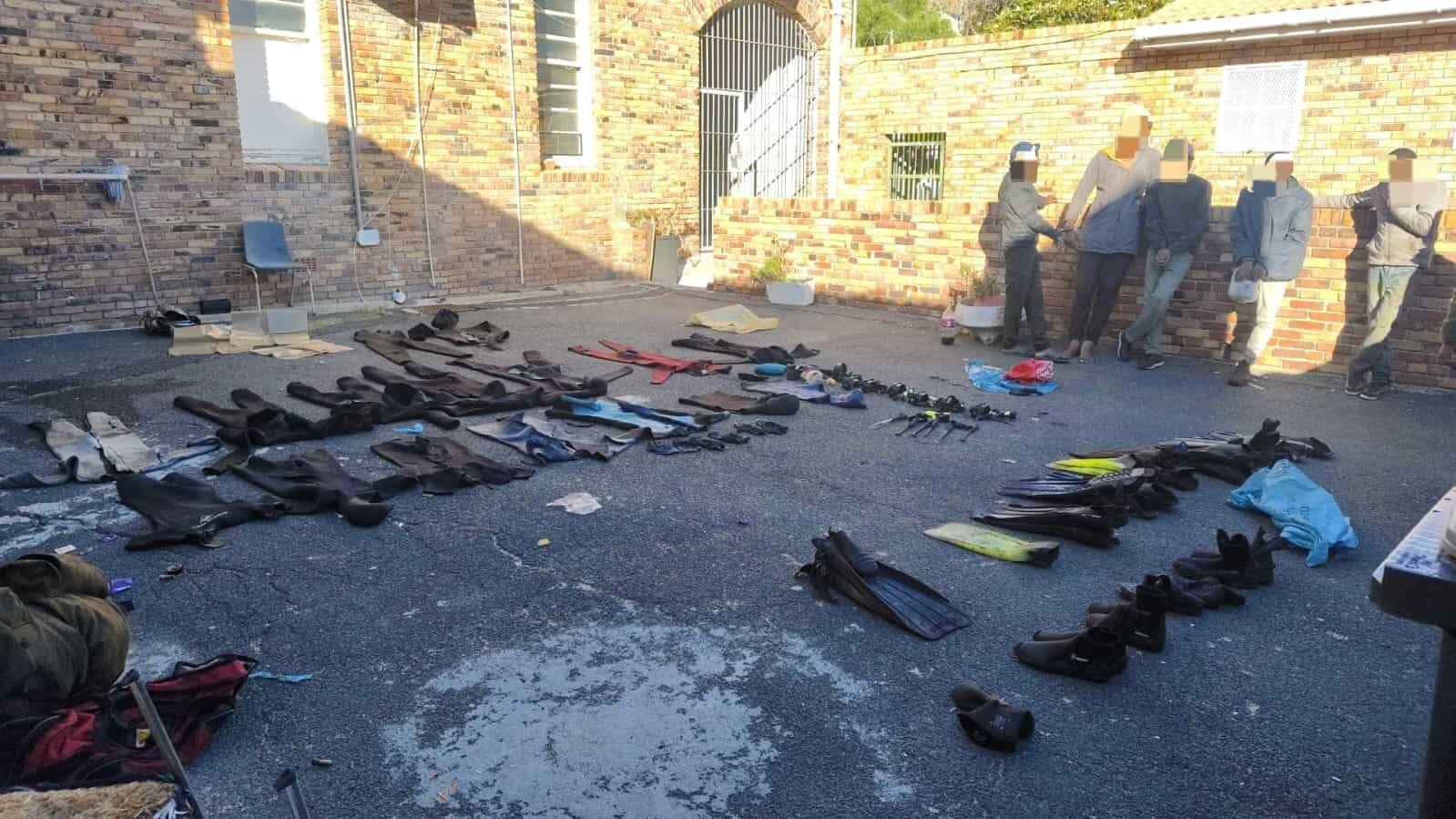
According to SANParks, a targeted night operation conducted on 23 April by its K9 Unit, working alongside the Sea, Air, Mountain (SEAM) team, led to the arrest of six suspects linked to abalone poaching in the park’s southern section. The operation focused on suspected poacher camps between Smitswinkel and Black Rocks, where trained dogs tracked down individuals attempting to evade authorities.
Four suspects were initially apprehended during the patrol, with a fifth individual caught while attempting to flee. Two additional suspects were later intercepted while the team was transporting those already in custody. Authorities confirmed that poaching equipment was confiscated and all suspects were handed over to the South African Police Service for further processing.
In a separate incident, SANParks rangers working with City law enforcement arrested a suspect at Lion’s Head who had stolen items from a parked vehicle. The individual was intercepted before leaving the area and later admitted to the theft.
Rangers also responded to a tip-off about suspected fynbos poaching on Devil’s Peak. SANParks’ operations room coordinated a response, directing field teams to the location where suspects were successfully apprehended.
SANParks spokesperson Peter Mbelengwa said the operations highlight the importance of coordinated enforcement efforts.
“These successes demonstrate the continued vigilance and collaboration of our enforcement teams in protecting visitors and conserving our natural heritage,” Mbelengwa said.
The arrests form part of broader efforts to curb poaching, which remains a persistent threat to biodiversity and conservation areas across South Africa.
Meanwhile, a significant legal victory in Mpumalanga has reinforced the consequences facing those involved in wildlife crimes.
The National Prosecuting Authority (NPA) confirmed that three former officials based in Skukuza have been sentenced to lengthy prison terms for rhino poaching.
Nyiko Gumede (40) and Nomsa Ndlovu (42), both former security officers, were each sentenced to an effective 12 years’ direct imprisonment, while technician Ludwick Mhlaba (44) received 10 years behind bars following their conviction in the Skukuza Regional Court.
The court heard that on the night of 19 October 2020, rangers responded to gunshots in the Sabie Sand section of the Kruger National Park, where they discovered a rhino carcass along with fresh horns and a firearm. Although the suspects initially evaded arrest, a cellphone recovered at the scene became a crucial piece of evidence.
Investigators traced a call made shortly before rangers arrived and, posing as corrupt officials, arranged a meeting with the suspects under the pretext of handing over the rhino horns. An undercover operation, authorised in terms of the Criminal Procedure Act, led to the arrest of all three accused at a pre-arranged location.
During the trial, the State presented testimony from rangers and police officers, as well as DNA evidence linking the recovered horns to the poached rhino. The court found the evidence compelling and rejected the accused’s not guilty pleas.
In aggravation of sentence, the State argued that the accused had abused positions of trust by participating in poaching activities they were meant to prevent.
NPA regional spokesperson Monica Nyuswa said the outcome sends a strong message.
“The NPA reaffirms its commitment to ensuring accountability and safeguarding South Africa’s natural heritage and endangered species,” Nyuswa said.
The court found no substantial and compelling circumstances to justify a lesser sentence, ordering that portions of the sentences run concurrently. All three accused were also declared unfit to possess firearms.
Poaching syndicates continue to pose a serious challenge in South Africa, driven by high demand for wildlife products such as rhino horn and abalone. Authorities say these crimes are often linked to organised networks that fuel corruption and undermine conservation efforts.
The recent arrests in Cape Town and convictions in Mpumalanga reflect a multi-pronged approach involving intelligence gathering, inter-agency cooperation, and strengthened prosecution.
Officials say sustained enforcement, combined with successful prosecutions, remains critical in deterring poaching and protecting the country’s biodiversity.
As operations continue across national parks and protected areas, authorities have reiterated their commitment to safeguarding South Africa’s natural resources and ensuring that those who exploit them face the full might of the law.