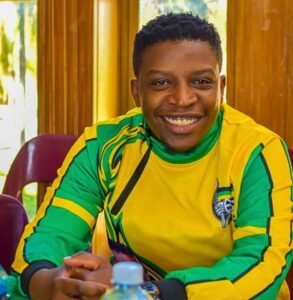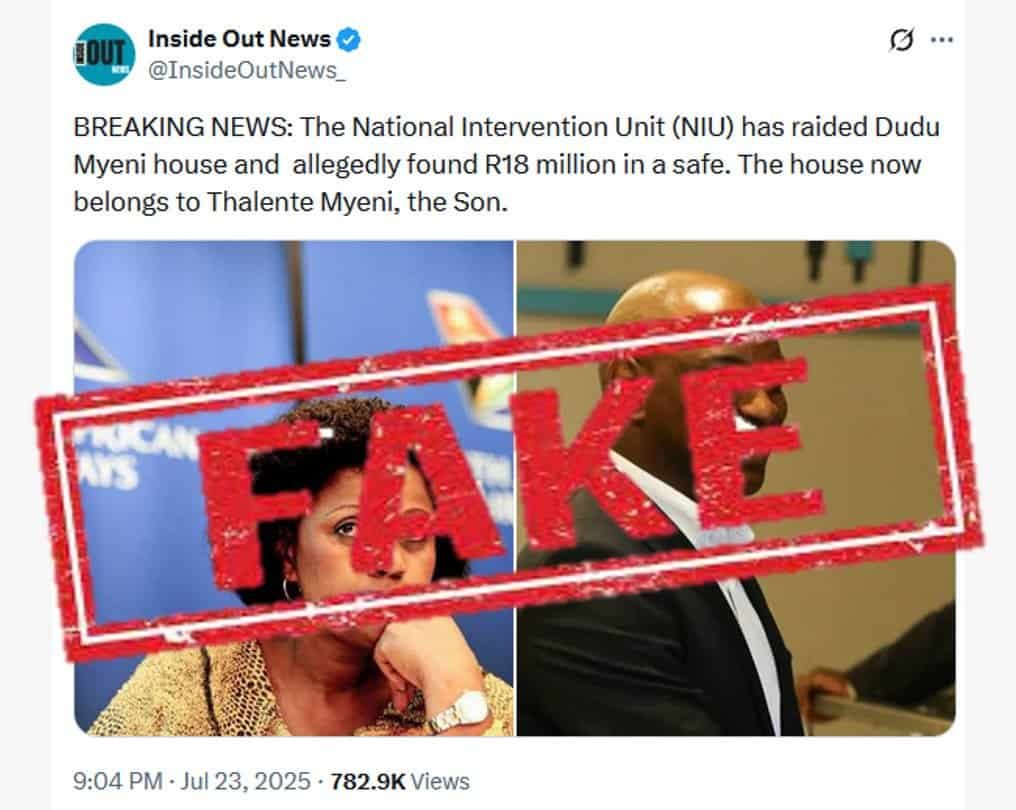
The South African Police Service (SAPS) has dismissed as false and misleading widely circulated reports that its elite National Intervention Unit (NIU) conducted a raid in Richards Bay where R18 million in cash was allegedly found stashed in a safe at a private home. The police have strongly warned the public against sharing fake news, especially when it falsely implicates individuals, living or deceased, without a factual basis.
The false report, which went viral on WhatsApp, TikTok, and X (formerly Twitter), claimed that the raid took place at a property linked to the late Dudu Myeni, the controversial former South African Airways (SAA) board chairperson and close ally of former president Jacob Zuma. Myeni passed away in June 2024 after a long illness, and no official investigations or asset seizures were publicly announced at the time of her death.
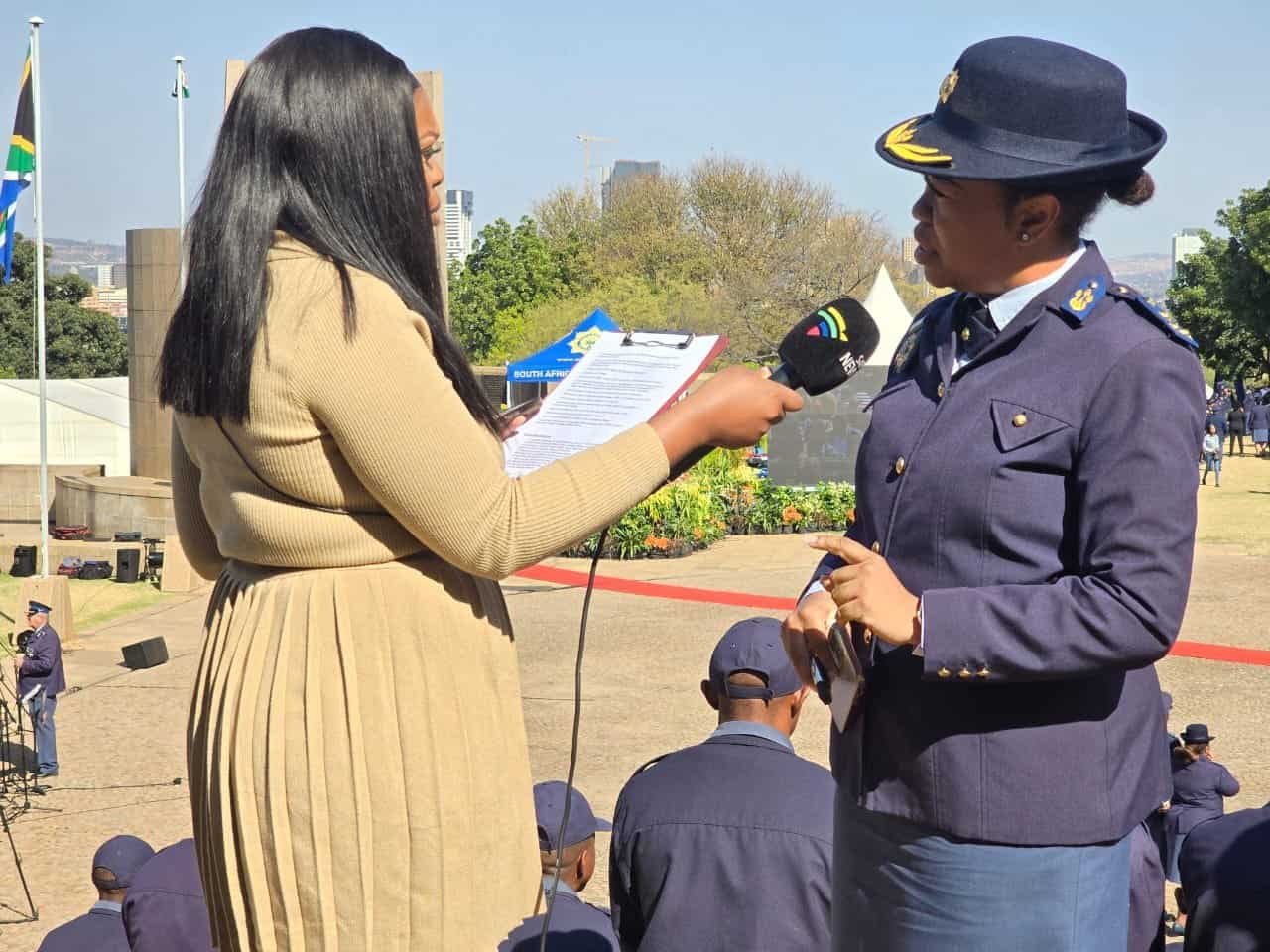
In an official statement issued on Thursday, SAPS national spokesperson Brigadier Athlenda Mathe set the record straight.
“The SAPS can confirm that no raid was undertaken by any of its units — more so the National Intervention Unit — in Richards Bay or anywhere else related to this claim,” said Mathe.
“We urge members of the public to refrain from spreading unverified information that can cause confusion and reputational harm.”
The police have described the story as “complete fabrication” and condemned the misuse of SAPS’ name in viral disinformation campaigns.
Who was Dudu Myeni? A legacy mired in controversy
Dudu Myeni, who died in June 2024 at the age of 60, was one of the most controversial figures in South Africa’s post-apartheid political and corporate landscape. Best known as the chairperson of the SAA board from 2012 to 2017, Myeni’s tenure became a focal point of state capture allegations, financial mismanagement, and political interference.
In 2020, she was declared a delinquent director for life by the Pretoria High Court after a successful case brought by the Organisation Undoing Tax Abuse (OUTA). The court found that Myeni had grossly mismanaged the national airline, obstructed turnaround plans, and was directly responsible for failed deals that cost SAA billions of rands.
The Zondo Commission further implicated her in its final State Capture report, accusing her of enabling corrupt deals and acting as a conduit between politically connected networks and state-owned enterprises. Despite her denials, Myeni remained a deeply divisive figure in the public eye, and her name has often resurfaced in rumours — even after her death.

The rise and risks of fake news in South Africa
The latest incident highlights growing concern about the proliferation of fake news in South Africa, especially through encrypted platforms like WhatsApp and TikTok, where false narratives can gain traction rapidly without verification.
The SAPS said the false claim about a “raid” not only undermines public trust in law enforcement but also causes reputational damage to those named — in this case, someone who is no longer alive to defend themselves.
“These fake messages are irresponsible and dangerous. They distort reality, erode confidence in police work, and unfairly target individuals,” said Brigadier Mathe.
Under the Cybercrimes Act, which came into force in 2021, it is an offence to knowingly spread false information that causes reputational harm or incites public violence. Offenders can face hefty fines or up to five years’ imprisonment.
Digital disinformation analysts warn of coordinated narratives
Disinformation experts have warned that some fake news campaigns are not merely accidents or jokes — but deliberate attempts to sow confusion, manipulate public opinion, or advance political agendas.
Dr Zanele Mkhize, a digital media and disinformation researcher at Wits University, said South Africa faces a growing threat from “coordinated misinformation cells” that operate across social media platforms.
“These false claims about SAPS raids or money seizures are often strategically crafted to create outrage or reinforce public suspicion toward the state or certain individuals,” she said.
“The fact that the story was linked to Dudu Myeni, even after her death, speaks to a pattern of using already polarising figures to give fake news an aura of credibility.”
Dr Mkhize urged social media users to “think before they click or share”, especially when stories appear sensational, lack source attribution, or are not backed by mainstream media.
Calls for stricter enforcement and public education
Civil society organisations are calling on authorities to not only issue warnings but to actively pursue and prosecute those who originate fake news that misleads the public or defames others.
Media Monitoring Africa (MMA) said it is concerned about the increasing number of false police-related reports gaining traction online.
“We are urging SAPS to consider legal recourse in cases where misinformation has serious implications for institutions and individuals,” MMA director William Bird said.
Meanwhile, the SAPS confirmed that its cybercrime and digital forensics units are monitoring the origin and spread of the Richards Bay fake news post and may open a case for investigation.
In conclusion: Be vigilant, verify before sharing
As South Africa heads into a politically charged environment with shifting coalitions and heightened public scrutiny, the danger of fake news looms large. SAPS has again urged the public to verify information via official channels or trusted news outlets before sharing it.
“Let us all play our part in protecting the truth and respecting the dignity of those unfairly targeted,” said Brigadier Mathe.