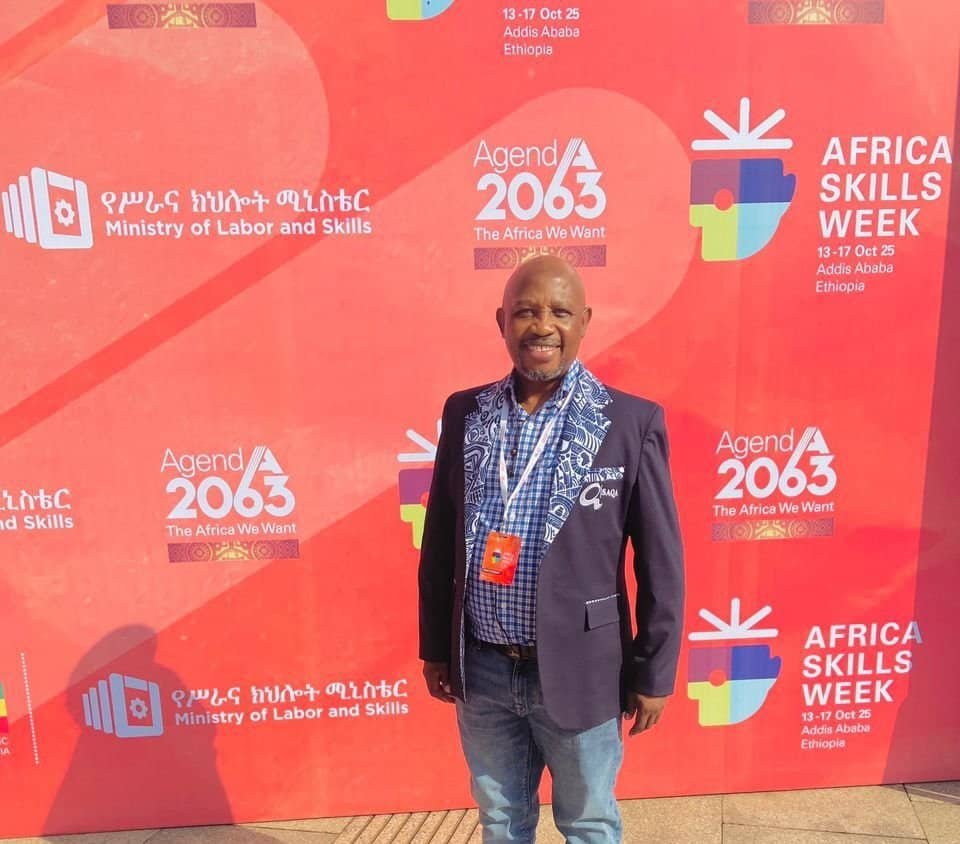
The South African Qualifications Authority (SAQA) is taking part in a high-level continental and global policy dialogue on skills development and higher education currently underway in Addis Ababa.
The forum, hosted by the African Union Commission, brings together policymakers, education authorities, industry leaders and development partners from across Africa and beyond. It runs until 17 April and is expected to shape future strategies on Technical and Vocational Education and Training (TVET) as well as higher education systems.
Representing SAQA at the gathering is Chief Operations Officer, Dr Makhapa Makhafola, who is participating in discussions focused on strengthening qualifications frameworks and improving employability across the continent.
The dialogue comes at a critical time, as African countries face mounting pressure to address high youth unemployment and skills mismatches. According to continental estimates, millions of young people enter the labour market each year, yet many struggle to find work due to gaps between education outcomes and industry needs.
Dr Makhafola said the forum forms part of broader efforts to advance the African Union’s education agenda, including the implementation of the AU Decade of Education and Skills Development (2025–2034). The initiative aims to transform education systems to better respond to labour market demands and support Africa’s industrialisation drive.
“Engagements such as these are critical in ensuring that education systems across the continent are aligned with economic priorities and are able to respond to emerging challenges,” he said.
Discussions at the forum are expected to centre on innovation, digital transformation, green skills and work-based learning models. These areas are increasingly seen as key to improving employability and ensuring that graduates are equipped with practical, future-ready competencies.
For South Africa, participation in the forum provides an opportunity to both contribute and learn. SAQA is expected to share its experience in developing and managing national qualifications frameworks, quality assurance systems and learner record databases—tools that are essential for maintaining standards and enabling mobility within the education sector.
At the same time, the authority hopes to draw lessons from other countries on how to build more inclusive and responsive education systems. This includes exploring ways to better integrate vocational training with higher education and expanding access to skills development opportunities.
A major focus of the discussions is the recognition and comparability of qualifications across borders. SAQA is advocating for stronger regional cooperation in this area, arguing that harmonised systems can support the movement of students and workers between countries.
This aligns with broader continental goals under frameworks such as the African Continental Free Trade Area, which emphasises labour mobility and economic integration. Reliable and trusted qualifications systems are seen as a key enabler of these ambitions.
Dr Makhafola noted that improving the recognition of prior learning and building a credible continental learner data ecosystem will be essential in supporting workforce planning and economic growth. “There is a need for systems that not only recognise formal education but also skills acquired through experience,” he said.
The forum also provides a platform to strengthen partnerships between governments, academic institutions and industry stakeholders. Such collaboration is viewed as vital in ensuring that training programmes remain relevant and responsive to real-world demands.
SAQA said its participation underscores South Africa’s commitment to playing an active role in shaping education and skills development on the continent. The authority believes that aligning qualifications with both national and international standards will be key to improving competitiveness in a rapidly changing global economy.
As the discussions continue in Addis Ababa, policymakers are expected to outline practical steps to modernise education systems and better prepare Africa’s workforce for the future.