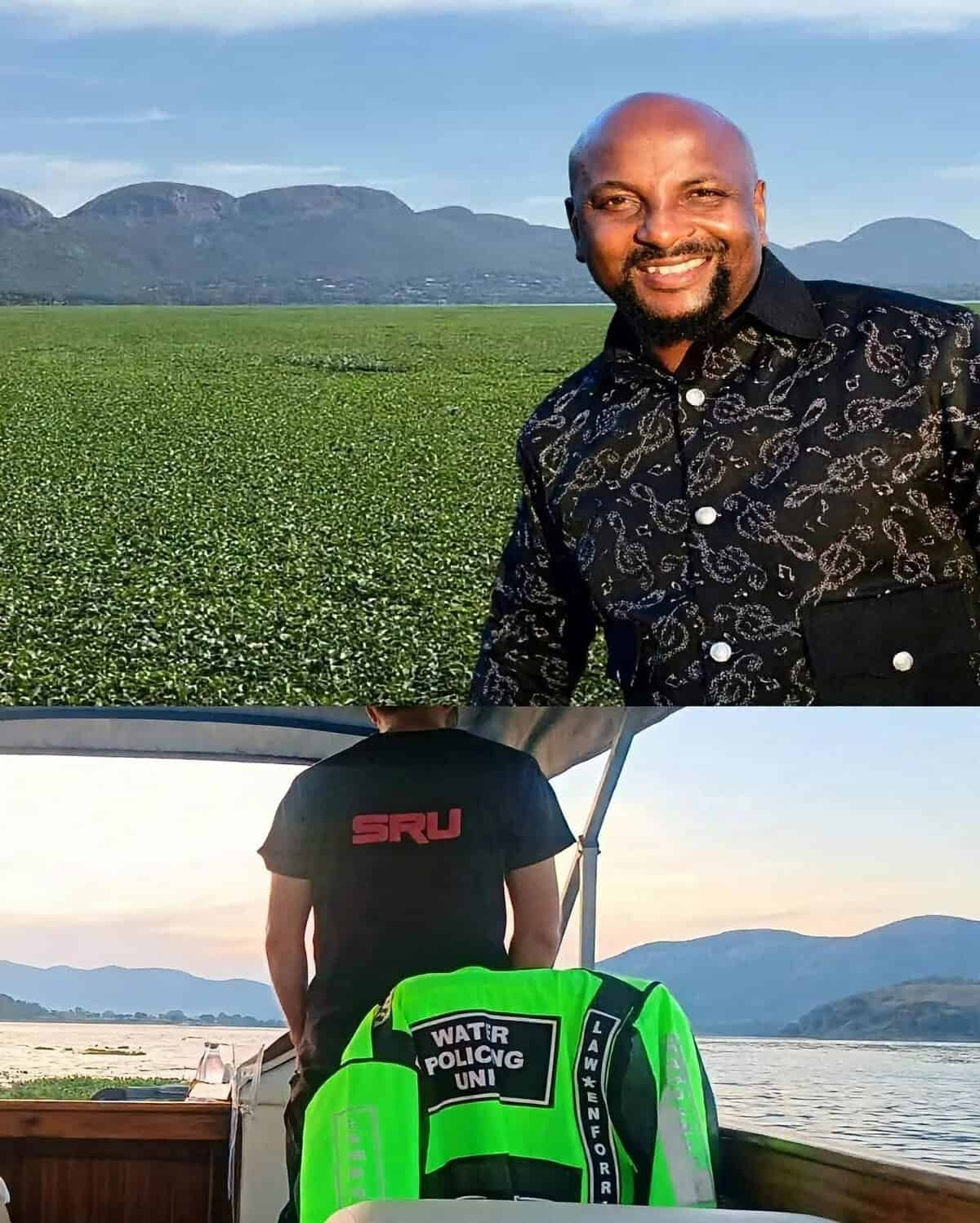
The search for missing Hartbeespoort Dam skipper Jan Obakeng Mokonyane has turned into a race against time, with thick water hyacinth covering nearly half of the dam and hampering efforts to locate him more than two weeks after his boat capsized. There were eight in the boat; seven people were rescued. Unfortunately, he wasn’t.
Mokonyane went missing on October 25, 2026, after a boat capsized at Hartbeespoort Dam in North West.
Despite ongoing search and rescue operations, there has been no breakthrough, with the dense vegetation creating serious challenges for teams trying to access different parts of the water.
North West police confirmed that the search was continuing, while concerns are mounting over the impact of water hyacinth on rescue operations and the safety of people using the dam for recreational activities.
According to information shared by environmental campaigners, approximately 46% of Hartbeespoort Dam is covered by water hyacinth, making it increasingly difficult for rescue boats to navigate through the affected areas.
Some boats have become trapped in the thick vegetation, while others have experienced engine overheating as teams attempt to push through the plants.
The Hartbeespoort Marine Law Enforcement Unit reportedly informed an environmental campaigner that six boats became stuck in the water hyacinth during a search operation.
There are also fears that Mokonyane’s body could be trapped underneath the extensive vegetation, further complicating efforts to locate him.
Search teams have been using drones daily to monitor different sections of the dam, while also hoping that bird activity could help identify something unusual in the water.
Meanwhile, efforts to remove the invasive water plants are continuing. However, campaigners have stressed that the removal operations must be carefully coordinated with the search to avoid disturbing or overlooking anything that could help locate the missing skipper.
More than two weeks into the ordeal, Mokonyane’s family is appealing to government to provide specialised equipment and additional resources to strengthen the search.
The tragedy has also exposed the wider consequences of the water hyacinth problem at one of South Africa’s popular recreational and tourism destinations.
Beyond its environmental impact, the invasive plant is affecting tourism businesses, boat operators and people who depend on the dam for their livelihoods.
The situation has also raised questions about the safety of boat cruises, particularly as reports of vessels getting stranded in the vegetation continue to emerge.
This week, Tlangelani Hlungwani shared her frightening experience on Facebook after becoming stranded on the dam for more than eight hours.
“Stuck in the dam more than 8 hours, no life jackets, no food, no toilet yohhhh,” she wrote.
Her experience prompted further concerns from social media users about whether boat operators are adequately prepared to deal with the increasingly difficult conditions.
On X, user Yebo Mere called for the dam to be declared a high-risk area for boat cruises because of the extensive water hyacinth.
“I think this dam should be declared a High risk area for the boat cruises due to the extreme hyacinth now,” he said.
Another user, Teho Smurf, argued that restrictions were already in place but were allegedly being ignored by some people.
“They actually do… what tends to happen is people go into the water anyways despite threatening of fines and skipper arrests,” he said.
He also raised concerns about what he described as greed among some establishments and poorly maintained boats being allowed to operate to maximise profits, particularly during weekends.
The growing concerns have intensified calls for government, environmental organisations and businesses to work together to address the water hyacinth crisis.
For Mokonyane’s family, however, the immediate priority remains finding their loved one and bringing an agonising wait for answers to an end.
As search teams continue their efforts, the tragedy has become a painful reminder that the water hyacinth crisis is no longer only an environmental and tourism concern, but one that is now directly affecting emergency response operations and human safety.