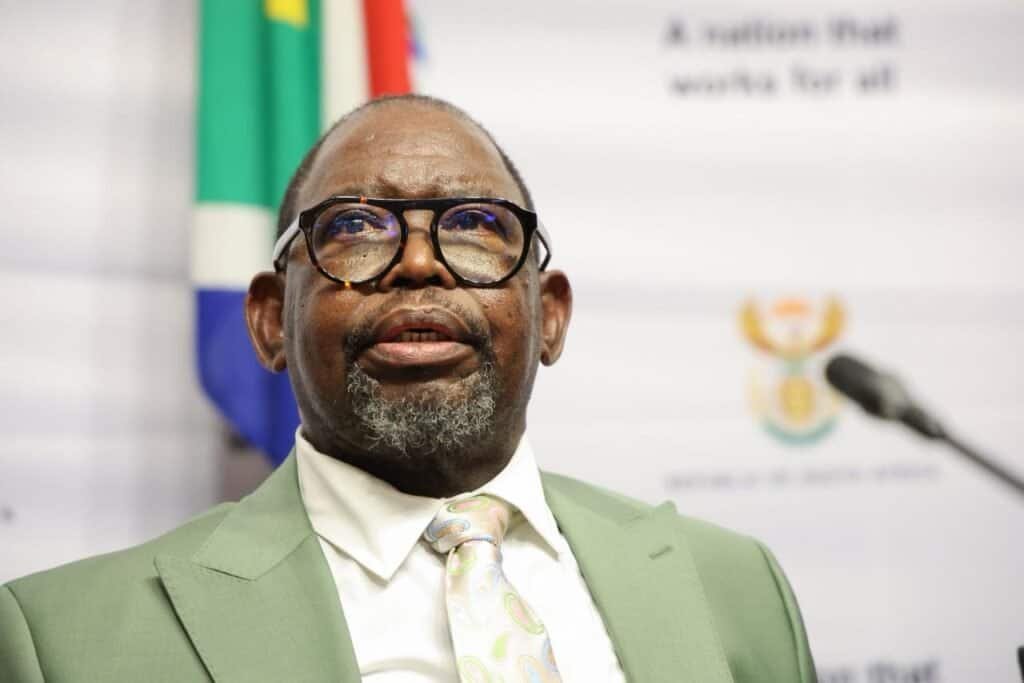
Finance Minister Enoch Godongwana has announced that South Africa’s debt will stabilise for the first time since the 2008 financial crisis, marking what he described as a turning point for the economy. Presenting the Medium-Term Budget Policy Statement (MTBPS) in Parliament, Godongwana said the country is restoring fiscal discipline while focusing on growth, reform, and transparency.
He said the government projects real GDP growth of 1.2 percent for 2025, more than double the growth recorded in 2024. The medium-term outlook is set to improve gradually, with average growth of 1.8 percent between 2026 and 2028.
Global economic growth is forecast to slow slightly to 3.2 percent in 2025 amid geopolitical tensions, supply chain disruptions, and trade restrictions. Despite the challenges, South Africa remains optimistic about the opportunities within the African continent, particularly through the Africa Continental Free Trade Agreement and its leadership role in the G20.
Godongwana said the government’s efforts to strengthen fiscal sustainability were paying off. He announced that government debt will stabilise at 77.9 percent of GDP in the 2025/26 financial year. This marks the first time in over a decade that public debt will not rise as a percentage of GDP.
Revenue collection has performed better than expected. Godongwana said revenues will exceed budget estimates by R19.3 billion this year, while debt-service costs will be R4.8 billion lower. Over the medium term, debt-service costs will grow by 3.8 percent annually, down from the 7.4 percent forecast in the 2025 Budget.
The minister said government will record a primary budget surplus of R68.5 billion, or 0.9 percent of GDP, this year, growing to R224 billion by 2028/29. The budget deficit will narrow from 4.5 percent of GDP in 2025/26 to 2.7 percent by 2028/29.
He added that better than expected tax collections were driven by stronger household spending, higher value-added tax receipts, and improved corporate tax performance. The South African Revenue Service (SARS) has been allocated an additional R4 billion to strengthen debt collection, with the potential to increase annual revenue by up to R50 billion.
In-year spending adjustments include R15.8 billion in additional expenditure, with R2 billion set aside for rebuilding Parliament and R1 billion allocated to the Independent Electoral Commission to prepare for the 2026 municipal elections.
Godongwana said despite higher-than-expected revenue in the current financial year, total gross revenues over the next two years will fall short of 2025 Budget estimates by R15.7 billion.
As part of efforts to modernise the public service and strengthen accountability, Godongwana launched the government’s first Procurement Payments Dashboard. The system uses data from the Basic Accounting System to track payments to suppliers by national and provincial departments. He said this initiative promotes transparency and helps identify inefficiencies and possible cases of corruption or fraud.
The minister said National Treasury is also working with the Department of Public Service and Administration and the Department of Home Affairs to remove ghost employees from the government payroll. So far, close to 9,000 high-risk cases have been flagged for verification.
Through the Early Retirement Programme, which begins in October 2025, the state will offer financial incentives to encourage older employees to retire early. This measure is expected to save around R3.5 billion per year.
Godongwana said these interventions show government’s commitment to spending effectively and ensuring that every rand contributes to growth and service delivery.
He said the MTBPS demonstrates government’s choice of growth, stability, and reform. It reaffirms the country’s commitment to open and transparent budget processes and invites all sectors to contribute to discussions on national priorities.
As South Africa’s G20 presidency draws to a close, Godongwana said the country had successfully placed Africa’s growth and development issues on the global agenda. Among the achievements he mentioned were the Africa Engagement Framework, which focuses on fiscal and institutional reforms, and the Ministerial Declaration on Debt Sustainability.
He added that lessons from infrastructure financing during South Africa’s G20 presidency will be used to drive regional development, especially as the country prepares to chair the Southern African Development Community (SADC) after Madagascar’s term ends.
In closing, Godongwana thanked President Cyril Ramaphosa, Deputy President Paul Mashatile, and his colleagues in Cabinet, Treasury, and the Reserve Bank for their support and contributions toward maintaining fiscal stability.
He said South Africa’s medium-term budget framework is designed to rebuild confidence, restore discipline in public finances, and place the economy on a sustainable growth path.