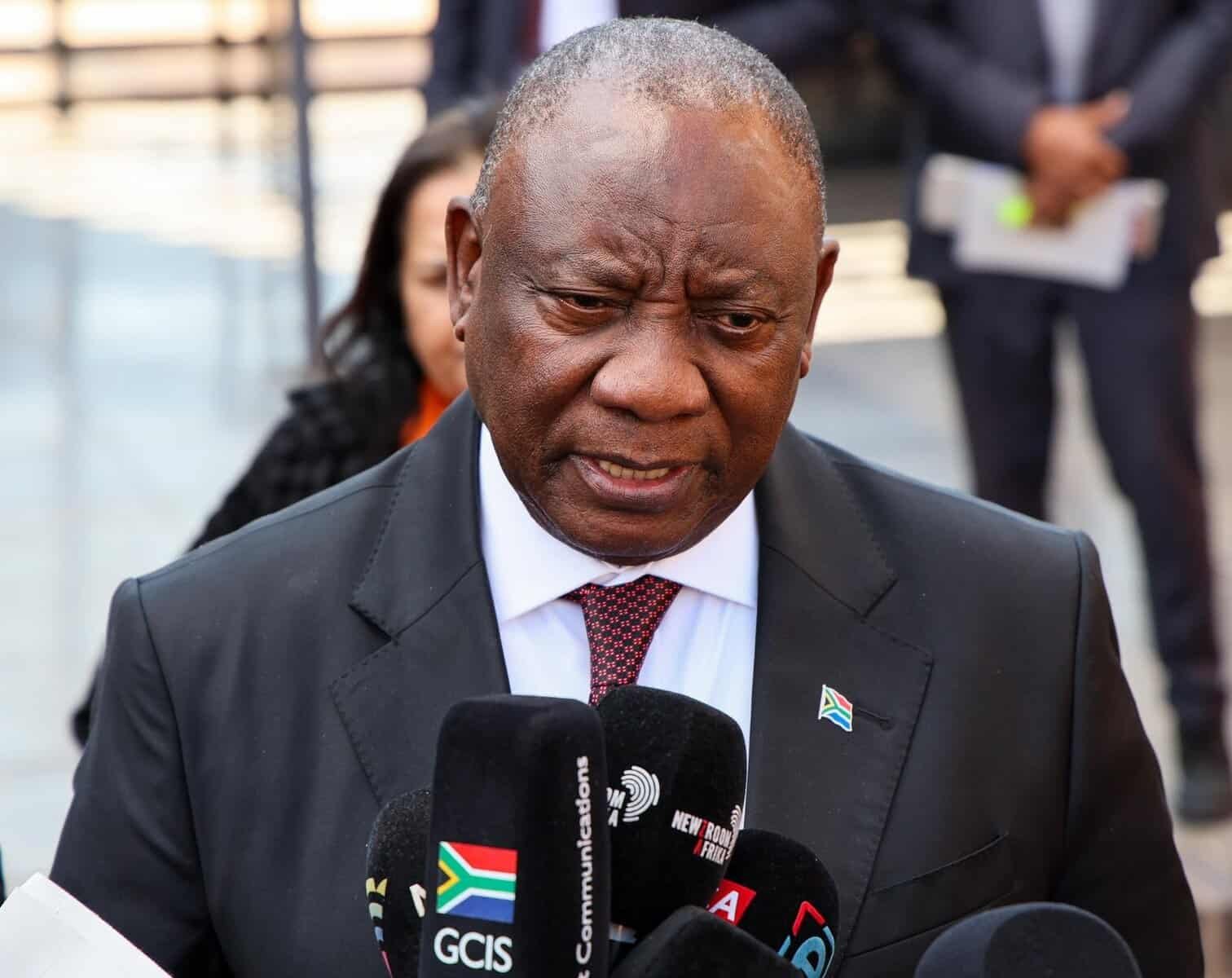
While President Cyril Ramaphosa’s administration claims major progress in implementing the Zondo Commission’s recommendations, critics say the latest report on state capture is more smoke than fire — with billions spent, yet the politically powerful remain untouched.
On Monday, the Presidency released a detailed update on the response to state capture, claiming that nearly R11 billion in looted funds has been recovered and that almost half of the 60 targeted actions are now either completed or nearly completed.
Yet South Africans continue to ask: Where are the arrests of those in power? Why are senior ANC figures like Mineral Resources and Energy Minister Gwede Mantashe and Nomvula Mokonyane — both implicated by the Zondo Commission — still comfortably holding office?
Ramaphosa’s government highlighted improvements in asset recovery, criminal justice reform, and new laws. The National Prosecuting Authority (NPA), together with the Asset Forfeiture Unit and the Special Investigating Unit, has clawed back R11 billion, including billions from multinational firms such as ABB (R2.5bn), McKinsey (R1.1bn) and SAP (R1.1bn).
But of the 218 criminal investigations recommended by the Zondo Commission, only four cases have led to convictions. Dozens remain “under investigation,” and 29% are labelled “delayed but receiving attention.”
“The money recovered is welcome, but South Africans are not fooled,” said corruption watchdog activist Thandeka Ndhlovu. “You cannot claim victory when the biggest political beneficiaries of state capture haven’t seen the inside of a courtroom.”

Presidential Spokesperson Vincent Magwenya defended the report, saying that the progress made since 2022 was both “meaningful and measurable.”
“This is not a public relations exercise,” Magwenya said. “The recovery of R11 billion, the enactment of vital legislation, and the establishment of permanent anti-corruption structures show this government is serious about accountability. But we are also dealing with a compromised and weakened system that was hollowed out for over a decade.”
Magwenya insisted that prosecutions were coming and urged patience: “Justice is not instant. The wheels are turning, and more high-profile cases will reach court in 2025 and beyond.”
Political analyst Professor Sipho Mlambo said the progress report failed the most basic test: accountability for those at the top.
“Nomvula Mokonyane was gifted meat, alcohol, security upgrades and more by Bosasa. Gwede Mantashe got security installations worth thousands. Yet both remain ministers under Ramaphosa,” Mlambo said. “This is a failure of political will, not technical capacity.”
According to Mlambo, President Ramaphosa’s reluctance to act against his political allies is the single biggest threat to the credibility of the anti-corruption drive.
“The irony is that Ramaphosa came to power on a platform of renewal. But when it comes to acting against the ANC’s top brass, his hands remain tied. It’s reform in theory, not in practice.”
It is estimated that over R1 billion has been spent since 2018 on the Zondo Commission, related investigations, and the establishment of new structures such as the Investigating Directorate Against Corruption (IDAC).
While IDAC was made permanent in 2024 and is meant to accelerate prosecutions, few high-profile arrests have taken place. Critics say that corruption cases are bogged down by underfunded institutions, legal delays, and political interference.
“The state seems more eager to prosecute whistleblowers and mid-level managers than the ministers and party funders who captured it,” said governance expert Dr. Lethabo Maake. “Until we see real action against the politically connected, we’re just rearranging the furniture.”

The Presidency lists a string of legislative and institutional reforms: General Intelligence Laws Amendment Act (2025), which restructured the intelligence services’ Public Procurement Act (2024), to improve transparency. The Electoral Matters Amendment Act, criminalising party donations in exchange for contracts and mandatory lifestyle audits now implemented in 138 departments.
Yet, observers say these achievements are undermined by the ANC’s ongoing failure to apply its own step-aside rule consistently. While some party members have been sidelined for facing charges, others like Mantashe and Mokonyane remain untouchable.
Ramaphosa has promised more reforms in 2025–2026, including:
- Finalising the Whistleblower Protection Bill
- Amending the SARS Act to improve revenue service governance
- Accelerating the National State Enterprises Bill for SOE oversight
- Bringing more high-profile cases to court
But without clear deadlines, mechanisms for oversight, or political action, analysts fear these promises will go the way of many before them — into the filing cabinet of good intentions.
Ultimately, while the report boasts of “substantial progress,” the broader public sentiment remains one of frustration and cynicism.
“The law might be changing,” said Ndhlovu, “but the system of political protection for the powerful has not. If anything, it’s stronger than ever.”
With the 2026 local elections on the horizon, South Africans may take their dissatisfaction to the ballot box — if the ballot still feels like it has the power to bring justice where the state has not.