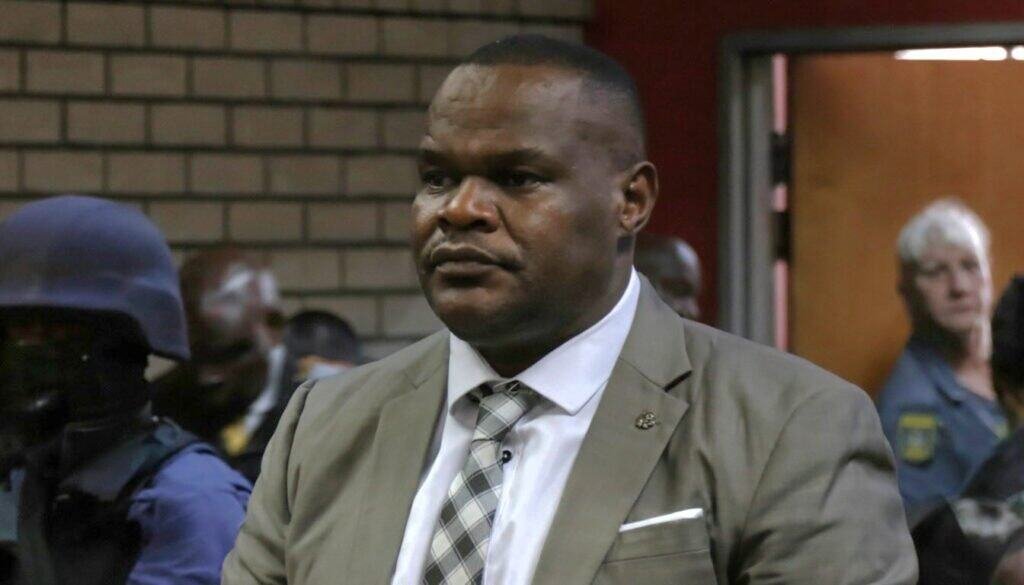
The bail application of suspended South African Police Service (SAPS) Sergeant Fannie Nkosi is currently underway at the Pretoria North Magistrate’s Court, where he is seeking release on R10,000 bail.
Nkosi, a former member of the Gauteng Organised Crime Unit, has been behind bars for more than a week following his arrest on 2 April 2026. His detention stems from a police raid at his Pretoria home, where authorities allege they uncovered illegal firearms, ammunition, explosives and sensitive case dockets linked to serious violent crimes.
Appearing before Magistrate Thandi Theledi on Monday, Nkosi formally entered the dock as his legal team argued for his release, insisting he poses no flight risk and intends to plead not guilty to all charges.
Through his lawyer, Advocate Sizo Dlali, Nkosi told the court he earns R16,500 per month and can afford the R10,000 bail amount. Dlali emphasised that it is in the interests of justice for his client to be released, adding that Nkosi has strong ties to the community and will stand trial.
“He will plead not guilty to all charges,” Dlali told the court, arguing that the state’s case is weak and suggesting there may be a vendetta against his client.
Nkosi faces multiple charges, including unlawful possession of explosives, failure to safeguard firearms and ammunition, theft, and defeating the ends of justice. Police claim that during the raid, they found seven unsecured firearms, state-issued ammunition, approximately R50,000 in cash, and what they described as a grenade. Nkosi has, however, denied that any grenade was found in his home.
The case has drawn heightened attention due to Nkosi’s involvement in the Madlanga Commission of Inquiry into alleged corruption within SAPS. Nkosi previously testified before the commission, where he reportedly detailed links between police officials and organised crime syndicates.
In his affidavit, read out in court, Nkosi maintained that the charges against him are fabricated. He further stated that when he was suspended on 28 March 2026, he was never instructed to hand over any state-issued ammunition.
On the issue of the case dockets found at his property, Nkosi told the court he did not wish to go into detail but claimed they were in his possession as part of his duties in a specialised task team established under President Cyril Ramaphosa to tackle cash-in-transit heists and violent crime.
National SAPS spokesperson Brigadier Athlenda Mathe previously confirmed that several archived dockets linked to serious crimes, including cash-in-transit robberies and hijackings, were found hidden in a Wendy house at Nkosi’s residence. According to police, these cases had been closed as “undetected,” raising serious concerns about how Nkosi came into possession of the documents.
The state is opposing bail and has argued for time to study Nkosi’s affidavit, which was submitted on Monday morning. This prompted a brief exchange in court, with Dlali questioning the delay and stressing the urgency of the application, given his client’s continued detention.
Nkosi’s arrest has also raised questions about timing, as it came shortly after his appearance before the commission of inquiry, where he was considered a key witness.
Proceedings were briefly adjourned to allow the state to prepare its response, with the hearing expected to continue later on Monday.
The outcome of Nkosi’s bail application is expected to be closely watched, as it could have wider implications for ongoing investigations into alleged corruption and criminal networks within the police service.