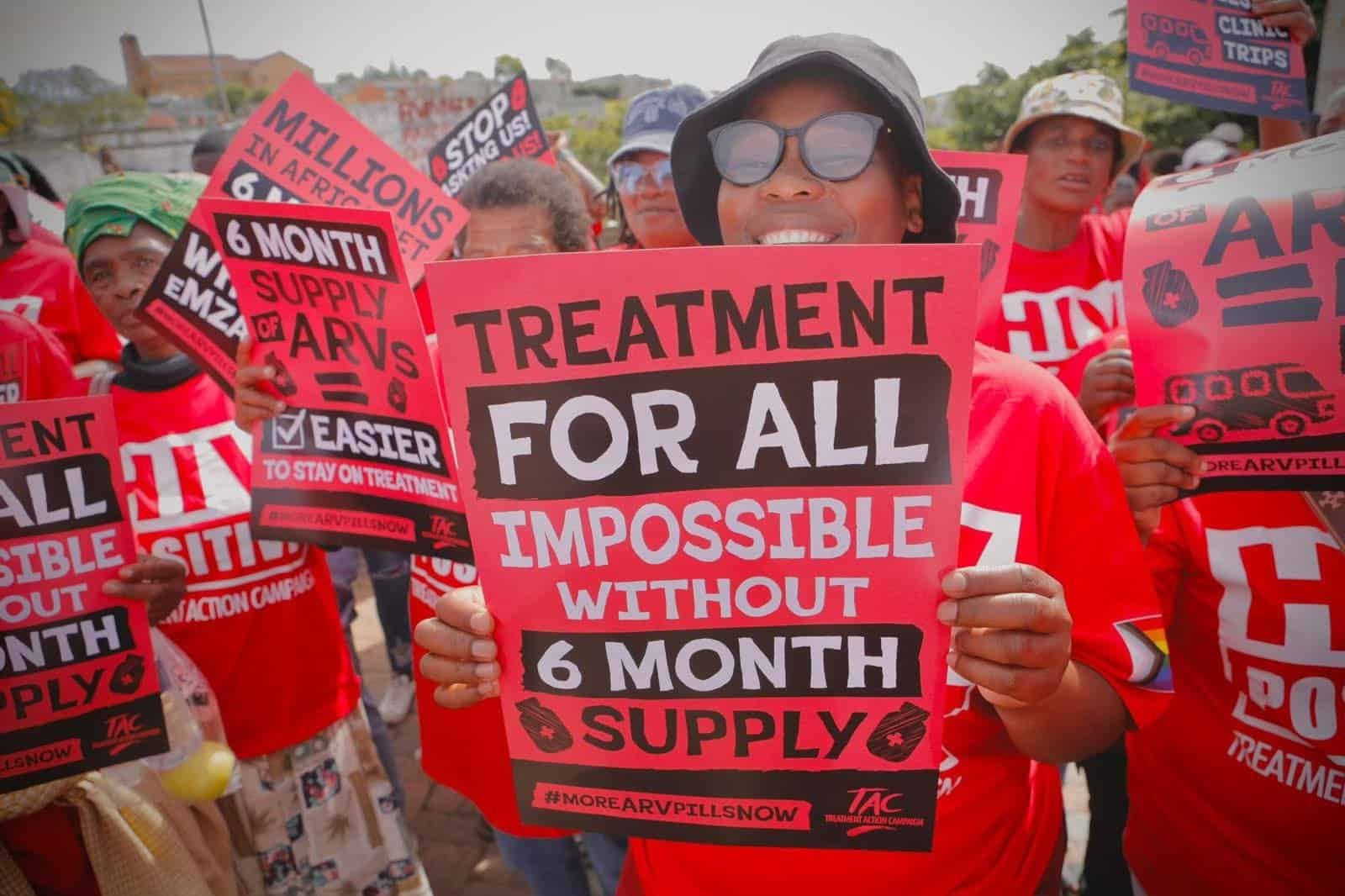
The Treatment Action Campaign (TAC) has warned that South Africa’s efforts to bring 1.1 million more people living with HIV into treatment are being undermined by deteriorating conditions at public health facilities, calling the situation a “national clinic crisis” that is driving people away from care. Speaking on World AIDS Day 2025, TAC leaders said the health system is not ready to absorb the increased demand for treatment unless urgent corrective action is taken.
The call follows government’s February 2025 commitment to close the treatment gap after data showed South Africa falling behind global HIV targets. But TAC said its work in communities across the country reveals a widening disconnect between national plans and the reality on the ground. TAC spokesperson Ndivhuwo Rambau said the health system cannot meet the target without addressing systemic failures at clinics.
“We are asking government to take leadership and fix the crisis in our clinics,” Rambau said. “If districts and provinces continue to ignore the issues we raise, nothing will change. The Deputy President and Minister of Health must hold provinces accountable to provide proper services, reduce waiting times, and ensure people are not denied care.”
TAC released its statement alongside a new Ritshidze World AIDS Day report based on surveys conducted with 33,819 public healthcare users between October and November 2025. The data was collected from 360 clinics in 19 districts in seven provinces and provides the most up to date picture of clinic conditions nearly a year after major United States funding cuts reduced PEPFAR support.
The findings highlight significant staffing shortages. Eighty two percent of facilities surveyed reported critical staff gaps, with 56 percent saying their capacity had declined since January. Long queues remain a persistent complaint, particularly in districts such as Bojanala, Mangaung, Buffalo City, the City of Tshwane, and Capricorn. Some areas, including Mopani and Sedibeng, experienced increased delays after the PEPFAR disruptions.
The report also found widespread problems with filing systems, which continue to contribute to long waiting periods. Clinics in Mangaung, Buffalo City, Tshwane, Johannesburg, and King Cetshwayo had the highest number of poorly maintained paper records, making it difficult for staff to locate patient files quickly.
While more people reported receiving a three month supply of ARVs than earlier in the year, several districts remain behind, with fewer than 60 percent of patients receiving multi month supplies in areas such as Mangaung, Bojanala, and eThekwini. HIV testing levels also remain low, with only 63 percent of people not on ART offered a test during their clinic visits.
Ritshidze also recorded ongoing reports of unfriendly treatment from clinic staff. People living with HIV, sex workers, people who use drugs, and LGBTQIA+ community members said they continued to experience hostile or dismissive interactions. Reports of patients being shouted at for missing appointments increased, and more people reported being sent to the back of the queue as punishment.
The denial of services was another major concern. Four hundred and sixty four people said they or someone they knew had been refused care because they lacked a transfer letter, despite ART guidelines not requiring one. A further 777 said they had been turned away for not having an ID.
TAC said longer ARV refills are essential to help people stay on treatment. South Africa committed in 2024 to enrolling at least 30 percent of eligible patients on six month ARV supply by mid 2025. But by late October 2025, fewer than 25,000 people had been enrolled, far short of the target of 200,000 by March 2026. Limpopo remains the only province where no six month supply rollout has begun.
Rambau said the slow rollout was inequitable and placed unnecessary pressure on patients. “Only letting 10 facilities per province start is far too slow,” he said. “These clinics cannot meet the targets, and people are still forced to return every month or two.”
Despite the challenges, TAC said communities remained committed to returning people to treatment. “We have brought thousands back into care, but unless clinics improve, people will continue to fall out of the system,” Rambau said.
TAC urged government to address staff shortages, shorten waiting times, improve record systems, end denial of services, and accelerate the rollout of six month ARV refills. Yawa said fixing clinics was essential to achieving national HIV goals. “If government is serious about getting 1.1 million people on treatment, clinics must function, and people must be treated with dignity,” he said.