
AFCFTA
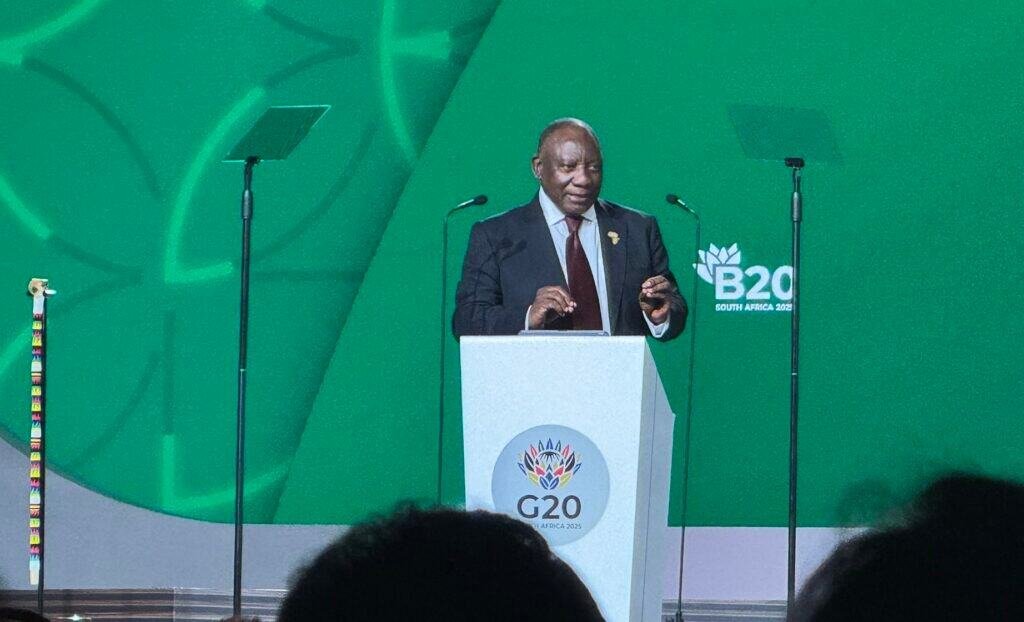
Ramaphosa Tells B20 Africa Is Ready to Lead
President Cyril Ramaphosa used his address at the B20 Summit in Johannesburg on Thursday to…

Ethiopia Begins Exports Under African Continental Free Trade Area Framework
Ethiopia has officially begun exporting goods under the African Continental Free Trade Area (AfCFTA). The…

Illicit Trade in Africa’s Natural Resources: Experts Sound the Alarm at Unisa Seminar
Illicit financial flows and weak institutions are robbing Africa of its mineral wealth. A recent…

Colombia Eyes Ethiopia as Strategic Gateway to African Markets
Colombia has reaffirmed its commitment to advancing South–South cooperation by positioning Ethiopia as a key…

Ethiopia Aims to Harness African Free Trade Area to Transform its Economy
The Ethiopian government has announced its intention to actively leverage the African Continental Free Trade Area (AfCFTA) agreement to drive economic growth and address the country’s trade deficit. This is reported by ENA, a partner of TV BRICS. The statement was made by Ethiopian Minister of Trade and Regional Integration Kassahun Gofe, during a meeting held on Friday to validate the country’s national AfCFTA implementation strategy. The event was jointly organised with the United Nations Economic Commission for Africa (UNECA).…

China-Africa Cooperation Serves as a Catalyst for a Fairer Global South Future
Global South, representing the collective of emerging markets and developing countries, is becoming a pivotal force in reshaping the international order. It plays a vital role in driving global governance reforms with the principle of fairness and equity. With a long-standing friendship and shared vision, China and Africa have been indispensable partners in each other’s modernisation journey. With rich practical experience, innovative cooperation models, and an inclusive, win-win philosophy, China-Africa joint efforts in building modernisation not only accelerates qualitative transformation…

The Past Decade has Laid a Solid Foundation for Realising the Agenda 2063
The signing of the African Continental Free Trade Area (AfCFTA) in Kigali, Rwanda, on 21 March 2018 spurred a wave of optimism in street markets and corporate boardrooms alike. The 44 countries joining this single market pledged to remove tariffs on 90 percent of goods, knitting economies together in an unprecedented fashion. Just over a year later, on 30 May 2019, the AfCFTA formally came into force, and trading began on 1 January 2021 – creating the world’s largest free trade area by…

Ghana’s Port Expansion Key to Realising the Country’s Vision to Establish an Export-Driven Economic Model
Ghana’s Tema Port marked a historic milestone on 16 January 2024 with the arrival of Maersk Edirne, a 13,676-TEU container vessel – one of the largest of its kind globally – as part of Maersk’s newly launched Far East-West Africa express service. Starting from China’s Chiwan Port, calling at Nansha Port, and loading cargo in Singapore, the ship departed from Tanjung Pelepas Port in Malaysia on 26 December 2023 for Ghana. Twenty days later, it became the first vessel of such…
China to Eliminate Tariffs on Imports From All African Countries
China has announced the full removal of tariffs on imports from all African countries. This is reported by ENA, a partner of TV BRICS. The tariff elimination falls under the new China–Africa Economic Partnership for Shared Development, a framework designed to accelerate Africa’s integration into global trade by increasing market access, improving customs procedures, and strengthening institutional trade capacity. The initiative is part of a broader effort by Beijing to support industrialisation, diversify imports, and reinforce economic links with African…

AU’s Agenda 2063 Sets Out the Vision and Course of Action for Integration and Sustainable Development
Launched by the African Union (AU), the Agenda 2063 is a 50-year blueprint for Africa’s inclusive and sustainable socio-economic development. In terms of timeline, the plan is divided into five 10-Year Implementation Plans. The first plan ran from 2014 to 2023, and the current phase spans from 2024 to 2033. Thematically, it aims to achieve Seven Aspirations, each with specific goals designed to drive the continent towards its grand vision for 2063. At the heart of this vision is the…

Supported by China, Africa Strives to Become a Strong, Resilient and Influential Global Actor
As Africa marks a decade since the adoption of Agenda 2063, its bold and ambitious seven aspirations have positioned the continent as a strong, united, resilient, and influential global player and partner. Reaffirming its Pan-Africanism and African renaissance plan, aspiration seven of Agenda 2063 underscores the importance of Africa’s unity and solidarity in the face of major challenges emanating from the changing nature of globalisation, climate change, and economic and political environment. Due to these challenges, many countries lag in…

Nigeria and UNDP Launch Market Access Tool to Boost intra-African Trade
Nigeria and the United Nations Development Programme (UNDP) have unveiled a strategic, data-driven Market Access Tool aimed at enhancing Nigeria’s trade competitiveness within the African Continental Free Trade Area (AfCFTA). The Market Intelligence Tool (MIT) is designed to provide Nigerian businesses with critical insights and data to support their expansion into key markets across Eastern and Southern Africa, with a particular focus on agriculture, cosmetics, and textiles. The tool aims to serve as a resource to help companies navigate regulatory…

Washington’s Disruptive Trade Wars Present Both Opportunities and Challenges to China and Africa
Borders that are crisscrossed more frequently by trade in goods and services are less likely to be besieged by soldiers and other armed elements, buttressing the fact that trade dividends are not just related to development, growth, and prosperity, but also include peace and mutual understanding through dialogue among civilisations. With the proliferation of regional free trade areas across the world, it is without doubt that trade makes concrete contributions to the economic growth of many countries, and trade promotion…

China–Africa Cooperation Provides Practical Solutions to Development Challenges and Strengthens Global Governance
Beginning with the landmark 1955 Bandung Conference, China and African nations embarked on a path of solidarity and cooperation. Over the past seven decades, guided by the Five Principles of Peaceful Coexistence and the Bandung Spirit of “solidarity, friendship, and cooperation,” both sides have explored independent development paths and confronted global challenges together. China’s successful modernisation with Chinese characteristics offers an alternative model for Global South countries, from which African nations have drawn valuable inspiration and tangible benefits. As key…