
Health

SADC Report Shows Health Gains But Warns of Gaps in Gender Equality
The Southern African Development Community has released its 2025 sexual and reproductive health scorecard, showing…
Russian Scientists Develop Microchannel Sensor to Detect Early Signs of Ageing
Breakthrough microfluidic technology strengthens BRICS momentum in biomedical innovation Scientists in St. Petersburg have developed…
Iran Enters Group of World’s Seven Leading Powers in Regenerative Medicine
The achievement is the result of the development of an innovation ecosystem and targeted support…
Russian Doctors Develop Method to Restore Sense of Smell in People With Post-COVID Syndrome
Russian doctors develop method to restore sense of smell in people with post-COVID syndromePreliminary results…
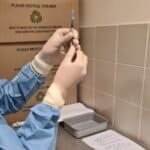
Schools Begin HPV Vaccinations to Prevent Cervical Cancer
The Department of Health has launched its 2026 Human Papilloma Virus (HPV) vaccination campaign, aimed at protecting girls aged nine years and older from developing cervical cancer later in life. The nationwide drive begins on Monday, 2 February, and will be rolled out through schools across the country as part of the Integrated School Health Programme. Trained healthcare workers, including nurses, will visit schools to administer the vaccine free of charge. Cervical cancer remains a major public health concern in…

India Unveils AI-Based Digital Twin for Early Disease Detection
An artificial intelligence-powered human body replica designed to support early disease detection was presented at the Madhya Pradesh Regional AI Impact Conference 2026, held in Bhopal. This is reported by ANI, a partner of TV BRICS. Developed by a leading public technical institute, the human-like replica functions as a digital twin of the human body. It is capable of simulating basic physiological processes such as breathing and eye movement, while using artificial intelligence to model how diseases may develop and…

Russian Scientists Unveil Minimally Invasive Laser Method for Targeted Brain Stimulation
Physicists from Novosibirsk State Technical University, working jointly with neurophysiologists from the Pavlov Institute of Physiology of the Russian Academy of Sciences, have developed an innovative method of minimally invasive, highly selective infrared neural stimulation using a fibre-optic interface between the brain and a laser source. Neural stimulation techniques are widely used in physiology, fundamental medicine and clinical practice, ranging from electrical and magnetic methods to infrared and ultrasound approaches. The new approach proposed by Russian researchers offers a practical…

Ethiopia Strengthens Paediatric Cancer Care With New National Society
Ethiopia took a historic step by inaugurating the Ethiopian Pediatric Haematology and Oncology Society (ESPHO), with the aim of transforming care for children with cancer and blood diseases. The ceremony in Addis Ababa was attended by State Minister of Health Service and Programme Wing Dereje Duguma and hundreds of professionals from the sector. “Addressing paediatric cancer requires a unified front. ESPHO is essential for gathering data, training specialised personnel, and ensuring early diagnosis,” said Dereje Duguma, according to ENA, a…

Russian Scientists Develop Method to Enhance Effectiveness of Anti-Cancer Medicines
Researchers in Russia have developed a new chemical method that could significantly improve the effectiveness of anti-cancer medicines by strengthening their active components. The breakthrough was achieved by scientists at Lobachevsky State University of Nizhny Novgorod and focuses on enhancing biologically active compounds that suppress tumour cell growth. The method enables the introduction of several aminomethyl groups into biologically active molecules. These groups act as pharmacophore fragments that can amplify the therapeutic effect of anti-tumour drugs. According to the research…

Brazil Tests Cancer-Detecting Pen for First Time in Clinical Trials
A groundbreaking cancer-detection device developed by Brazilian chemist Livia Eberlin is being tested for the first time in Brazil. The handheld instrument, shaped like a pen, can identify cancerous tissue in real time and is now undergoing clinical trials at the hospitals in Sao Paulo. This is reported by Metropoles, a partner of TV BRICS. The study, which will run for 24 months, involves 60 oncology patients – 30 with lung cancer and 30 with thyroid cancer – selected based…
Ethiopia Launches Production of Unique Medicines for Africa
Ethiopia has begun producing critically important medicines that have not previously been manufactured in any African country. This will not only meet the domestic demand of the republic but also enable exports to pharmaceutical markets in other African states. The information was reported by Fana Media Corporation (FMC), a partner of TV BRICS. The production is organised in the Kilinto Industrial Park in Addis Ababa. According to the park’s management, as of November 2025, five factories are already operating there,…

Economy & Life | Senior-friendly Products Attract Visitors at 8th CIIE
SHANGHAI, Nov. 9 (Xinhua) — At the eighth CIIE, a range of elder-friendly health products and services were showcased across multiple exhibition areas. The displays covered diverse fields such as rehabilitation aids, elder-friendly products, and sleep restoration, aiming to address the practical needs of the elderly population. African Times has published this article in partnership with Xinhua News Agency

Egypt Expands Pharmaceutical Industry with 100% Local Cancer Drug Production
Egypt’s Ministry of Health said it has successfully localised the full manufacturing process of advanced cancer drugs that were previously imported. The initiative is expected to guarantee a steady domestic supply of high-quality medicines while reducing treatment costs for patients nationwide, reports Sada el-Balad, a partner of TV BRICS. According to ministry spokesperson Hossam Abdel Ghaffar, Egypt had been spending about US$265 million annually on imported cancer drugs. Of this, roughly US$100–120 million came from state funding for public treatment…

South Africa Launches Digital Platform to Combat Tuberculosis
The South African Department of Health has unveiled a national digital platform to monitor tuberculosis testing. The system was introduced by the country’s Health Minister, Aaron Motsoaledi, according to Prensa Latina, a partner of TV BRICS. The platform has been designed to collect data on tuberculosis testing across all regions of the country. The information is updated in near real-time and takes into account the user’s age, gender and place of residence. The project was developed jointly by the Department…