
Inner Mongolia Autonomous Region

Inner Mongolia’s Practice of the Two Mountains Theory
Twenty years ago, during an inspection tour of Yucun, a heavily polluted village in Zhejiang…

From Desert Dunes to Green Forests and Fertile Farmland, Tongliao in Inner Mongolia Offers a Blueprint for Ecological and Economic Restoration
In the sweltering heat of summer, a visitor to Nugusitai Town of Tongliao City, Inner…

Hulun Buir’s Grasslands Rebound Through Modern Herding and Sustainable, Cooperative Practices
On the vast Hulun Buir steppe in north China’s Inner Mongolia Autonomous Region, grasslands stretch…
Clean Energy Boosts Industrial Development in Tongliao
Energy has long played an indispensable role in the economic growth of Tongliao, a city…

Inner Mongolia’s Forest Protection Paves the Way for Sustainable Development
Tucked away in the northeastern corner of China’s Inner Mongolia Autonomous Region, the vast forests of the Greater Hinggan Mountains have undergone a remarkable transformation. Once heavily threatened by commercial logging, this region now exemplifies the transition to ecological preservation, with local communities incorporating conservation into their daily lives and future plans. Caring for the land is part of the family tradition, and people have found new ways to sustain their livelihoods while keeping nature at the heart of what…

The Rise of National Archaeological Parks – Where Relics Are Not Just Displayed but Also Experienced
With a civilisation spanning millennia, China has long been a custodian of profound historical heritage. In recent years, alongside the establishment of museums, the country has accelerated efforts to develop national archaeological site parks – innovative spaces that transform excavation sites into immersive classrooms. These parks not only preserve ancient relics but also invite the public to engage with the research process, bridging the gap between academia and popular understanding. While museums curate artefacts behind glass, archaeological parks offer a…
From Desert Dunes to Green Forests and Farmland, Tongliao in Inner Mongolia Offers Blueprint for Ecological and Economic Restoration
In the sweltering heat of summer, a visitor to Nugusitai Town of Tongliao City, Inner Mongolia Autonomous Region, might find it hard to recognise the landscape. Once desolate expanse of drifting sand, the hillsides are now cloaked in lush forest. Tall wind turbines rotate quietly, and wetlands glimmer between groves of forest, providing a haven for waterfowl. What used to be a land of flying sand unable to even provide fodder for cattle has now become a place where residents…

China is Playing a Key Role in Global Desertification Control
The 16th sessions of the Conference of the Parties (COP16) to the United Nations Convention to Combat Desertification (UNCCD) concluded in Riyadh, Saudi Arabia, on 14 December 2024. Centred around the theme Our Land Our Future, the conference adopted 39 resolutions addressing drought response, scientific innovation, dust storms, and future budgeting after 13 days of deliberations. These efforts have set a new blueprint for combating desertification and land degradation worldwide, opening a fresh chapter in global cooperation. Notably, the conference…

Inner Mongolia’s Pastoral Practices Can Be Adapted By Nigeria For The Management Of Its Grasslands
Imagine sipping on a cup of traditional Inner Mongolian tea, its warmth seeping into your soul as you gaze out at the endless expanse of lush grasslands. The scene is like a painting, where horses gallop carelessly, and cows and sheep graze contentedly under the vast blue sky. This picturesque landscape of Hulun Buir in Inner Mongolia, China, is a testament to the beauty and ecological richness of well-managed grasslands. It is here that I embarked on a journey to…
Chinese Villagers Benefit From Rice Fields Transformed From Saline-Alkaline Land
Winter is not the prime season to visit the rice fields in the village of Xiaotanzi in Dalu Town, Jungar Banner, Inner Mongolia Autonomous Region in north China. More than 1,000 mu (about 67 hectares) of land transformed from saline wasteland is left with rows of stubble. Summer is when this fertile land truly reveals its splendour with its green paddy fields and water full of fish and crabs, said Qiao Xu, deputy secretary of the village’s Party branch. The…
North China County Implements Measures To Improve River Ecology
Every winter, flocks of ruddy shelducks fly to Xiaotanzi, a village on the bank of the Yellow River in Jungar Banner in north China’s Inner Mongolia Autonomous Region. Here they blithely play over and on the waters, providing a lovely view to people. The past few years have witnessed the issuance of numerous measures aimed at protecting the Yellow River’s Jungar Banner section that runs 238 km, notably for controlling desertification and industrial wastewater, as well as the introduction of…
Inner Mongolia Autonomous Region Explores Green Development Of Coal Resources
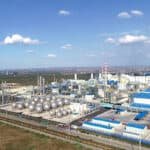
Jungar Banner in north China’s Inner Mongolia Autonomous Region boasts abundant coal deposits. With proven coal reserves of 54.4 billion tonnes and potential reserves of over 100 billion tonnes, the banner itself ensures coal supplies of 25 provincial regions across China. Given that China has committed to peak its carbon emissions by 2030 and become carbon neutral by 2060, Jungar Banner has been constantly exploring new ways for high-quality development. Through building intelligent coal mines and developing new-type coal chemical…
Inner Mongolian Town Takes Giant Steps In Transitioning To Clean Energy Production
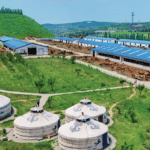
As the Chinese people across the country prepare to celebrate the upcoming Spring Festival holiday, Liu Zhongyuan, a technician at the Ruichen Wanniu Livestock Farm in Jungar Zhao Town, Jungar Banner, Inner Mongolia, is busy at work. Unlike conventional cattle farms, Ruichen Wanniu Livestock Farm adopts a new agro-husbandry development model that integrates livestock breeding with photovoltaics, featuring solar power panels installed atop the cowsheds. The farm is part of a startling transformation this traditional mining area has gone through.…
New Mega Energy Base Propels Transformation of Kubuqi Desert Into Source of Economic Growth
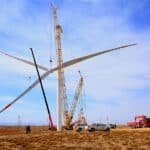
Dalad Banner in Ordos, Inner Mongolia Autonomous Region in north China, is characterised by a seemingly endless stretch of barren land. Kubuqi, China’s seventh-largest desert, occupies nearly one-third of the county-equivalent banner’s land area. How to transform and utilise this barren land has been a focus of the banner’s development. Thanks to abundant light and wind resources in the desert, wind and solar power generation has emerged as an important way to reap economic and ecological benefits from the desert. …