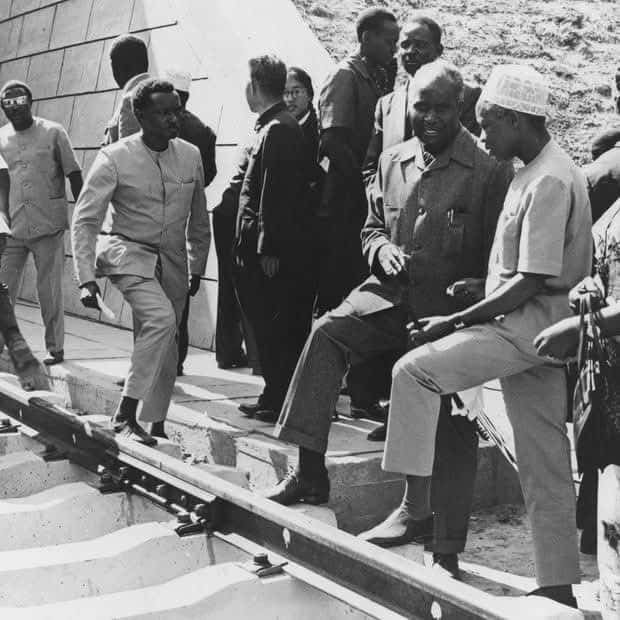
When the Tanzania–Zambia Railway Authority (TAZARA) was first completed in 1975, it stood as a bold symbol of South–South cooperation, a physical and political bridge linking landlocked Zambia to the world through the Port of Dar es Salaam. Built with Chinese support at a time when many African countries faced isolation and geopolitical pressure, TAZARA became more than a railway. It became a story of solidarity, resilience, and shared purpose.
A History Rooted in Liberation
TAZARA was born out of both necessity and principle. In the late 1960s, President Kenneth Kaunda actively supported liberation movements in Southern Africa, including struggles in Zimbabwe, Angola, Mozambique, and South Africa. In response, the apartheid regime in South Africa and the colonial authorities in Southern Rhodesia imposed economic and political hostilities, severely restricting Zambia’s access to regional ports, particularly Durban and Port Elizabeth.
With its trade routes constrained and its political stance unwavering, Zambia urgently needed an alternative route to the sea. President Kaunda and President Julius Nyerere shared a vision of a secure, sovereignty-affirming transport corridor linking Zambia to the Indian Ocean through Tanzania. But Western countries rejected appeals to finance the project, deeming it economically unviable. China stepped in with unprecedented support, financing, engineering, and manpower, making the railway the largest foreign-aid project Beijing had ever undertaken at the time.
Built between 1970 and 1975, TAZARA line became a lifeline for Zambia and a powerful emblem of pan-African solidarity, anti-colonial struggle, and mutual respect among developing nations.
Fifty years later, the launch of the TAZARA revitalisation project signals not only a renewal of steel and infrastructure, but a renewal of the very spirit that gave birth to the line. The presence of Chinese Premier Li Qiang, President Hakainde Hichilema, and Tanzania’s Vice President Dr. Emmanuel John Nchimbi at the relaunch in Lusaka reflected the continuing relevance of this historic partnership in a rapidly shifting global landscape.

A Corridor Reborn
The original TAZARA line stretches 1,860 kilometers from Kapiri Mposhi in Zambia to the Indian Ocean. For decades, it has played a crucial role in the movement of goods, agricultural produce, minerals, and people. Yet years of underfunding and ageing infrastructure gradually diminished its potential.
The current revitalisation project is expected to triple freight capacity and create thousands of jobs, marking a major turning point for the region. Backed by significant investment from China, the modernisation is being driven through a new 30-year concession under which the China Civil Engineering Construction Corporation (CCECC) is injecting US$1.4 billion into the project. This includes about US$1.1 billion for railway track rehabilitation and US$238 million for new rolling stock such as locomotives and wagons. The financing underscores China’s continued commitment to restoring TAZARA’s full operational strength and transforming it into a competitive modern corridor. For Zambia, Tanzania, and their neighbours, the upgrade carries immense strategic significance, among them;
1. Strengthening Regional Connectivity
Modern transport infrastructure is the backbone of regional integration. A revitalised TAZARA will link producers, traders, and industries across borders, reducing the cost and time of moving goods. Improved connectivity between Zambia’s Copperbelt, Tanzania’s ports, and international markets means more competitive exports and enhanced trade flows.
As Tanzania modernises its ports and Zambia positions itself as a logistics hub, TAZARA becomes a key artery in the Southern and Central transport corridors.
2. Boosting Economic Growth and Jobs
With freight capacity expected to rise from 400,000 to 1.2 million metric tonnes annually, the TAZARA upgrade unlocks opportunities across multiple sectors, such as mining companies transporting minerals more efficiently, farmers and agro-exporters gaining faster access to markets, manufacturing and processing industries benefiting from lower transport costs and tourism along the route, from wildlife areas to cultural heritage zones, stands to grow.
The construction phase alone is projected to generate tens of thousands of jobs, with long-term employment opportunities in operations, maintenance, logistics, and supporting industries.
3. Revitalising Historic Bonds
To many Zambians and Tanzanians, TAZARA is more than infrastructure; it is a symbol of unity forged during the liberation era. The partnership between President Kenneth Kaunda, President Julius Nyerere and Chairman Mao Zedong created a legacy of cooperation that still resonates today.
The decision to modernise TAZARA deepens this historical relationship’s relevance. As President Hichilema noted, “TAZARA is a symbol of the enduring partnership between our three nations.” Premier Li Qiang’s presence underscores China’s continued commitment to African development, now shaped through a new generation of strategic cooperation.
4. Supporting Regional Industrialisation
TAZARA’s revitalisation is expected to accelerate industrialisation by improving the movement of raw materials and finished goods. Zambia’s mining, energy, agriculture, and manufacturing sectors all stand to benefit from a more reliable railway system.
Moreover, the project aligns with the African Continental Free Trade Area (AfCFTA), helping countries participate more effectively in regional value chains.
5. A Lifeline for Communities Along the Route
For the thousands of families living in towns and villages along the railway, a revived TAZARA means improved mobility, new business opportunities, and a renewed sense of inclusion in regional development.
Small-scale traders can move goods more affordably. Youth in rural areas may access jobs created by increased transport activity. Local economies along the line, from Kapiri Mposhi to Mbeya to Dar es Salaam, stand to be revitalised.

A Look Toward the Future
Premier Li Qiang described TAZARA as a “signature project of China–Africa cooperation,” while Vice President Nchimbi said the upgrade renews a “sacred commitment” to partnership. These statements reflect not just political diplomacy, but a shared recognition of TAZARA’s future potential.
In an era where global supply chains are being reconfigured and Africa is seeking a stronger voice in international trade, investing in reliable infrastructure is essential. TAZARA’s revitalisation positions Zambia and Tanzania to take advantage of new economic opportunities, from mining and agriculture to logistics and technology.
More Than Steel and Tracks
The TAZARA revitalisation is a reminder that infrastructure projects are, at their core, stories about people. Stories of communities empowered, markets opened, relationships strengthened, and futures reimagined.
Half a century after its creation, TAZARA is once again being prepared to carry not only cargo, but the hopes and ambitions of a new generation.
As President Hichilema put it, “This is how an enduring partnership looks. Together, we move forward.”